

 Español
SUPPORTING OUR CONSERVATION PARTNERS IN AFRICA FROM RAINFORESTS TO SAVANNAS
In 1998, our work in Africa began with efforts to protect African wild dogs and five endangered vulture species in Botswana. Since then, our International Field Conservation department has supported projects and formed partnerships across the continent to help conserve threatened wildlife. Today, we support partnerships focused on protecting Threatened African lions and Endangered mountain gorillas in Uganda, as well as Endangered grey crowned cranes in Rwanda.
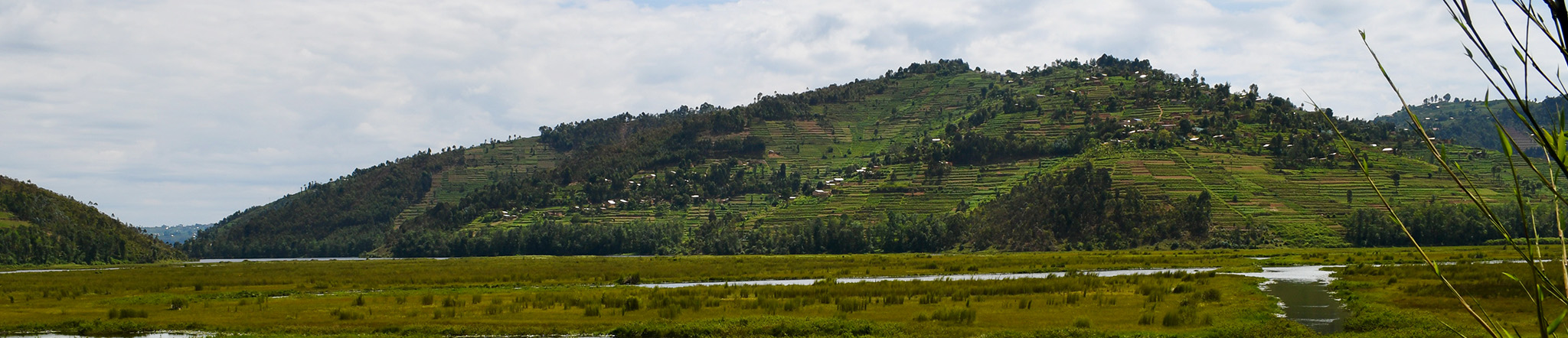
RWANDA
COMMUNITY CHAMPIONS HELPING GREY CROWNED CRANES
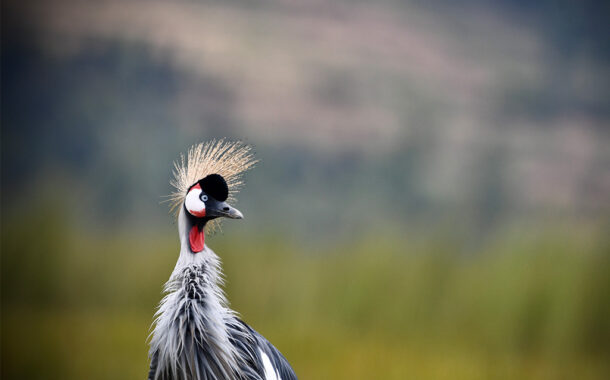
Endangered grey crowned cranes serve as vital seed dispersers for many important plant species and are celebrated for their beauty as the national bird of Uganda. These magnificent birds face a variety of threats, and DZCA supports our partners on the ground — the Rwanda Wildlife Conservation Association — in conserving the cranes and other species throughout Rwanda. DZCA also supports RWCA’s transboundary initiative to protect grey crowned cranes in partnership with Nature Uganda, Nature Tanzania, the International Crane Foundation, and new partners currently being recruited in Burundi.
THE CHALLENGES
Our research in the international department helped us identify the Great Lakes Area in eastern Africa as an important biodiversity hotspot. Grey crowned cranes in this area are facing three key threats:
- The Illegal Wildlife Trade as people take birds and eggs from the wild
- Human-wildlife conflict may occur when birds enter farmlands to forage on crops
- Habitat Loss as wetland areas continue to shrink
RWCA’s Community Conservation Champions
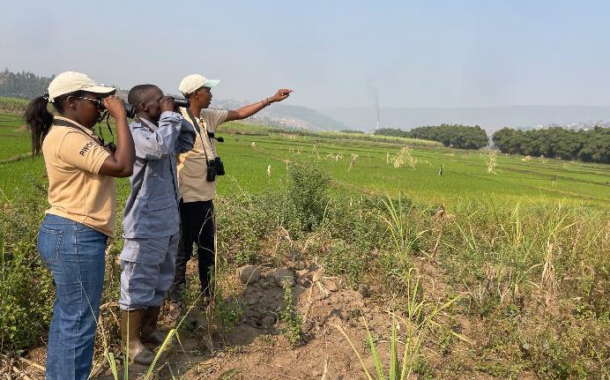
DZCA supports RWCA’s Community Conservation Champions (CCC), a group of 52 local community members employed across Rwanda, Uganda, Burundi, and Tanzania in key crane hotspots. These champions help monitor crane populations and raise awareness within their home communities about the importance of preserving cranes and the wetlands they inhabit.
Photo courtesy of the Rwanda Wildlife Conservation Association.
Monitoring
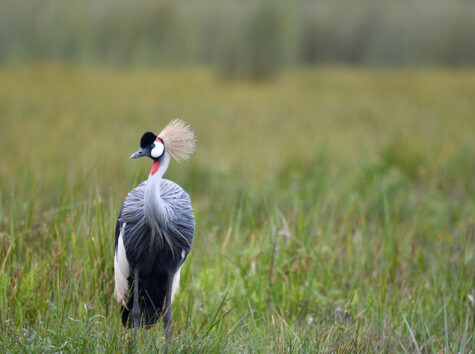
Once a year, several organizations collaborate to conduct population counts for grey crowned cranes, with the CCC playing a vital role in these efforts. In addition, the CCC continually monitor crane health and safety within their communities. They help mitigate conflicts between cranes and people and work to prevent incidents involving the illegal pet trade or the removal of eggs for food.
Community Outreach
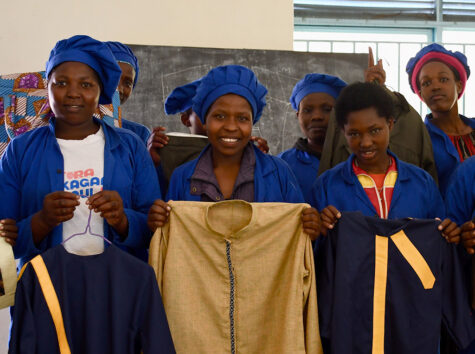
RWCA carries out extensive community outreach, often accompanied by the CCC. They visit busy areas such as markets and community centers to deliver conservation messages about the importance of grey crowned cranes and the protection of local wetlands. In their own communities, the CCC serve as ambassadors for the cranes, helping others understand the critical role these birds play in the ecosystem. RWCA also operates community livelihood programs such as a women’s sewing cooperative.
Supporting Supplies
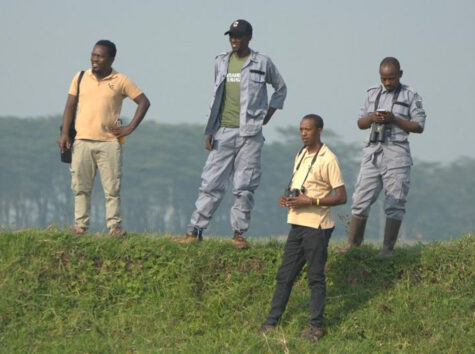
The CCC frequently work in marshlands monitoring birds and require specialized boots and uniforms to perform their duties effectively. Each year, DZCA provides new uniforms and boots for all CCC members across the four countries. We are proud to partner with this incredible organization and are currently exploring collaborative research opportunities.
Photo courtesy of the Rwanda Wildlife Conservation Association.
UGANDA
CONSERVING THE LION POPULATION OF
QUEEN ELIZABETH NATIONAL PARK (QENP)
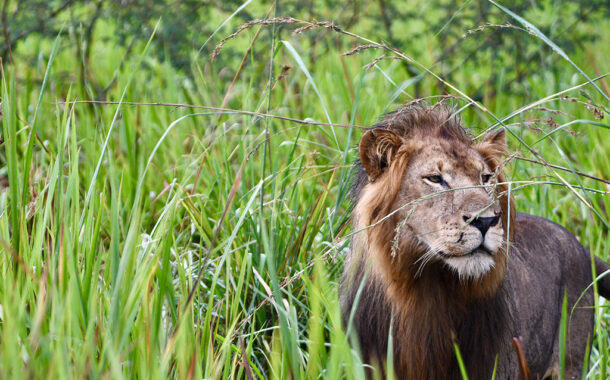
Threatened African lion populations continue to decline, with fewer than 22,000 remaining in the wild. Our partners in Uganda at the Kyambura Lion Monitoring Project (KLMP), part of the Volcanoes Safaris Partnership Trust, take a multi-faceted approach to protecting the QENP lion population, whose numbers have dropped to fewer than 50 individuals. DZCA supports KLMP through their work in the daily monitoring of the QENP lion population, conducting an annual census of lions, leopards, and hyenas in the park, and training local Ugandans in scientific monitoring techniques.
THE CHALLENGES
Our research in the International Department identified the Greater Virunga Landscape as a significant biodiversity hotspot. Queen Elizabeth National Park (QENP) forms a contiguous landscape with Virunga National Park in the Democratic Republic of Congo, allowing for the movement of lions between these areas. QENP is also home to the famous tree-climbing lions of Ishasha. However, the lion population in QENP is facing multiple threats:
- Human wildlife conflict when lions approach villages in the park or threaten livestock
- Habitat fragmentation occurs when invasive floral species prevent wildlife movement
- A skewed sex ratio (2:1: male/female) means male lions must travel further to find mates
- Snares intended for bushmeat catch other animals like lions or elephants
KLMP’s Annual Census
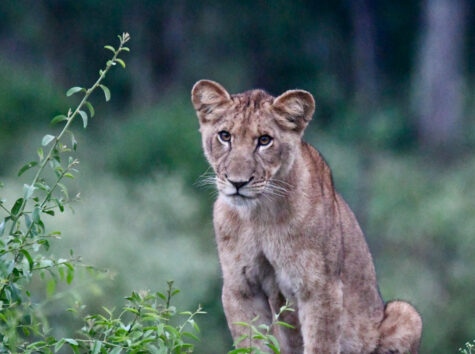
DZCA partially supports KLMP’s annual survey, which collaborates with multiple organizations to monitor the populations of lions, leopards, and hyenas in Queen Elizabeth National Park (QENP). Covering over 7,000 kilometers each year, the census helps quantify wildlife population trends, enabling conservation organizations to develop management plans in response to the findings and to assess whether conservation interventions are impacting population numbers.
Daily Monitoring
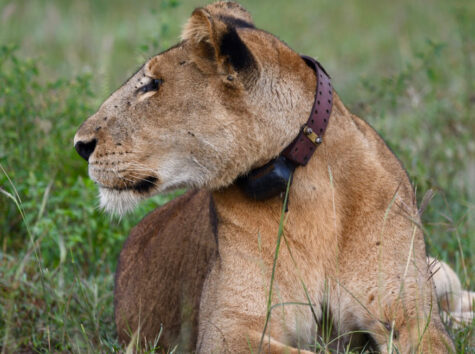
Some lions in QENP are fitted with tracking collars, allowing conservationists to monitor their locations through radio telemetry. The KLMP team also maintains a database of known lions—currently totaling around thirty—by identifying individuals based on their unique whisker spot patterns. Ongoing monitoring helps track lion movement throughout the park and ensures that lions are not approaching nearby communities.
Training Local Ugandans
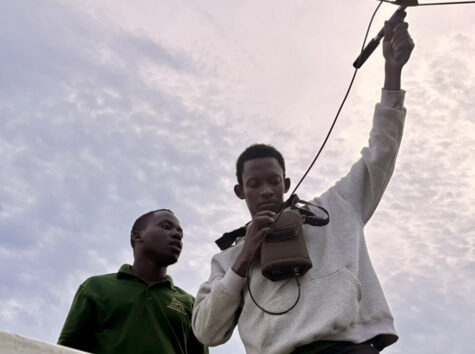
KLMP consists of a multinational scientific team that trains Ugandans from local villages in wildlife monitoring techniques. In 2025, DZCA is supporting the onboarding of three new team members from the local community as well as additional equipment to make detecting lions easier.
Response Team
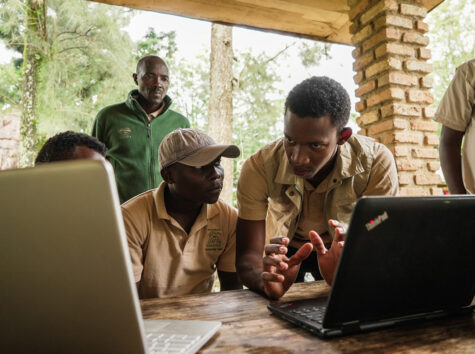
QENP is a large national park facing many threats to its wildlife. KLMP remains on constant alert to respond to incidents such as animals caught in snares or lions approaching villages. The team also works closely with the Uganda Wildlife Authority and other local conservation organizations to assist with monitoring the recovery of injured wildlife.
Photo courtesy of Kyambura Lion Monitoring Project.
Our Partners
Denver Zoo Conservation Alliance is grateful for the network of partner organizations working in Africa and on the home front to affect meaningful change:
Rwanda Wildlife Conservation Association (RWCA)
Kyambura Lion Monitoring Project (KLMP)
Volcanoes Safaris Partnership Trust
Asia | Since 2008
Latin America | Since 2008