

 Español
[link_to_contenthub_landing]
Five endangered and critically endangered species of vultures in Botswana will soon get critical help from rapid responders to rescue sick birds.
Denver Zoo was recently recognized with two nationally competitive Association of Zoos and Aquariums (AZA) Conservation Grant Fund awards. The funding supports our incredible team of animal care staff and conservationists in making the world a better place for animals – in particular, our vulture conservation program in Botswana and a groundbreaking study on socialization in male Asian elephants.
Denver Zoo’s Field Conservation team has protected wildlife in Botswana since 2006. This grant enables Denver Zoo and our partners at Raptors Botswana to safeguard endangered vultures. Their numbers are plummeting, due in large part to poisoning as a result of human-wildlife conflict. Increasingly, poison-laced carcasses target vultures. Farmers and ranchers lace carcasses with poison to retaliate against carnivores that prey on their herd. Vultures are attracted and killed as well.
With this funding, Denver Zoo and Raptors Botswana can increase awareness of the birds’ plight and train poison ‘first-responders’. Forty wildlife professionals will be trained on rapid response techniques to address poisoning events. Vultures are nature’s cleaning crew and process harmful bacteria before it contaminates the soil or affects people and livestock. With their ecosystem services vastly underappreciated, Botswana’s vultures are in crisis. Our team is leading vital work to ensure a better tomorrow.
In addition to saving vultures, Denver Zoo’s Animal Wellness team is leading a groundbreaking study on sociality in male Asian elephants. The results will have implications for the wellness of elephants in human care and those in the wild. Denver Zoo will collaborate with a Research Physiologist and expert in elephant hormones at the world-renowned Smithsonian Conservation Biology Institute.
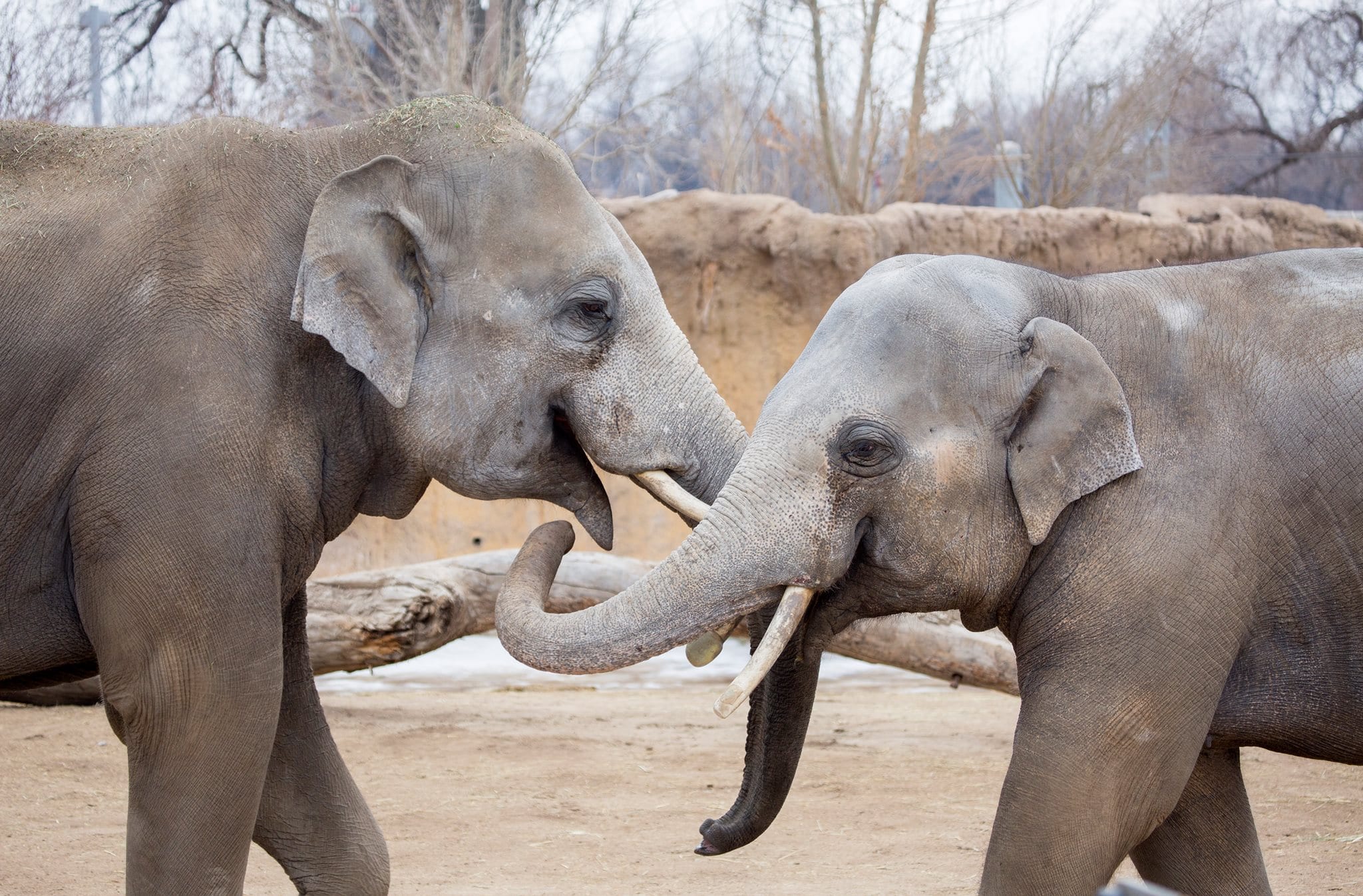
Once considered to be solitary, it is now known that bull Asian elephants are more social than previously thought. Recent data confirms that Asian bulls often associate in small bachelor groups in the wild. Yet, only three of the 33 AZA facilities currently housing Asian elephants routinely house any bulls together. With no formal studies to date on the management of these intelligent and social creatures, we are working to fill knowledge gaps surrounding social aspects and reproduction.
Denver Zoo recently expanded its current herd from three to five bulls. With the largest bachelor herd of Asian elephants in the world, this presents a rare opportunity to evaluate biological and behavioral responses as the new bulls are introduced to our resident bulls. Jake, age 9, and Chuck, 10 – will soon meet the veteran residents of Toyota Elephant Passage, Groucho, 47, Bodhi, 14, and Billy, 10, under the helpful eye of animal care staff.
Established in 1984, the Conservation Grants Fund supports the cooperative, conservation-related scientific and educational initiatives of AZA-accredited facilities.
Learn more about Denver Zoo’s conservation efforts and how you can support our work protecting wild animals and wild places around the globe.
[dz_image_gallery_slides]
[contenthub_nav]
Stories you may like
[stories_you_may_like]