How Denver Zoo Conservation Alliance Helps Keeps our Animals Cool

Summer is here and the fun in the sun has begun! As the temperatures rise and the days get hot, we keep cool however we can—a dip in the pool, frozen treats and plenty of shade. Our wild and wonderful animals are no different, except they rely on our care to beat the heat.  

As the heat rises in Colorado, the challenges for our Animal Care team who look after 2,500+ animals continue to grow. Our staff is working hard at finding new ways to keep our animals cool during the hottest months of the year. Air-conditioned indoor spaces are available to cool off, but unsurprisingly, our wild animals do want to be outside—and we want that for them!  

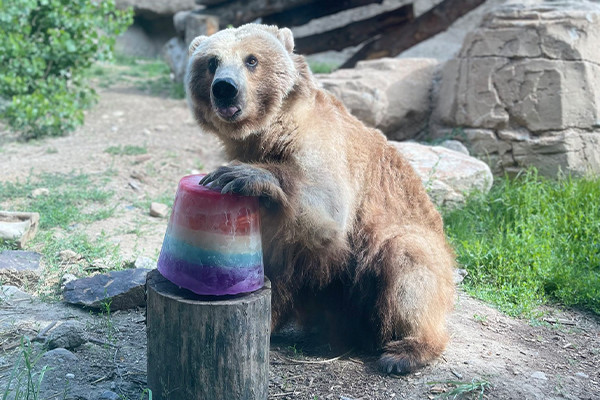
From fans and misters to ice machines and blood popsicles, our Animal Care Specialists are dedicated to coming up with creative ways to keep our residents comfortable in the heat of the summer while also providing fun and beneficial enrichment.  

Check out these three unique ways our Animal Care Specialists help keep our animals extra cool and comfortable all season long!
Blood Popsicle, Anyone?

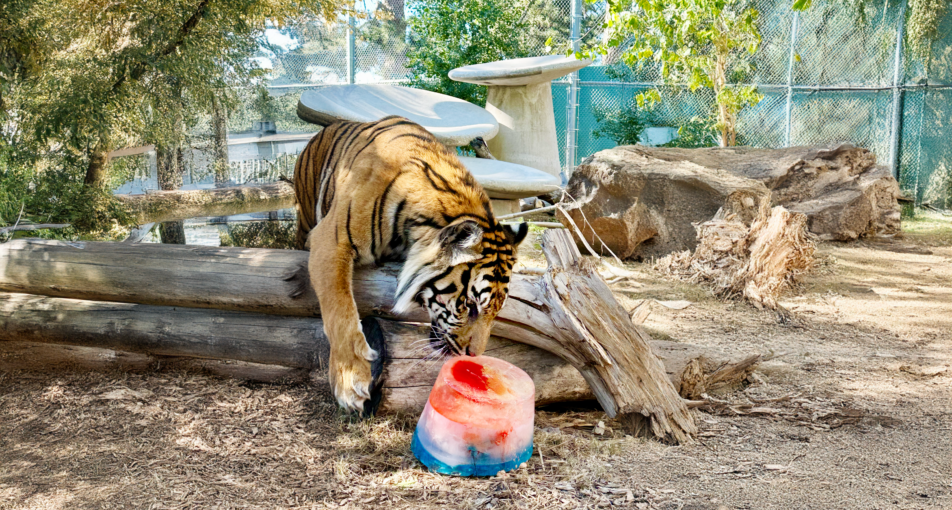
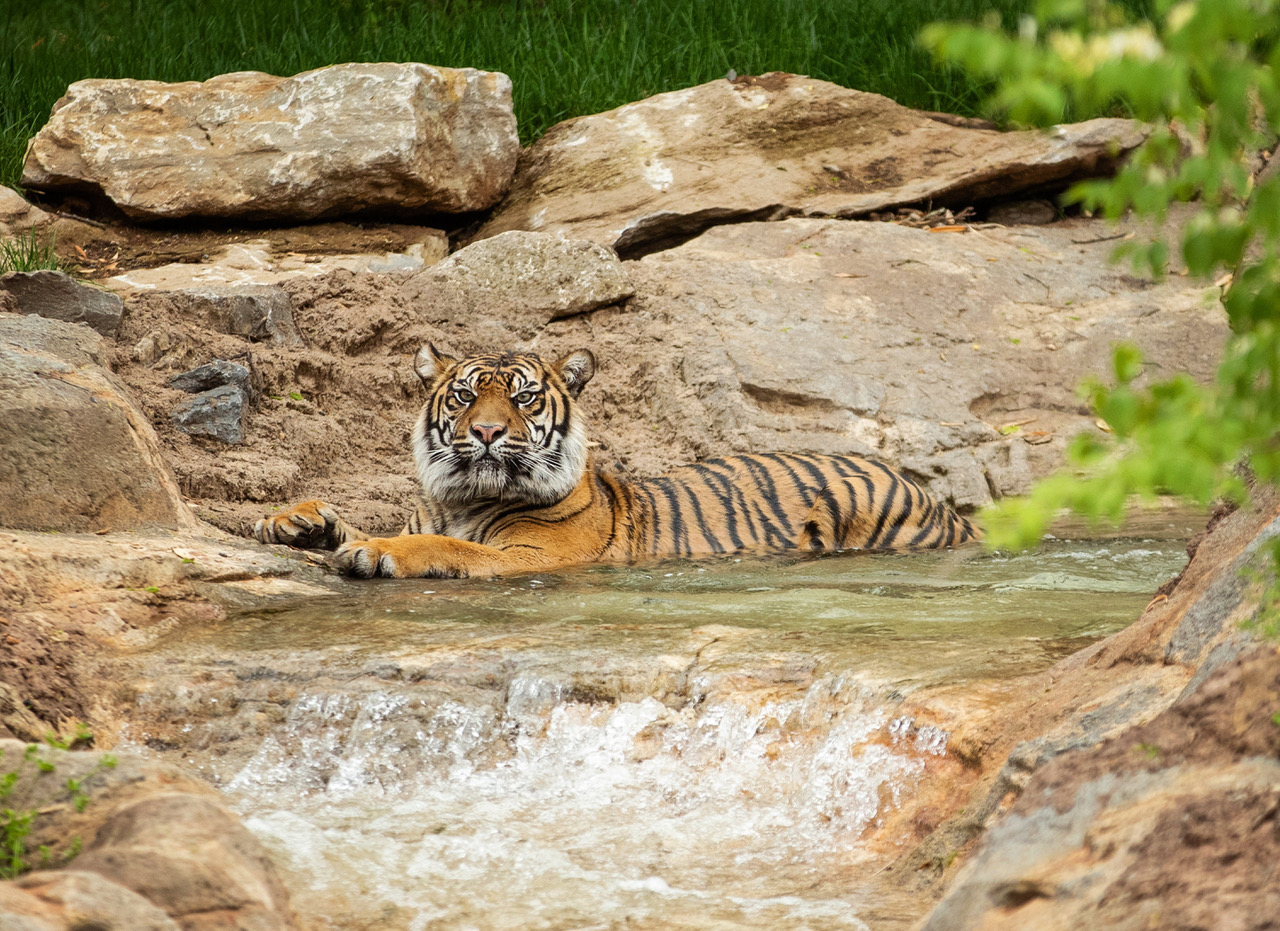
Our Animal Care Specialists love coming up with creative ways to keep our tigers cool in the summer heat, including making meat and blood popsicles!  

Popsicles made of frozen blood and meat may not sound appetizing to us, but our big cats sure do love them, especially because they provide mental stimulation. A donation of $100 can provide our tiger with her favorite “bloodsicles.” Sounds delicious…at least if you’re ChloJo! 

Rub-A-Dub-Dub, Three Hyenas in a Tub! 

Who’s up for a cold plunge? Our spotted hyenas, Ngozi, Kelele and Tavi are—and don’t forget the bubbles! Treat our hyena pack to a sudsy spa day with a nice, cold bubble bath to clean up and cool off. Bubble baths also serve as enrichment, as hyenas like to hide things in water and come back to them later. Our Animal Care staff hides fun items for the pack to find and ups the challenge level by making the items hard to see. Whenever the suds come out, the pack gets extra excited to play! For just $48/month you can provide tubs of bubs for our spotted pack of three. If you’re a big fan of bubble baths, we’ve got some well-pampered hyenas who totally agree. 

Throw Shade at Our Flamingos 

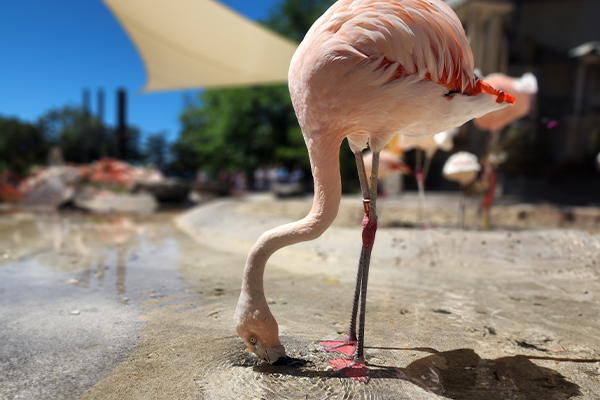
Because wild animals want to be outside as much as possible, shade is the gold standard for keeping animals cool when the summer sun is hot. While our Horticulture team continues integrating trees into new and current habitat designs, some of our habitats require unique shade solutions, like a custom shade sail. These shade sails require concrete caissons, structural steel for poles, the shade material and installation. Installing custom sails is a big-ticket item at $65,000 a pop, but every little bit helps! Keep our flock fabulous and donate any amount today.  
As a non-profit organization, your donations continue to provide world-class care for all our animals, including keeping them extra cool and comfortable all season long.  

Follow Denver Zoo Conservation Alliance on Facebook, Instagram, TikTok and LinkedIn for updates on our incredible animals! 

Your besties + Glowing Wild Adult Night? Sounds like the best of both worlds to us! Join us on April 2 and May 7 for a glowing, kid-free evening. Visit denverzoo.org for tickets and more info! ✨🤩🫶 

#glowingwild #denverevents #denverzooconservationalliance #denver #adultnight #kidfree

Happy birthday to Bailey and Kerry, our brown capuchin mother-daughter duo! 🎉🐒 

Kerry is celebrating 39 and Bailey just turned 44, making Bailey not only the oldest member of her troop, but the oldest primate at DZCA! 

To celebrate this incredible milestone, our team decked out their habitat with festive decorations and special frozen treats filled with juice, fruit, and nuts. 

With brown capuchins typically living 35–45 years in human care, these milestones are truly remarkable. We’re proud to provide them with the specialized care they need to thrive in their golden years. 

Join us in wishing these two a very happy birthday! 🎂 

🎥: Animal Care Specialist Daria G.
We’ve got some jaw-some news! Five epaulette shark pups have hatched in Tropical Discovery! After about five months of incubation inside their “mermaid’s purses,” these tiny sharks have officially entered the world. 

Two of the pups are already on exhibit, with the others potentially joining them soon, so keep an eye out during your next visit! 

Epaulette sharks are famous for their ability to “walk” along the seafloor using their fins, helping them navigate shallow reef habitats where other sharks can’t survive. Even as babies, they’re built for life in these ever-changing environments. 

Stop by Tropical Discovery to catch a glimpse of these incredible new arrivals! 🦈 

Baby Bulletin presented by Intermountain Health. 

#DenverZooConservationAlliance #SavingWildlifeTogether #Sharks #EpauletteSharks #BabyShark
A Pink Tie Affair

If you hadn’t gathered from the name, Flock Party was originally inspired by our beloved flock of American and Chilean flamingos. Can you blame us? They’re fabulous! But when we refer to our dress code as “Pink Tie,” don’t take us TOO literally. There’s a brilliant spectrum of colors and patterns in the natural world—when choosing your outfit, let nature be your guide!

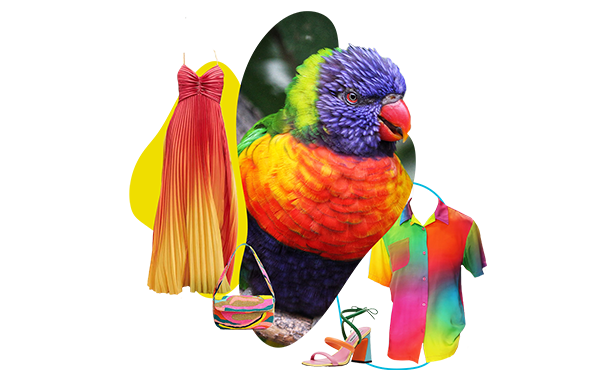
Who says flamingos should have all the fun? After all, our rainbow lorikeets spend their days sipping fruity cocktails, just like you’re about to do at Flock Party. Re-tweet this look with bright blocks of color and tangy ombre shades. 

LOOK: LUXE 
RetroFête Senna Dress 
Delfi Collective Nicole Chiffon Maxi 

LOOK: LESS 
Beachside Bunny Helena Dress 
Tahari Ombre Colorblock Dress 

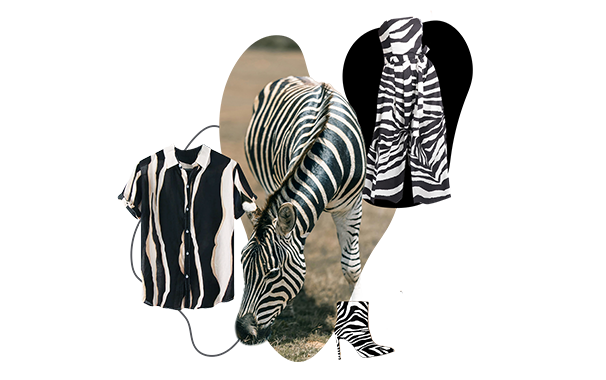
Live together in perfect harmony with a graphic striped look inspired by our beautiful Grevy’s zebras. Chromatophiles, take note: today’s stripes are not strictly black and white! So feel free to horse around in living color. 

LOOK: LUXE 
Michael Kors Crepe de Chine Caftan 
Natori Bustier Palazzo Jumpsuit 
 

LOOK: LESS 
Beachside Bunny Georgia Dress 
Banana Republic A-Line Maxi Dress 

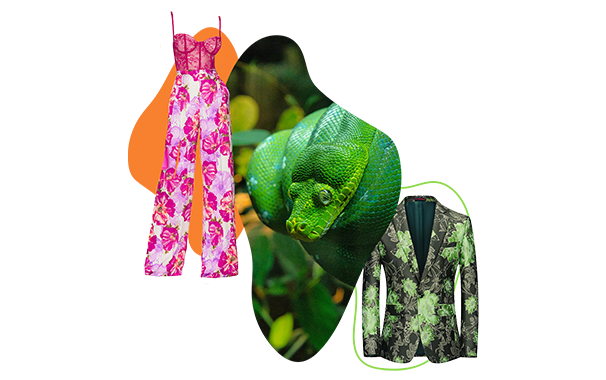
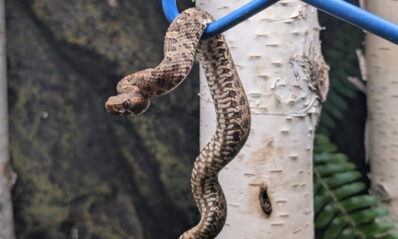
With more than 1,800 animals lavishing in their rainforest homes, our beloved Tropical Discovery habitat is a virtual jungle of fashion inspiration! Pick a lush floral print, a python power suit or whatever suits your fancy. 

LOOK: LUXE 
Katie May Tink Jumpsuit 
Fara Mystic Serpent Maxi
 

LOOK: LESS 
Hello Molly Runaway Paradise Mini 
Zara Snake Print Separates 

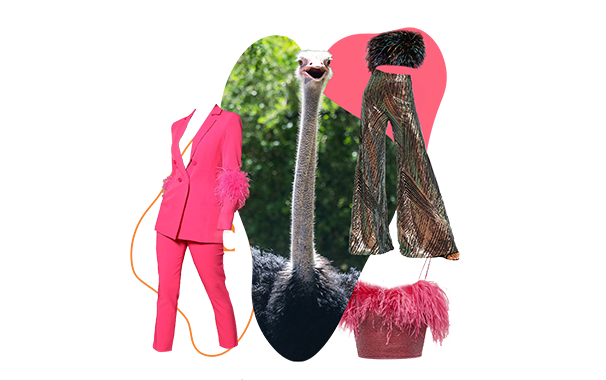
Oh, Dusty—you delightful, dramatic-exit-making, boy-band-loving weirdo! We hope you never, EVER change. We also hope our guests will take inspiration in your downy fluff, falsie-length lashes and color-blocked style.  

LOOK: HIS 
Dolce Vita Colorblock Suit 
French Crown Half-and-Half Separates

LOOK: HERS 
The Label Coime Gown 
Self Portrait Feather Mini Dress 

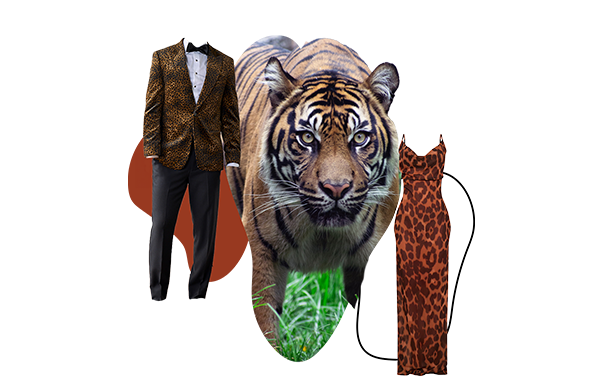
It’s basically a crime to cut big cats out of the Flock Party outfit conversation—at this point, leopard print is considered a neutral! Find some fresh kitty fashion inspiration in these his-and-hers, spots-or-stripes vibes.

LOOK: HIS 
Shinesty Leopard Print Suit 
Opposuits Tiger Royale Sequin Blazer

LOOK: HERS 
Norma Kamali Leopard Jumpsuit 
Retrofête Nicole Silk Chiffon Dress

 
Fashion illustrator Elle Powell will be joining us once again for flash portraits!  
Meet us in Wildlife Plaza to have your Flock Party ‘fit immortalized in pencil and paint.  
Portraits are first-come, first-served and are included with your Flock Party admission. 

Hope’s New Home

With more than a million species in danger of extinction worldwide, many due to devastating habitat loss, zoo-based conservation has become an essential component of long-term species survival. As an Association of Zoos and Aquariums (AZA)-accredited institution, Denver Zoo has long participated in the Species Survival Plan (SSP) to ensure genetic diversity in wildlife bred under human care. But as an urban campus with a finite 80-acre geographic footprint, the space we can utilize to make a significant impact has been historically limited—until now.

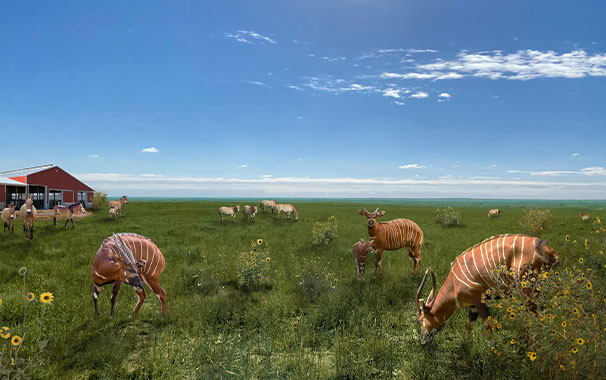
Spanning 570 acres in Weld County, Colorado, the Lembke Family Preserve will allow Denver Zoo to dramatically evolve both our animal care and conservation breeding practices. 

“The Lembke Family Preserve represents the dawn of a new era for Denver Zoo and will dramatically expand our capabilities for our animals and Colorado wildlife as we build it out in the coming years. We are deeply grateful to the Lembke family for their generosity and mutual understanding that saving wildlife for future generations requires a dedicated community of donors, members, partners and neighbors.”   
Bert Vescolani, President and CEO of Denver Zoo.

Phase 1: Holding + Breeding

A recognized industry leader in both animal care and conservation breeding, Denver Zoo is already doing important work on our main campus; imagine what we can do with nearly 7X the space! In PHASE 1 of the Lembke Family Preserve, we’ll be able to expand our current SSP efforts, with more space for our growing animal families as well as the potential to add new species to our program. We’ll also gain greater holding capacity as well as temporary relocations for habitat maintenance or renovation.

Phase 2: Research + Reintroduction

In phase two, the Zoo plans to transform the facility into a conservation center focused on conservation breeding and wild reintroduction of species that are threatened or endangered in Colorado and beyond. The center, both a physical satellite campus and the philosophical heart of present and future conservation collaborations, will allow Denver Zoo to make a more meaningful impact on the future of regionally Threatened and Endangered species in our home state. It will also give us a more robust framework for much-needed conservation breeding research—with the long-term goal of increasing the success of wildlife reintroduction programs in Colorado and worldwide.

Zoo-Based Conservation: Why it Matters

Bob Lembke explained the drive behind the gift: “Denver Zoo has been part of our family tradition since the late 1950s. Both Carol and I loved visiting the old zoo of our childhood, and we took our kids there many times. It’s always a special family outing. With the stewardship provided to endangered species by the Zoo through The Preserve, we hope that the Zoo can be part of our family for generations.” 

As intact wild ecosystems continue to decrease, the number of species that are viable candidates for reintroduction is also in rapid decline. With your help, the Lembke Family Preserve will enable Denver Zoo to scale our leadership in two vital ways. First, our world-class animal care experts will have a spacious secondary campus on which to foster continued health and well-being for our animal family—many of whose species are Threatened or Endangered. Second, in partnership with other organizations, the Lembke Family Preserve will allow Denver Zoo to advance the science of conservation breeding and reintroduction. This critical field of research is a rapidly evolving space, and YOU can be instrumental in this essential phase of discovery.

YOU can make a lasting impact for Threatened and Endangered animals! All visitsmemberships and donations support our wildlife conservation efforts in Colorado + worldwide. For updates on the Preserve and its evolution, be sure to follow us on FacebookInstagramTwitter and TikTok

Last Place on Earth

Indonesia’s Leuser Ecosystem is the last place on Earth where Critically Endangered Sumatran elephants, tigers, orangutans and rhinoceroses coexist in the wild. This remote UNESCO World Heritage site is home to countless fragile habitats and threatened species. Yet due to illegal farming and development, the entire area is in grave danger. That’s six million acres at risk.

When looking for global conservation work to support, Denver Zoo Conservation Alliance specifically seeks out landscapes like Leuser: where there is strong alignment with the species in our care and our new strategy and where we can make a measurable impact with modest resources. The Leuser partnership is just one of several new Field Conservation efforts we’re launching this year throughout Asia. Read on to learn exactly what we’re doing, how—and why!

SUMATRA | CONSERVATION CAPACITY STRENGTHENING

In the Leuser Ecosystem, Denver Zoo Conservation Alliance is excited to be working with Forum Konservasi Leuser (FKL), a passionate grass-roots NGO working to protect this unique area and its wildlife. Through this partnership, Denver Zoo will help FKL build a field station for research and monitoring, assist with the restoration of local habitats and much more.

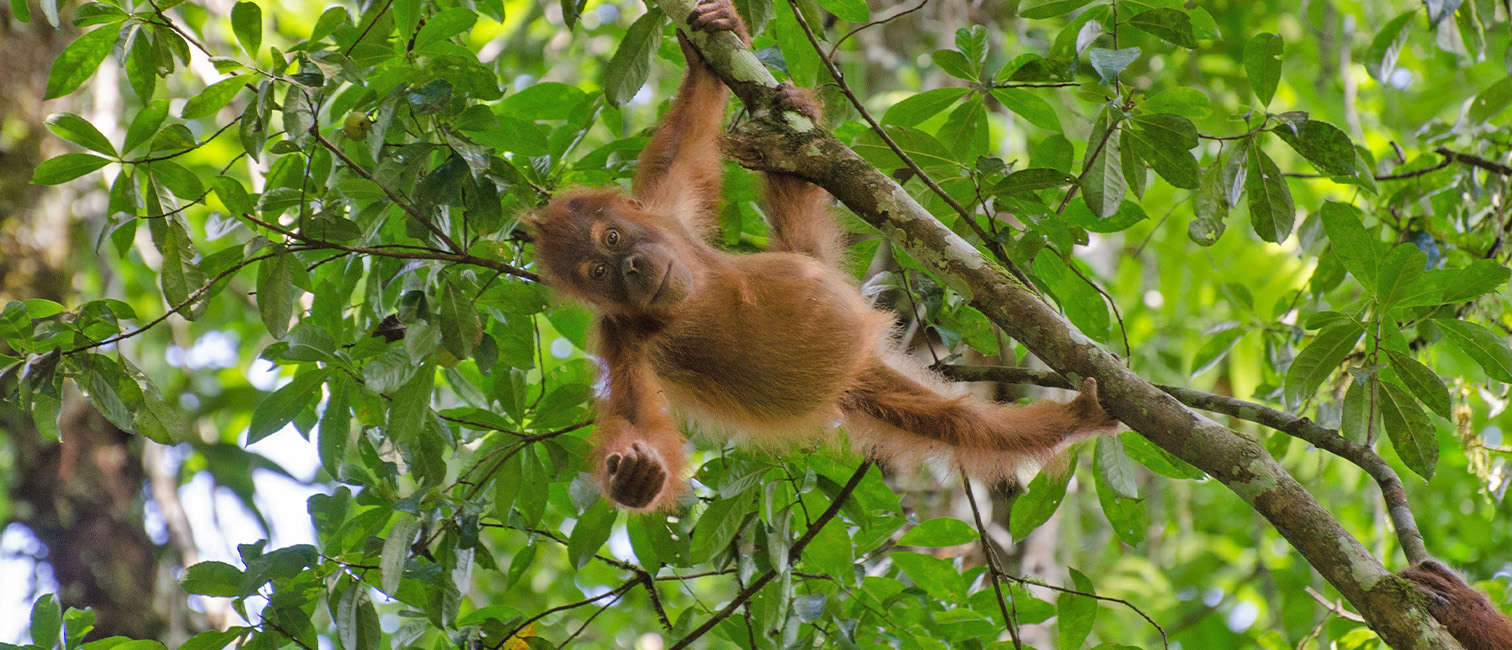
We’ll also support work in surrounding communities in Aceh province, Sumatra, to raise awareness about the long-term effects people have on these fragile ecosystems—with a focus on helping local people secure livelihoods with lower environmental impact. And here at the Zoo, our Sumatran tiger and orangutan family are also raising awareness! By helping our guests form a connection with individuals like ChloJo and Siska, we can spread the word about the dire need to protect their relatives in the wild.

LAOS+ | ASIAN ELEPHANT RESEARCH + EDUCATION

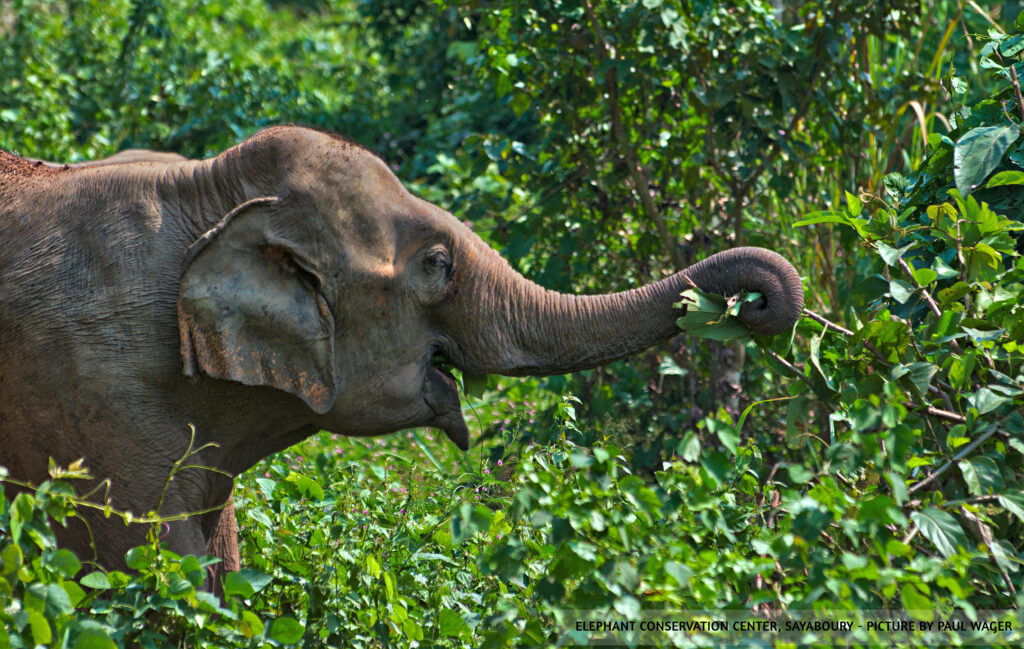
Once called Lan Xang, Land of a Million Elephants, Laos was home to one of the largest elephant populations in Southeast Asia. But today, habitat loss, human-elephant conflict and the illegal wildlife trade have taken a devastating toll. Only about 400 wild elephants remain in the entire country, with the largest group found in Nakai-Nam Theun National Protected Area. More data is needed to address the unique threats to this important elephant population.

We’re proud to partner with Association Anoulak as they study Asian elephant population size, genetic diversity and social dynamics to inform Laos’ National Elephant Action Plan. We’re also working with the Elephant Conservation Center (ECC) to support the education of a Lao veterinarian and lab technician. By providing access to specialized training not currently available at the National University of Laos, this partnership will benefit both the ECC and the Lao conservation community as a whole.

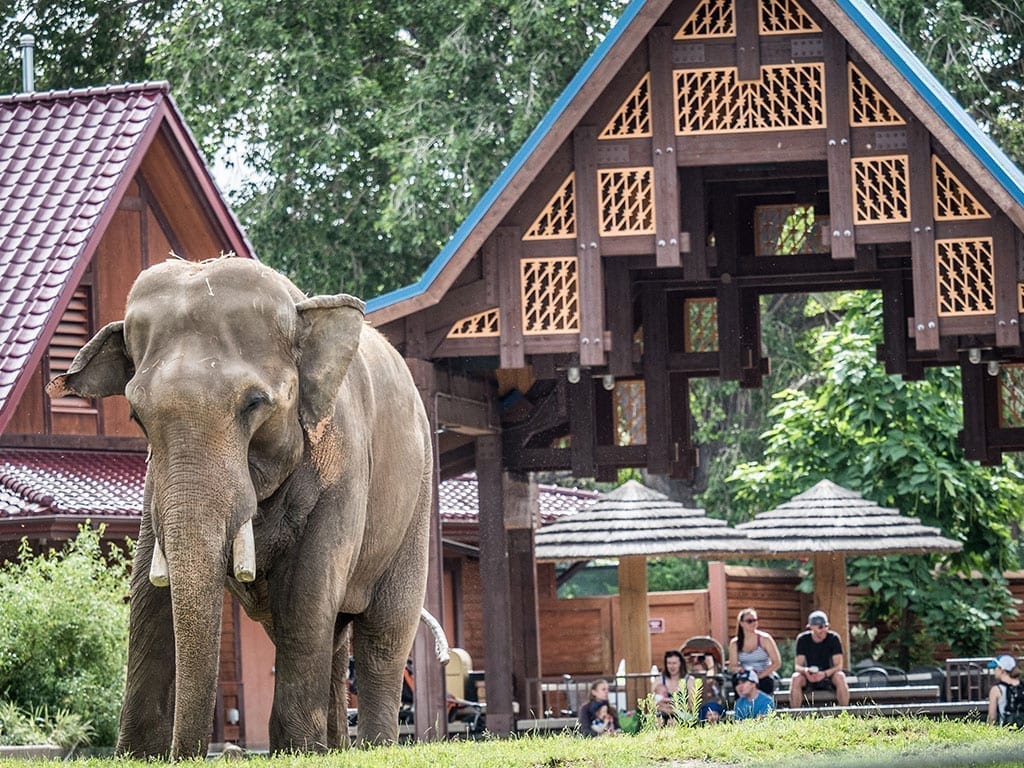
Denver Zoo has also become a Conservation Partner of the International Union for the Conservation of Nature’s Asian Elephant Specialist Group, a group of global experts dedicated to managing and protecting the species across the continent. And right here in Toyota Elephant Passage, Denver Zoo experts continue to study our beloved Asian elephant bachelor herd! Our ongoing findings are shared not only with our colleagues in the Association of Zoos and Aquariums—but with elephant conservation organizations all over the world.

LAOS | NORTHERN WHITE-CHEEKED GIBBON RESEARCH

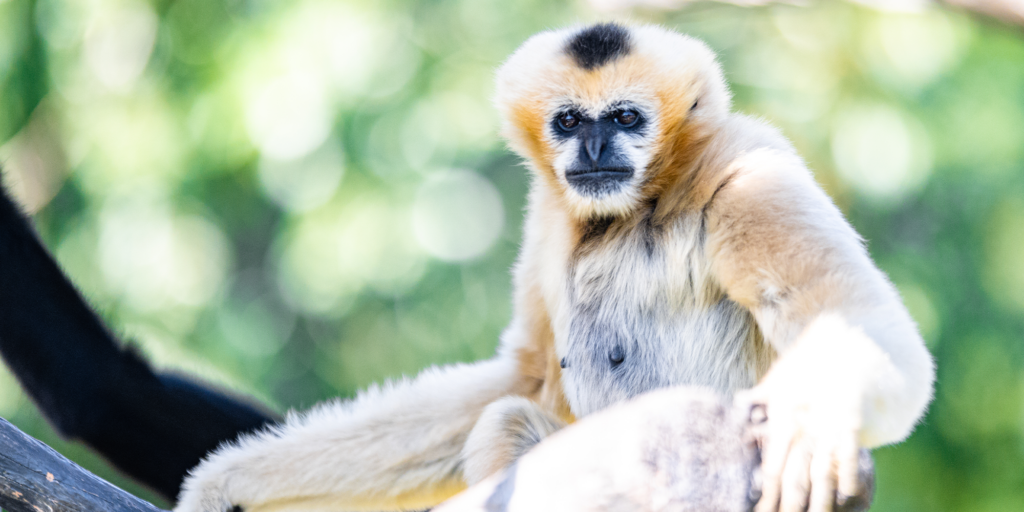
In the dense forests of the natural range of the northern white-cheeked gibbon, they’re incredibly difficult to see—and study! The Annamite Range, which straddles Laos and Vietnam, is one of the last strongholds for this Critically Endangered species. Here, we’ll expand our work with Association Anoulak to support a research program using cutting-edge acoustic recorders. Using sound to monitor gibbon populations isn’t new, but this technology is much more accurate than the previous method: human hearing.

WALKING THE WALK—INTO A GREENER FUTURE

Everything in nature is connected. That’s why our strategy follows the One Health model—a unified approach that connects humans, animals and ecosystems for the health of all. In addition to our work with wildlife and habitats, we must also work with local people to identify and address the root cause of threats. The goal? A world in which humans and animals can share resources in a way that’s sustainable for both. There’s much work yet to be done. Our new partnerships in Asia are only part of the bigger picture…stay tuned for more announcements!

Wondering how you can help? All visitsmemberships and donations support our wildlife conservation efforts in Colorado + worldwide. For updates on our conservation work, be sure to follow us on FacebookInstagramX and LinkedIn. 

Your besties + Glowing Wild Adult Night? Sounds like the best of both worlds to us! Join us on April 2 and May 7 for a glowing, kid-free evening. Visit denverzoo.org for tickets and more info! ✨🤩🫶 

#glowingwild #denverevents #denverzooconservationalliance #denver #adultnight #kidfree
Happy birthday to Bailey and Kerry, our brown capuchin mother-daughter duo! 🎉🐒 

Kerry is celebrating 39 and Bailey just turned 44, making Bailey not only the oldest member of her troop, but the oldest primate at DZCA! 

To celebrate this incredible milestone, our team decked out their habitat with festive decorations and special frozen treats filled with juice, fruit, and nuts. 

With brown capuchins typically living 35–45 years in human care, these milestones are truly remarkable. We’re proud to provide them with the specialized care they need to thrive in their golden years. 

Join us in wishing these two a very happy birthday! 🎂 

🎥: Animal Care Specialist Daria G.
We’ve got some jaw-some news! Five epaulette shark pups have hatched in Tropical Discovery! After about five months of incubation inside their “mermaid’s purses,” these tiny sharks have officially entered the world. 

Two of the pups are already on exhibit, with the others potentially joining them soon, so keep an eye out during your next visit! 

Epaulette sharks are famous for their ability to “walk” along the seafloor using their fins, helping them navigate shallow reef habitats where other sharks can’t survive. Even as babies, they’re built for life in these ever-changing environments. 

Stop by Tropical Discovery to catch a glimpse of these incredible new arrivals! 🦈 

Baby Bulletin presented by Intermountain Health. 

#DenverZooConservationAlliance #SavingWildlifeTogether #Sharks #EpauletteSharks #BabyShark
Down Under is Open

COME SAY G’DAY

Explore Down Under with Marvelous Marsupials and Other Species Native to Australia and Surrounding Regions

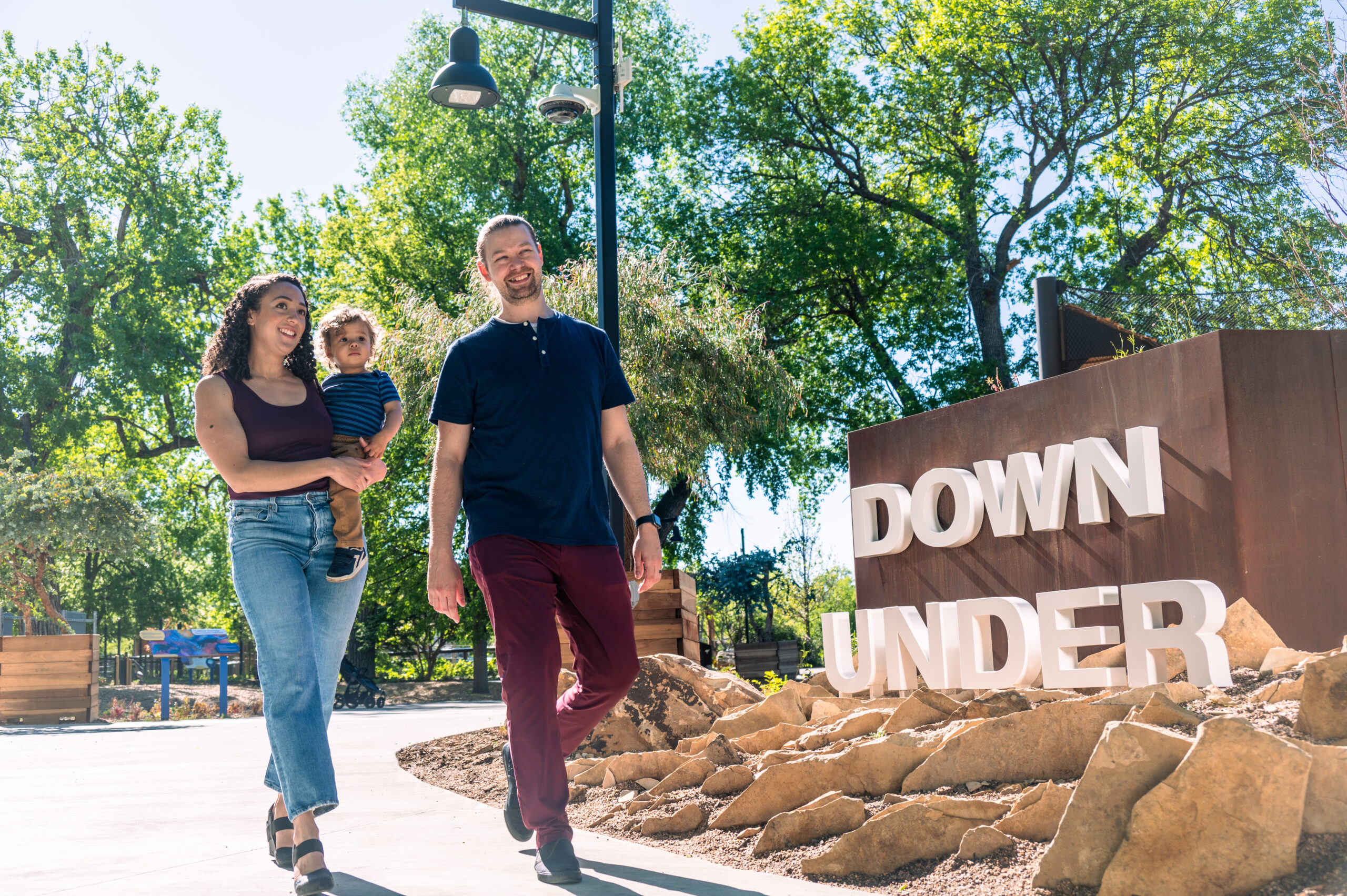
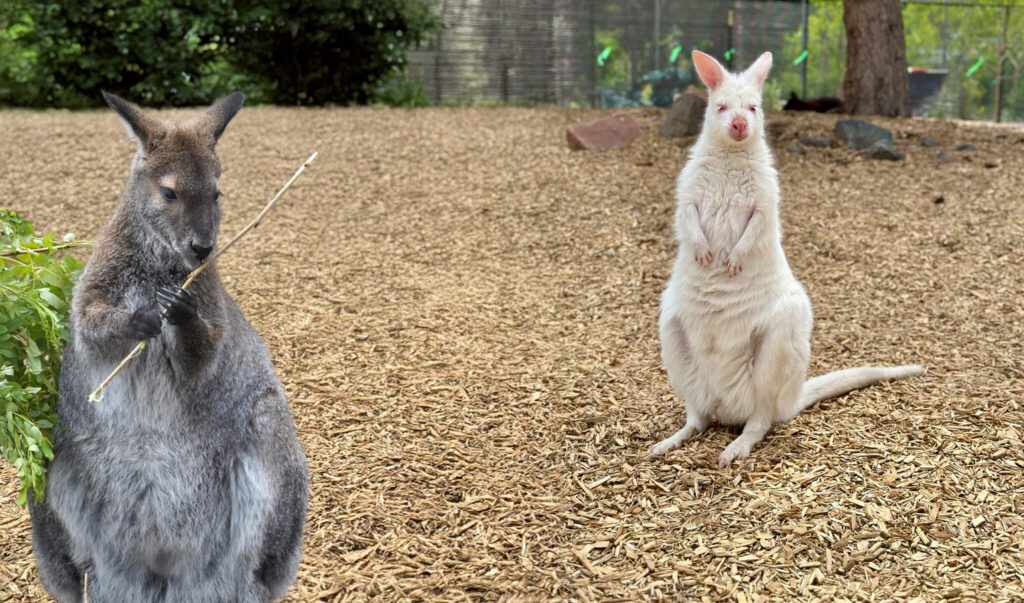
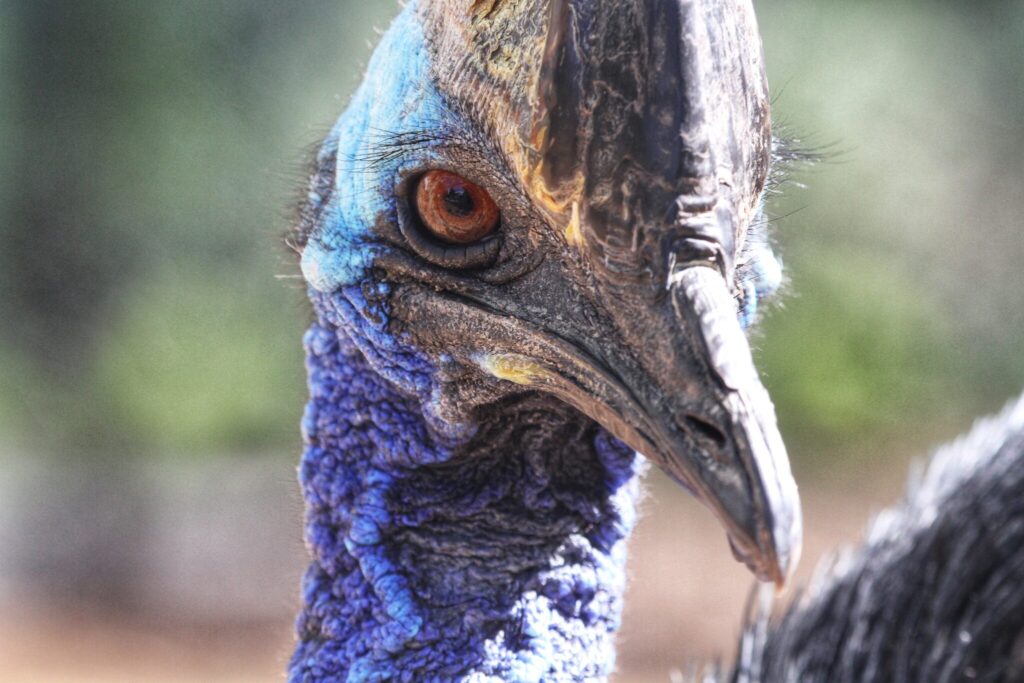
Down Under, the Zoo’s newest multi-species habitat, opens on May 24. Members and guests can explore Wallaby Way, an immersive pathway experience where they’ll get up close with our red-necked wallabies and red kangaroos, and get to say g’day to adorable tree kangaroos and bright-blue cassowaries. This new habitat encompasses the former site of Bird World and part of the historic pachyderm habitat, and makes up more than two acres of our 80-acre campus.

A NEW HOME FOR AUSTRALASIAN SPECIES 

In addition to Wallaby Way, where guests will gain insight into the world of wallabies and kangaroos and the crucial role they play in their ecosystem, they’ll also observe Huon tree kangaroos Pearl and Tristan, who both arrived in 2023 and are a new species at the Zoo. As an endangered species from Papua New Guinea, Huan tree kangaroos are unique and rare (and adorable). Down Under also provides a new home for cassowaries Neville and Salem with more space for potential conservation breeding in the future as part of their Species Survival Plan through the Association of Zoos and Aquariums.  

SHARING THE FIRST NATIONS PEOPLES’ STORY  

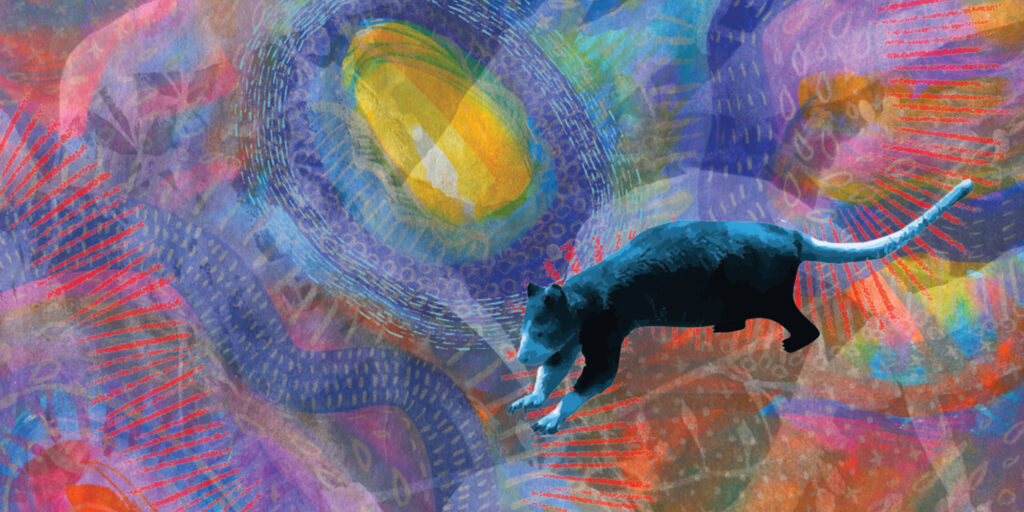
Down Under reflects our commitment to sharing First Nations peoples’ perspectives to highlight the connections people have to nature and place, and stewardship of wild lands. In building the Down Under story, we worked closely with First Nations advisors, including Artist and Poet Kirli Saunders, a proud Gunai woman with ties to the Biripi, Gundungurra, Yuin and Dharawal peoples of the east coast of Australia. Kirli helped reimagine the Down Under habitat through art and engaging with First Nations Traditional Custodians to integrate a cross-cultural exploration of connection to—and care for—Country. Her murals in Down Under replicate palettes from the Australian landscape and emphasizes the relationships of culturally significant species with native plants, bush medicines and community.  

IT’S ALSO ABOUT THE FLORA  

From rock materials recycled from other projects within the Zoo to a recycled water irrigation that will save millions of gallons of potable water each year, everything in Down Under is done with sustainability in mind. And although most of the plants used in the landscape are not native to Australia, our horticulture team took great care to select species native to Colorado that are hardy in our climate and have the “look and feel” of Australia. This results in a landscape that conserves water, provides habitat for pollinators and invertebrates, and contributes to a healthy ecosystem on campus. 

Denver Zoo received more than $1.5 million in community support for the construction of Down Under as part of our “Into the Great Wild Open” campaign, which supports all the great work we do, including access and education, animal care and new animal habitats and field conservation and sustainability efforts. For more information and to purchase tickets, visit DenverZoo.org.

For updates, be sure to follow us on FacebookInstagramX and LinkedIn. 

African Impact

This year, Denver Zoo Conservation Alliance (DZCA) is expanding our global wildlife conservation efforts with two new programs in Africa—one, to help protect Endangered mountain gorillas, and another to preserve wild populations of Endangered grey-crowned cranes.

Conservation Through Public Health

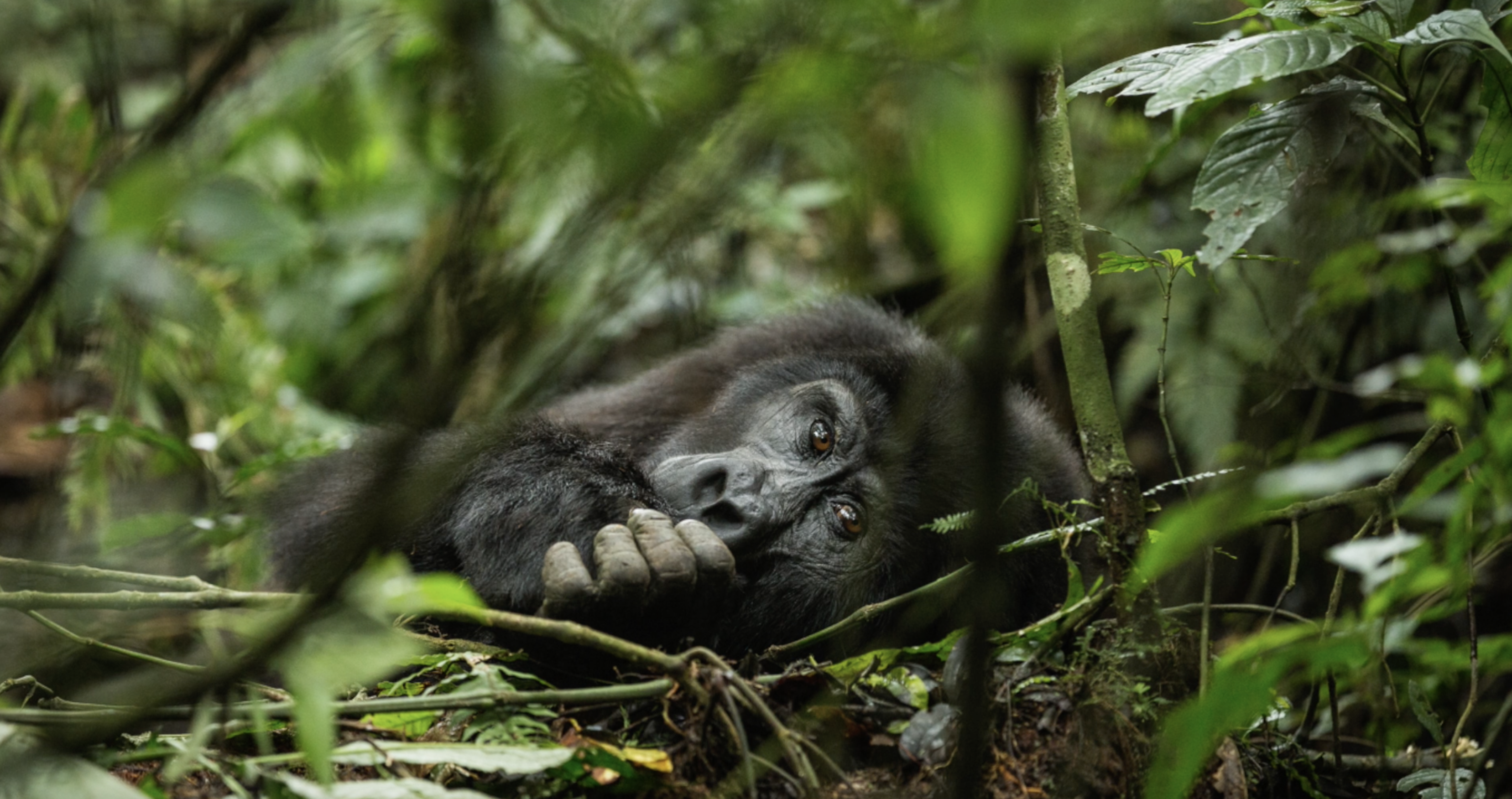
We’re honored to provide world-class animal care to Critically Endangered western lowland gorillas. But more than 8,500 miles away, in Uganda’s Bwindi Impenetrable National Park, their wild counterparts face a variety of threats. Through our new partnership with Conservation Through Public Health (CTPH), an organization focused on the interdependence of wildlife and human health in and around Bwindi’s protected areas, DZCA and our partner will be working towards sustainable solutions. 

CTPH regularly monitors the health of habituated Bwindi gorilla groups through fecal samples, engages with local villagers on zoonotic disease prevention, trains rangers and porters on best practices for gorilla engagement with tourists, and supports livelihood projects for the local community. By funding a veterinary technician’s salary for one year, DZCA will ease the workload of the organization’s current team as they continue to monitor the health of mountain gorilla groups in the region. The Zoo is also looking for future opportunities to support CTPH in multiple ways as they continue their important work with the hopes of expansion to other areas where gorillas are found.  

Rwanda Wildlife Conservation Association

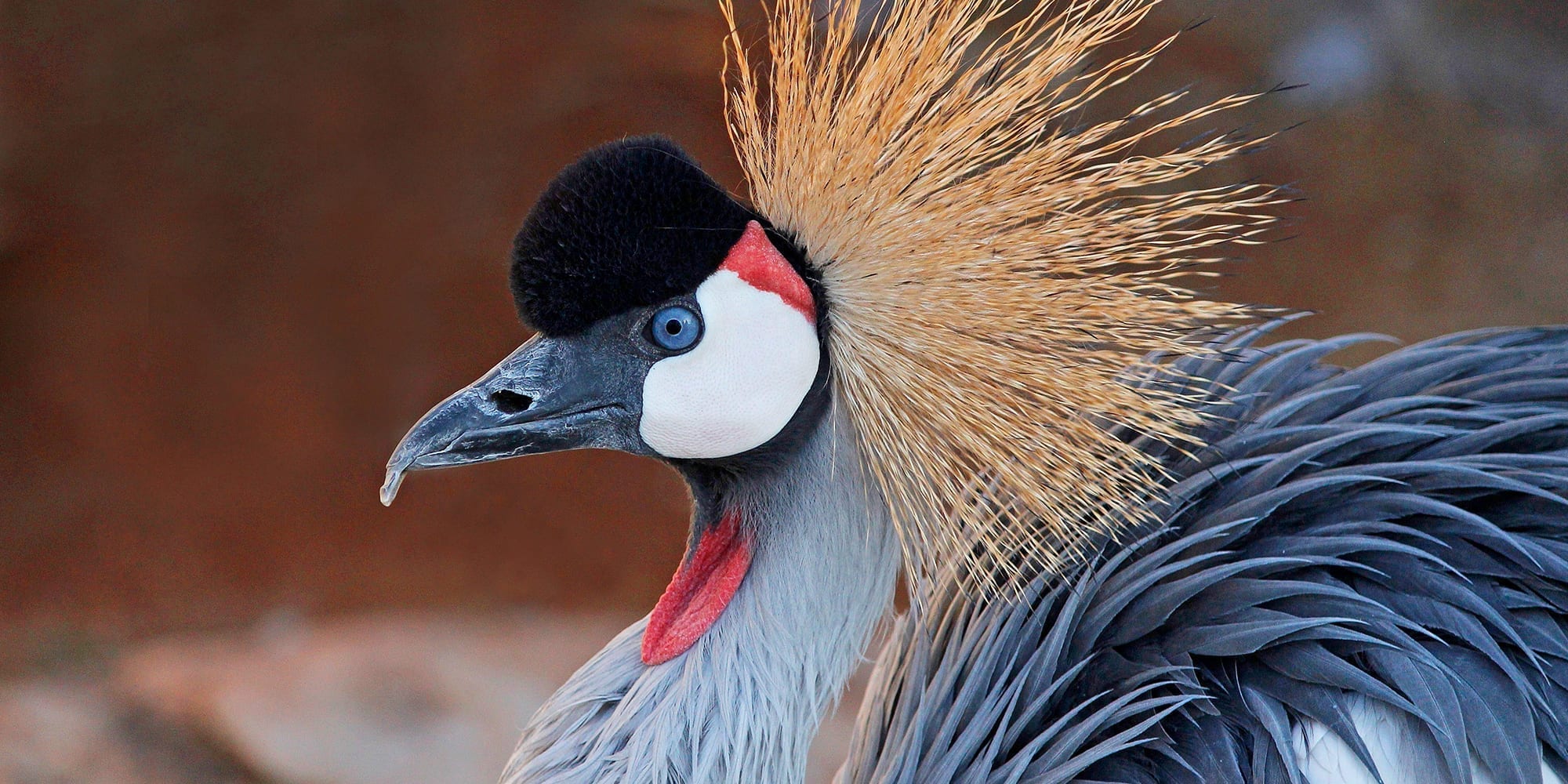
The Zoo is also partnering with Rwanda Wildlife Conservation Association (RWCA) to help protect Endangered grey crowned cranes. which face threats from human-wildlife conflict and the illegal wildlife trade. RWCA continues to expand its crane conservation program through a trans-boundary partnership with Nature Uganda, Nature Tanzania and the International Crane Foundation that employs local people as “Community Conservation Champions” to survey and monitor crane populations and raise awareness with their fellow community members. The Zoo’s investment in RWCA will support these champions and provide field supplies for one year, contributing to the program’s efforts to increase the cranes’ numbers across their ranges in three East African countries.  

Global Conservation: An Inside Job

Like the Asian field conservation initiatives, both of our African programs are rooted in capacity strengthening—using our knowledge and resources to support the skills, abilities, processes and infrastructures of the organizations already doing incredible work in their respective fields.

Wondering how you can help? All visitsmemberships and donations support our wildlife conservation efforts in Colorado + worldwide. For updates on our conservation work, be sure to follow us on FacebookInstagramX and LinkedIn. 

Denver Zoo Announces AZA Accreditation

We’re thrilled to announce that Denver Zoo has achieved accreditation by the Association of Zoos & Aquariums (AZA). This prestigious accreditation reflects our unwavering commitment to animal care, wildlife conservation, education, science, and recreation. We’ve undergone an extensive and comprehensive evaluation of our operations and programs, resulting in a well-deserved five-year accreditation. This reaffirms our position as one of the top zoos in North America and a leader in animal care and conservation. Denver Zoo has maintained its status as an AZA-accredited facility since it was first accredited in 1976.

“AZA accreditation is the ultimate stamp of approval for our profession, and assures our guests and members that we’re providing the best possible care for our animals and creating a safe, enjoyable experience for our community. We’re beyond proud to be among the very few zoos and aquariums in the world that maintains such a high standard across our programs and operations.”  
Bert Vescolani, President & CEO of Denver Zoo.

It’s worth noting that fewer than 10 percent of the 2,800 wildlife exhibitors licensed by the United States Department of Agriculture (USDA) under the Animal Welfare Act meet the comprehensive standards of AZA accreditation. As an accredited organization, we’re subject to evaluation every five years by a team of expert inspectors who assess animal welfare, care, and management, including living environments, social groupings, health, and nutrition. They also evaluate all other aspects of our operations, from our involvement in wildlife conservation and research to our guest services, education programs, and finances.

We believe this accreditation process is of utmost importance. Every year, AZA sends over 200 accreditation inspectors worldwide to review applications, and we have nearly 40 facilities participating in our Pathway Toward Membership program, reflecting the growing significance of independent accreditation. AZA’s standards are continually updated to incorporate cutting-edge zoological practices based on the latest animal well-being science and research, attracting the best-of-the-best zoos and aquariums to be part of our association.

In addition to our AZA accreditation, Denver Zoo earned the American Humane Certified™ seal in 2020 for our exceptional treatment of the animals in our care. This achievement, similar to an AZA inspection, required us to pass rigorous, expert third-party audits. We join a distinguished group of leading zoological institutions that have received the American Humane Certified™ designation.

Eirina’s Baby Bliss

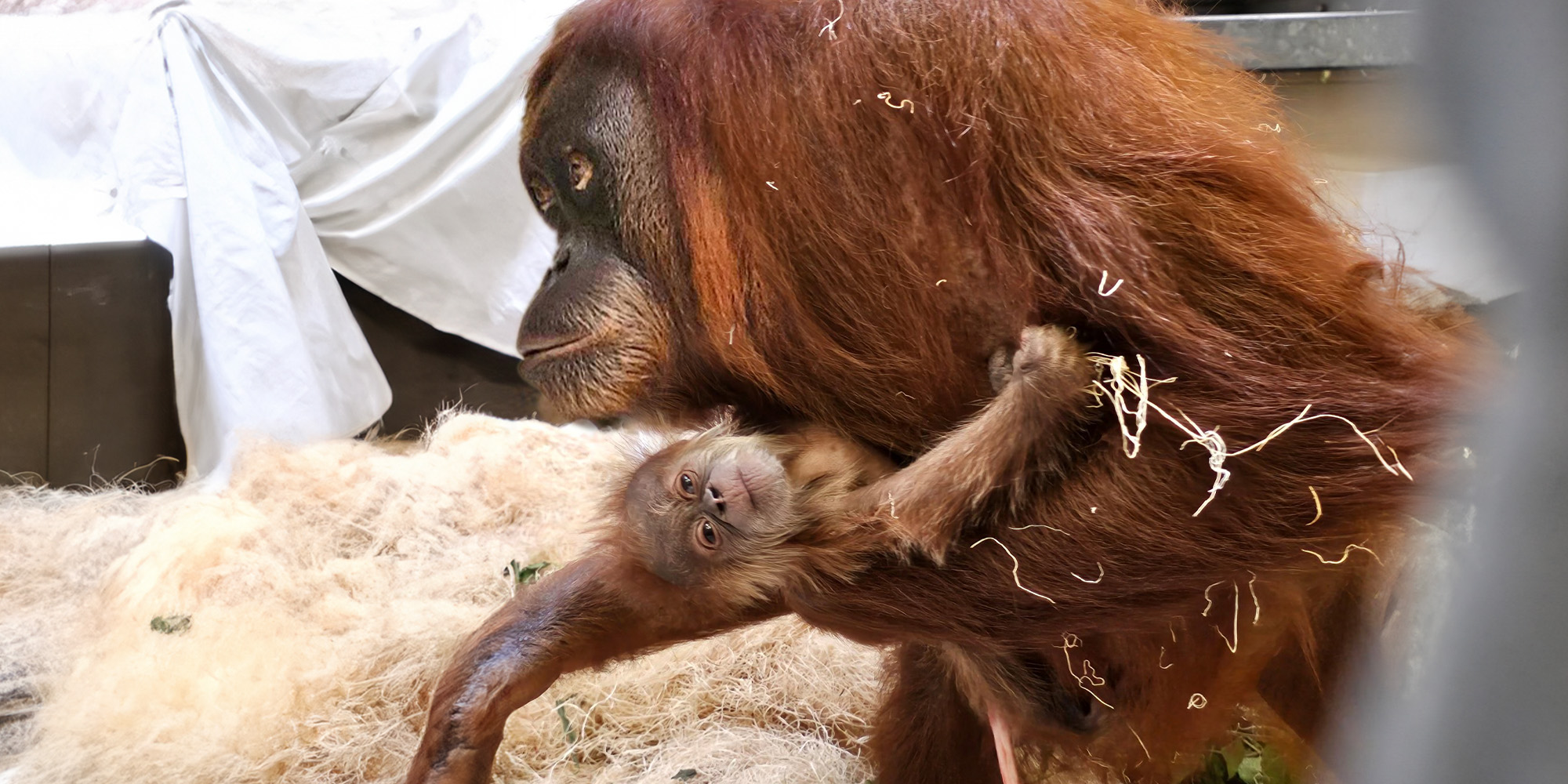
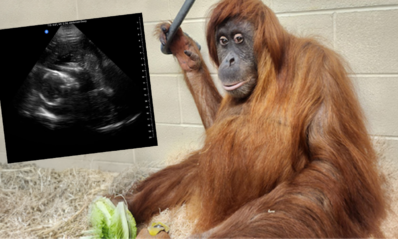
We’re beside ourselves with joy…our Sumatran orangutan sayang (baby) arrived on Sunday, August 27! You may be able to catch a glimpse of the adorable “redhead with bedhead” as she bonds with mom Eirina and endures the sweet (and persistent) curiosity of the rest of the family. 

Our animal care and health teams report that mom and baby—who is believed to be a female, and whose name is yet to be determined—are thriving in their Great Apes habitat in Primate Panorama. This is Eirina’s first baby after receiving a breeding recommendation as part of the Sumatran Orangutan Species Survival Plan and provides an invaluable boost to the Critically Endangered species. Our animal health team will be conducting a DNA test in the coming weeks to determine whether the baby’s father is 30-year-old Berani, or 15-year-old Jaya. 

Eirina joined us from Germany’s Dortmund Zoo in 2016, and has since enjoyed spending time with the Zoo’s other female orangutans—including Hesty (13) and Cerah (5). Shortly after we announced Erina’s pregnancy in April, the mom-to-be and her care team made national news when Animal Care Specialist Cindy Cossaboon was able to soothe the first-time mom’s morning sickness by making her the same tea she drank when pregnant with her own daughter. 

The birth of a healthy Sumatran orangutan baby marks a momentous occasion, both for Denver Zoo and the global conservation community. Sumatran orangutans are listed as Critically Endangered by the International Union for Conservation of Nature (IUCN) with a rapidly declining wild population due to habitat loss, illegal hunting and the black-market pet trade.  

At Denver Zoo, all babies are precious—but there’s even more cause for celebration when we get a win for a Critically Endangered species. As a non-profit conservation organization, we rely on YOU, our beloved community to support the essential work we do on campus, across Colorado and around the world. Please consider donating to our Orangutan Baby Registry and stay tuned for more updates! 

We hope you’ll swing by soon to see the new baby! Remember, your visit supports our wildlife conservation efforts in Colorado + worldwide. Be sure to follow us on FacebookInstagramTwitter and TikTok for updates on our 3,000 wonderful animals. 

Denver Zoo Debuts Boreal Toad Community Science Effort

By: Sam Hengge, Boreal Toad Project Assistant

How do modern zoos and aquariums meet the challenge of involving local communities in conservation efforts? One way Denver Zoo’s conservation team has sought to meet this challenge is through a brand-new community science program focused on Colorado’s endangered boreal toad (Anaxyrus boreas boreas). As a part of their participation with “Team Toad,” volunteers from throughout Colorado have been learning how to survey a variety of high-elevation wetlands in search of this rare amphibian. Within one summer of launching the program, community science efforts have already begun making an impact. 

Once widespread at elevations of 8,000-12,000ft in the southern Rocky Mountains, the boreal toad has largely disappeared from its historical range across the west. While boreal toad populations vary across surrounding states, in Colorado there are approximately 800 adult boreal toads remaining. Boreal toads are largely threatened by habitat loss and chytridiomycosis, a fungal pathogen leading to the decline of many amphibians worldwide. With over half of their breeding sites positive for chytrid, boreal toads have been largely susceptible to this disease. 

To help bring the boreal toad back from the brink of extinction in Colorado, Denver Zoo began assisting Colorado Parks and Wildlife in their conservation efforts by implementing a captive breeding program. Denver Zoo’s interest in boreal toads originally began in 2010 with a set of Utah boreal toads that were successfully bred and reintroduced in 2019. Following the success of these efforts, Denver Zoo shifted their focus towards Colorado boreal toads in 2022, leading to the successful breeding and reintroduction of their tadpoles/metamorphs back into the wild.  

To supplement captive breeding efforts, Denver Zoo also debuted a boreal toad community science project in the summer of 2022. After putting out the call for “Toad Trekkers,” Denver Zoo staff trained 76 interested community science volunteers from across the state to conduct amphibian surveys among target wetlands. Participants learned how to distinguish boreal toads from other amphibians and were taught how to swab specimens for chytrid. Additionally, volunteers conducted waterbody assessments for evaluating the quality of wetland habitats as potential reintroduction sites.  

In August 2022, a small group of Denver Zoo staff and volunteers found a boreal toad near Buena Vista, CO in a wetland where the species was believed to be absent after years without any sightings. As a result of this discovery, Colorado Parks and Wildlife altered how they were managing the wetland by halting a toad-stocking that had originally been planned in the area.  

This past summer, in addition to training a new round of “Toad Trekkers,” Denver Zoo surveyed a new set of wetlands with community science volunteers and made additional boreal toad discoveries. Following the success of the last two field seasons, Denver Zoo’s conservation team is hopeful that community science efforts will continue having a positive effect on boreal toad conservation in Colorado.  

 Remember, your visit supports our wildlife conservation efforts in Colorado + worldwide. Be sure to follow us on FacebookInstagramTwitter and TikTok for updates on our 3,000 wonderful animals. 

It Will Take All of Us to Save Elephants

By: Lynn Von Hagen, Regional Conservation Director – Africa and Angela Yang, Director of International Field Conservation

World Elephant Day 2023 is the perfect time to reflect on the need for interdisciplinary collaborations to protect the world’s elephants. Three elephant species remain in Asia and Africa, all of which are threatened by habitat loss and fragmentation, human-elephant conflict, and climate change. However, each species has its own unique geographic pressures and life-history traits, causing the conservation of elephants to sometimes seem an insurmountable challenge.  

So, how does the world take on the daunting task of making sure these iconic, intelligent, “gardeners of the forest” roam the Earth for perpetuity? An increasingly prominent issue is the concept of “coexistence” as fragmented and degraded habitats increase the proximity and encounters between communities and elephants. Elephant conservation is complex, and as conservationists we often seek solutions in isolation. A holistic, collaborative approach, bringing some of the world’s greatest minds together is what it will take; each discipline contributing an important piece to solving one of conservation’s enigmatic problems.   

An interdisciplinary approach to elephant conservation would involve leveraging the resources of multi-lateral agencies, the expertise of Indigenous and Western scientists, with the participation and support of local people who live alongside elephants. Denver Zoo’s field conservation strategy aligns with these ideals and supports locally based organizations working in elephant conservation and have recently entered a partnership with the IUCN’s Asian Elephant Specialist Group. Zoo-based Conservation Organizations (ZBCOs) often go overlooked for their investment in global community-based conservation programs and their unique role in educational opportunities with the public. Systems thinking applications used by academics or conservation planners can help to map out potential drivers of conflict. Social scientists can work with local communities (using free, prior, informed consent (FPIC)) to understand community perspectives to co-develop sustainable solutions. Agricultural agents and experts could propose multiple solutions that reduce crop losses from elephant foraging and provide resilience to other environmental threats. However, without local communities’ involvement, our best efforts at conserving elephants will fail.  

It will take many disciplines to address the complexities of conserving the world’s largest land mammals. Indeed, it will take all of us working together to save elephants.