Meet the Flockers

FASHION INSPO FOR EVERY FLOCK PARTY PERSONA

September will be here before you know it, and that means all you fancy flockers had better start thinking about your Flock Party finery! Fortunately, there are zero hard-and-fast RULES governing the dress code for this event-it’s more like a loose set of V I B E S, the top two being fun and colorful. But for those of you who need more to work with than “Golden Girls décor, but make it fashion,” we’ve put together a few style personas to help you rock…er…flock…your ‘fit.

The Tropical Flocker

Kerry Horizontal2

STYLE ICON

Kerry Washington

BRAND INSPO

Farm Rio, Hemant & Nandita, Anthropologie

LOOKS FOR LESS

Sugarhill Brighton, Hello Molly, H&M

It should go without saying, but we’ll say it: animal prints are ALWAYS welcome at a Zoo soirée, and even more so if they’re expressed in a punchy Lisa Frank palette! The same applies to jungly tropical prints: the bigger the better. We want ’em bursting with oversized palms and bombastic blooms. And, because too much is just enough, let’s pile on the wooden beads…lace up those metallic gladiator sandals…then top it all off with a pretty pom-pom clutch!

The Coastal Flocker

Reese Horizontal2

STYLE ICON Reese Witherspoon BRAND INSPOLily Pulitzer, Tuckernuck, Draper James, Vineyard VinesLOOKS FOR LESSShop Chartreuse, Mint Julep, Pink’s Boutique

We’re unsure precisely when the classic, southern, beachy and preppy aesthetics put their bright-blonde heads together to create the look broadly defined as “coastal,” but like a gimlet on the veranda, it always goes down easy! Think: seaside stripes, scalloped hems and candy-colored florals-all deployed in feminine silhouettes that positively demand a tassel earring, an espadrille wedge and a basket bag. Bonus: coastal looks also pair perfectly with flat sandals, which make it MUCH easier to experience this 84-acre fête.

The Modern Flocker

Zendaya Horizontal2

STYLE ICON Zendaya BRAND INSPOBlack Halo, Milly, Karen MillenLOOKS FOR LESSLulus, Etsy, Petal & Pup

LE SIGH…sadly, we don’t all get to be Zendaya in Valentino at Paris Fashion Week. But we can certainly dream, can’t we? And a wonderful way to do that is to serve a sleek, monochromatic look as you swan around with your favorite flockers. We love co-ords of all kinds, from crop-skirt combos to tank-and-trouser sets to full-on pantsuits like Ms. Z’s. We also adore a one-and-done situation-just be sure to use the buddy system for bathroom runs. PRO TIP: If your look demands a heel, make it a sturdy block-heel bootie or platform pump.

The Conscious Flocker

Zooey Horizontal2

STYLE ICONZooey DeschanelBRAND INSPOTheRealReal, Rent the Runway, Common ThreadsLOOKS FOR LESSPoshmark, Mercari, thredUP

There are SO MANY good reasons to shop sustainably, whether you’re choosing rental, vintage, resale or shopping with a company like Reformation, which crafts fresh designs exclusively from deadstock fabrics. Of course, it’s better for our planet and the beautiful beings that inhabit it-including our beloved flamingo fam! But much like Flock Party, responsible retail gives you the opportunity to turn some heads AND do some good, while dabbling in brands that might not otherwise be in your budget…often without a long-term commitment. Win-win-win!

Flockin’ Man-Candy

Harry Horizontal2

STYLE ICON Harry Styles LOOKS WE LOVESmiffy’s, OppoSuits, Asos, Express, Twisted Tailor

Let’s not forget our fabulous male-identifying friends! Many of the ideas above play nicely with men’s fashion, too-including bold suits, color pops and wild prints. We especially love a high-low look (think: tuxedo pants with bright high-tops) but preppy mainstays like gingham, madras and seersucker are clutch last-minute options. Shout-out to all the other red-carpet rebels (Momoa! Chalomet!) who are out there normalizing pink, patterns and more for men.

BONUS: Lazy Flocker Cheat Codes

Not up for the whole flockin’ fashion journey? We feel that. Luckily, there are a couple of foolproof “cheat codes” that can significantly streamline your shopping experience. Dust off ye olde fascinator, because the first one is DERBY! If you’ve ever attended a Kentucky Derby party, chances are, the outfit you wore is at least 78% flockadelic-and if you haven’t, dumping “derby outfit” into your search bar will get you very close to Flocktown.

The second is BARBIE; the release of the new Barbie movie in July has sparked countless collabs and inspired-by collections. Keep your eyes peeled for these limited-edition, predominantly pink pieces and you’ll be well on your way! See you in September!

Capture the Moment
Website Flock Illustrator samples small Horizontal

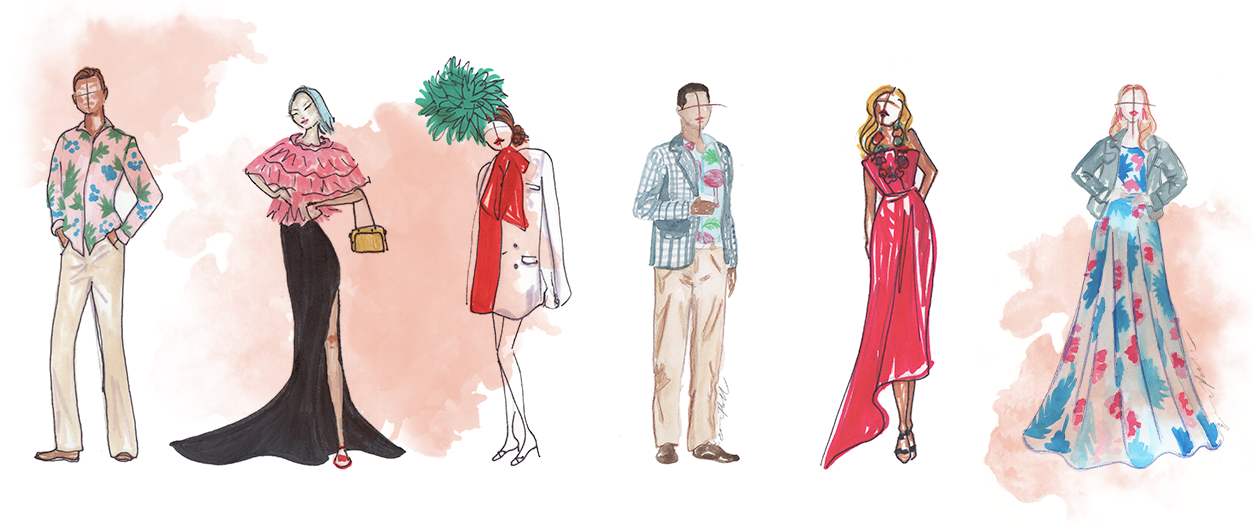
Esteemed editorial fashion illustrator Elle Powell will be doing LIVE watercolor portraits at Flock Party. Get your event tickets now and stay tuned for details on this exclusive party perk!

We can’t wait to see your smiling face! Remember, your visit supports our wildlife conservation efforts in Colorado + worldwide. Be sure to follow us on Facebook Instagram, Twitter and TikTok for updates on our 3,000 wonderful animals.

Subscribe

Be first to hear the latest animal updates, important stories and details about all the fun happening around Denver Zoo. Subscribe
Rowdy Research

By Maura Davis, Curator of Large Mammals 

“Where are your females?” 

“Why don’t you have babies?” 

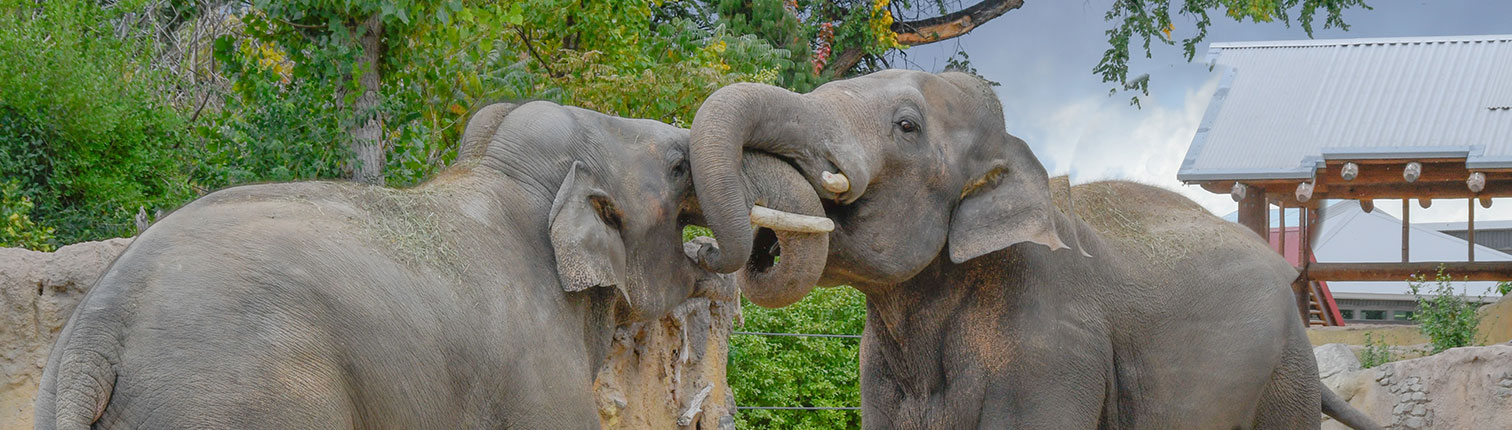
These are among the most common questions we get at Denver Zoo about our Asian elephant herd, and while our answer isn’t always what a guest is looking for (we don’t house females, so no babies here!), the way we take care of elephants in Toyota Elephant Passage is part of a larger goal to better understand male elephant socialization in the wild, and in human care.  

Toyota Elephant Passage opened at Denver Zoo in 2012 and was specifically designed to hold bulls.  In 2016, we started socializing male Asian elephants and our team of elephant care specialists  dedicated their time to learning as much about the integration process and consequences of those interactions as possible. Many zoological institutions that are housing male elephants often experience difficulties in socializing them as they get older due to numerous changes that occur as they mature, the most significant being their annual hormonal cycle called musth.   

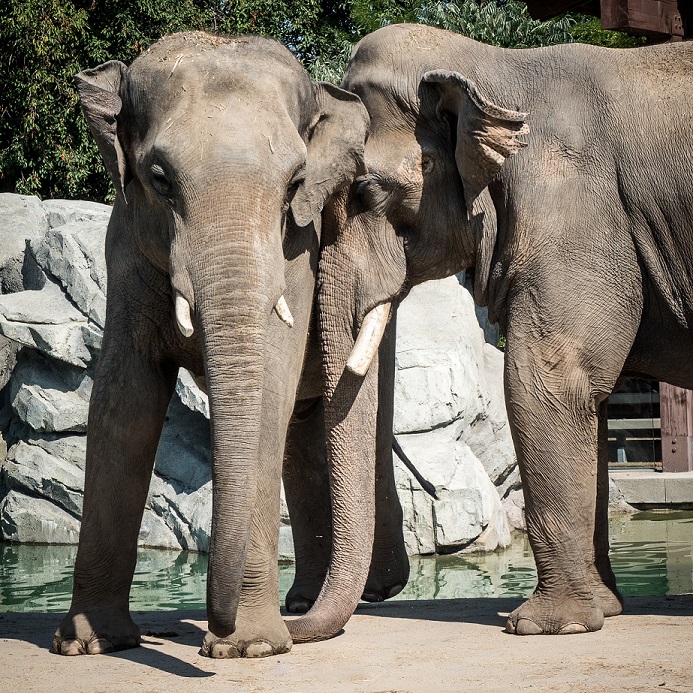
The social structure of the herd in Denver was specifically designed to have a mature male (Groucho, age 53), who can teach and lead with patience and appropriate dominance, and a range of younger bulls who recently left their family groups to come and learn from Groucho’s teaching. As these younger males mature, they could be recommended to move elsewhere to a breeding institution to continue working with the Association of Zoos and Aquariums’ Species Survival Plans efforts to keep genetic diversity within the AZA’s Asian elephant population. As more male elephants are born, there will be a growing need for other institutions to house multiple male elephants, so learning best management practices and the importance of social hierarchy are important to set those other facilities up for success in the future.  

Denver Zoo has been working with researchers over the last several years to study multiple aspects of male management, and recently published a study titled “Age and Social History Impact Social Interaction Between Bull Asian Elephants at Denver Zoo.”  In this study, we found that behavior significantly changed when the mature male was present and that including at least one mature male in social groupings may reduce competition between adolescents. This has helped us understand how to best set up introductions of new elephants into our herd by starting with the the most mature male to help guide appropriate interactions when a new bull is establishing himself in the group. 

While this research helps us understand our own herd better, it will also be used worldwide to support the care of elephants in their native ranges, and in other accredited institutions. In India, the research is able to help guide governmental policy regarding the removal of adult males from groups of younger males in wild herds. Young males without the guidance of an adult bull show more tendencies to raid crops and cause damage in populated areas.  

We were able to see this research in practice with the arrival of our newest juvenile, Duncan. Duncan has only been at Denver Zoo for two weeks, but is already acclimating well with members of our herd, thanks to the work of our elephant care specialists. He spent his first day with Groucho to ensure Duncan had the mature male as support to help guide appropriate introductions to the younger elephants.  He has since met 14-year-old Chuck and 13-year-old Jake while under Groucho’s guidance. Our animal care specialists will continue to introduce him to other members of the group as he settles in.  

Research is a time-consuming process, but the insights gained, and the ability to share them with other organizations caring for Asian elephants, are invaluable. And thanks to our dedicated team, we now know more about male Asian elephant socialization than we ever have.  

Other Duties as Assigned

[link_to_contenthub_landing]

How Denver Zoo Encourages Everyone to Get Involved with Conservation 


By: Kellie Burch
 

When I applied for the role of Marketing Manager at Denver Zoo, I wasn’t expecting that one day I’d be logging data about wild kea in New Zealand as part of my job. But that’s exactly what I found myself doing in 2021, when my manager suggested I apply to be a Kea Database Assistant.  

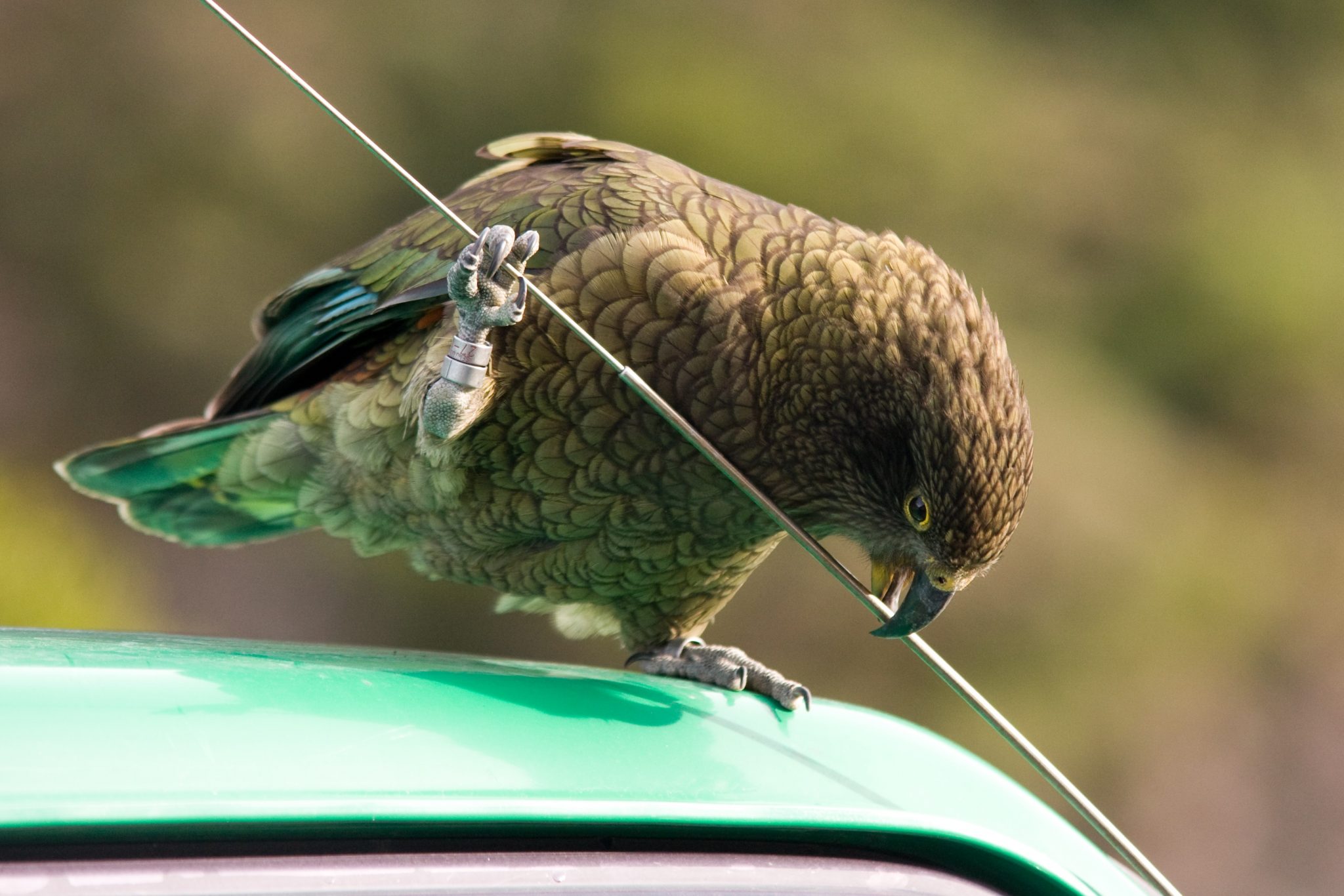
Kea are an endangered species of large parrot found in the forested and alpine regions of New Zealand.  And if you’ve never had the chance to see one of these birds in the wild, you can see them right here at Denver Zoo! Not only does Denver Zoo house these rare birds, but for the last six years, we have also been heavily involved with kea conservation work. 

In 2019, as part of Denver Zoo’s commitment to conservation, we wanted to support sending a staff member to New Zealand to participate in the Lead Free Kea Program in which kea are trapped and tested for lead poisoning to identify problem regions for lead, and rehabilitate birds with toxic levels of lead in their blood.  While in New Zealand, Jessica Meehan, former bird keeper, asked the Kea Conservation Trust about how Denver Zoo could still be involved in KCT conservation work, and thus, the Kea Database project was born!  

As she developed the project, it became clear that Jessica needed some help inputting data in order to complete the entries in a reasonable amount of time, and she requested support from Denver Zoo to recruit database assistants. 

As a Marketing Manager, I wasn’t 100% sure I’d be the best fit for the Kea Database project. But one of the cool parts of working at Denver Zoo is that opportunities like this are available to all staff members from any department at the Zoo, rather than just zookeepers or Field Conservation staff members.   

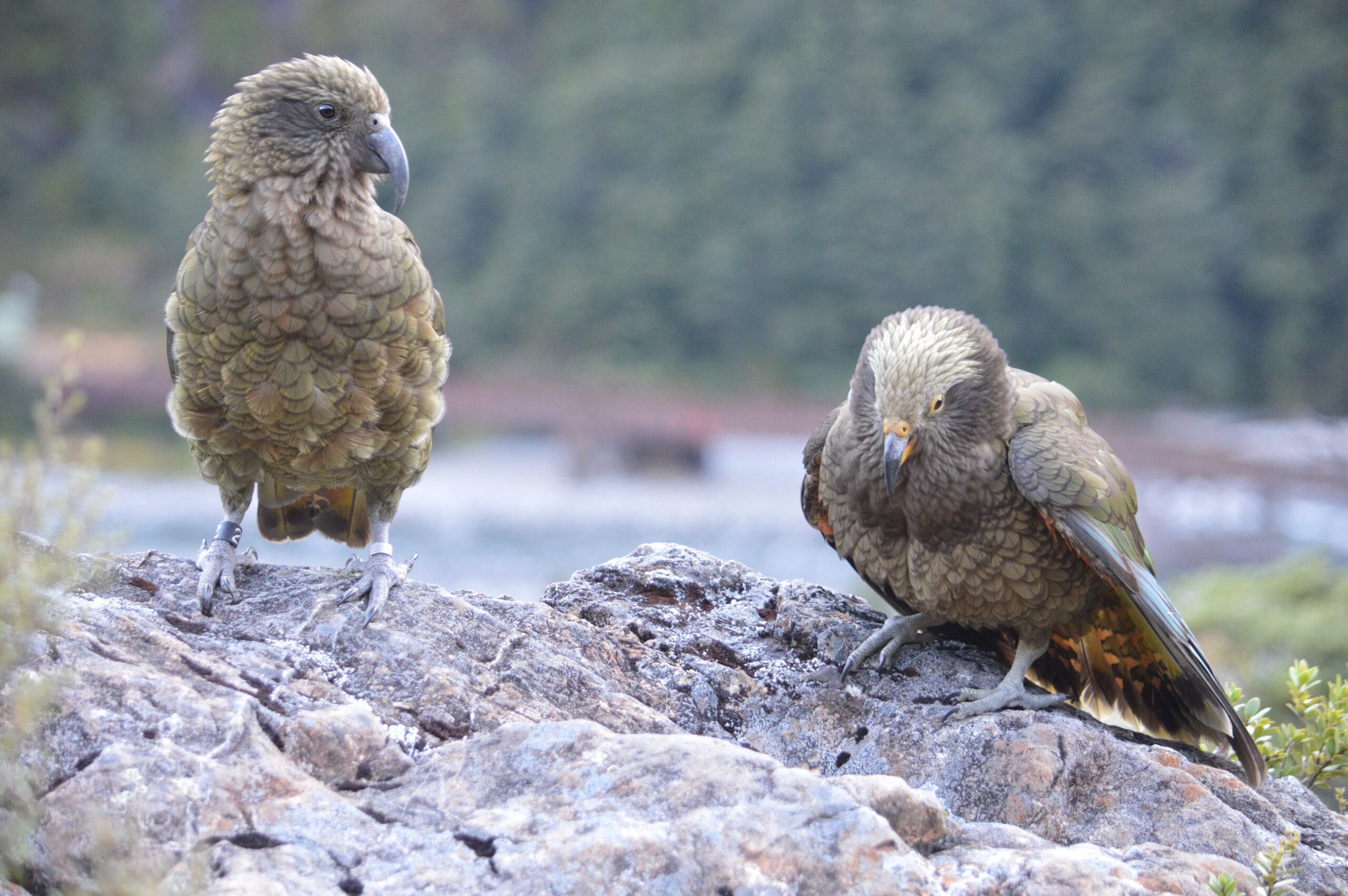
Jessica took me under her wing (no pun intended) and helped me onboard right away. She taught me important skills for entering all the data, like how to identify Kea age based on their markings on their face and body. For example, when Keas are juveniles, they have more colorful markings than older birds. I also learned how to read a topographical map and look up locations using longitude and latitude (something I haven’t done since middle school!). 

This photo features an Adult Kea on the left, identified by the lack of color on its face. The kea on the right is a juvenile, identified by the yellow on its eyes/beak and light feathers on the head

An adult kea on the left stands on a rock with a juvenile kea (R) Photo by: Jessica Meehan

Before the Kea Sightings Database was available, this information was collected on the KCT website and was stored  on spreadsheets often using location descriptions rather than coordinates. Our team worked to translate  these locations to coordinates so the data can be more useful to researchers. Together, our team was able to enter kea sightings from 12 years of historical data, and we’re adding more all the time!  The data can help researchers track trends around kea populations and locations, areas with human-kea conflict, and let’s them track individual kea.

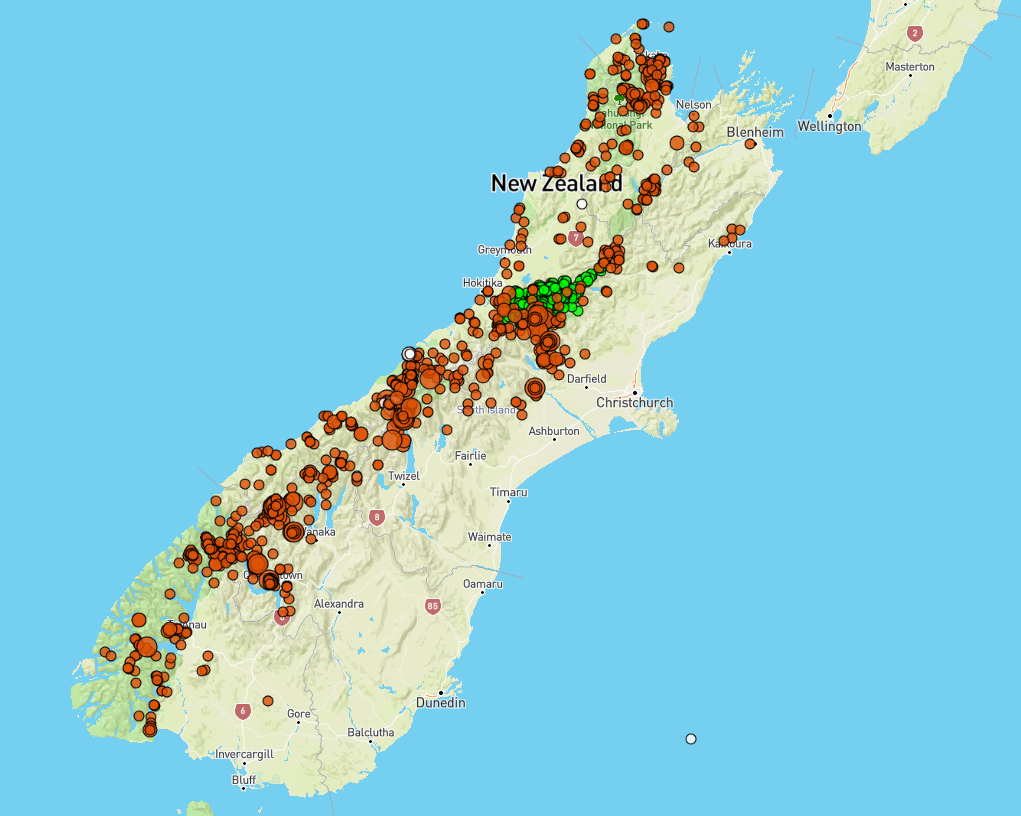
The map below plots out those data entries across New Zealand. The bigger dots indicate more Kea sighted in that particular area.

Map of New Zealand with red and green dot clusters indicating kea sightings

This map shows all the data we’ve entered as a team since 2020

Today, the Kea Sightings Database allows residents and tourists to directly report their sighting to the database and, if the bird is wearing a band, they can look up more information regarding their particular sighting. In addition to the database project, Denver Zoo continues to support KCT financially as well. Last year, we sent funds to the Lead Free Kea Project, which allowed for replacement of toxic lead materials on buildings in Arthur’s Pass Village with materials that are safer for kea. With Denver Zoo’s support for purchasing materials, the construction teams in Arthur’s Pass Village are on track to replace toxic lead-head nails and flashing with kea-safe materials on all 114 buildings identified in this area.

Kea database entry has been a lot of hard work, but incredibly rewarding. I feel more connected than ever to Denver Zoo’s mission to save wildlife for future generations, and am filled with hope that we can reverse the red and get kea off the IUCN endangered species list.

Conservation Through a Different Lens

By Kristi Odom 

I will admit, I was skeptical about zoos. As a wildlife photographer and filmmaker, I spent countless hours observing animals in their natural habitat in some crazy-remote locations. My passion has grown quickly for the beauty of nature and so has my fight to try and use photography to protect it.  

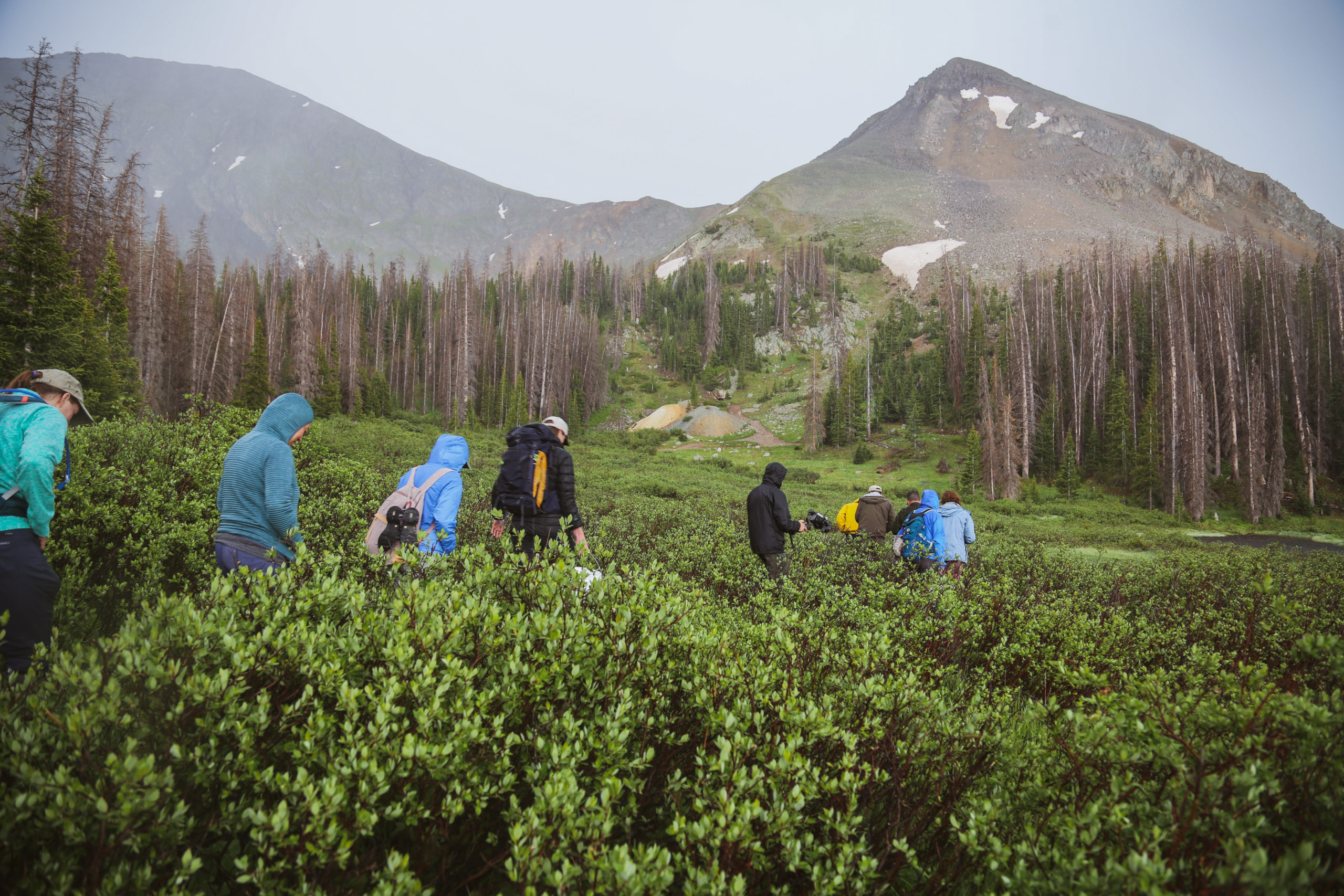
Like many people in 2020, I found myself wanting a change, and I moved to Colorado It felt like a natural fit since I’m always looking for stories about people who fight to save wildlife, to celebrate those heroes and to help show the power people can make protecting our planet. I found a group of more than 400 volunteers that hike to high altitudes to count and monitor pikas. The first trip sparked my curiosity and excitement.  This small rabbit relative is a climate indicator, and with temperatures changing in the mountains, their livelihood is becoming more challenged. The Pika Project is run by a partnership with Rocky Mountain Wild and Denver Zoo. I was so inspired by the work, I ended up pitching and getting this story published online for National Geographic.It was an honor to tell a story about an experience I loved so much. The piece not only talked about climate change, but also the collaboration between individuals, organizations and biologists to protect a threatened species.  

This was my introduction to Denver Zoo. Not a visit to the 86-acre campus, but getting out in the field with their experts. Getting to know all the key players in conservation at the Zoo, my first thought was, “Wow, this is a passionate group.” I learned about the many projects they were involved in, from working on the human wildlife conflict on Mount Evans (soon to be Mount Blue Sky), to the fight to protect Colorado’s only alpine toad, the endangered boreal toad. Talking with the director of Colorado Field Conservation at Denver Zoo, Stefan Ekernas, I learned about how the Zoo spends more than $2 million a year on protecting wildlife and wild spaces. While I have worked with many organizations that have helped protect individual animals, this was a bigger scale–it is a group that helps protect species. From there, I started learning about the Association of Zoos and Aquariums., an organization dedicated to the conservation, education, science and recreation efforts of zoos. AZA accredited zoos and aquariums spend around $160 million on conservation annually and have funded more than 2,500 conservation projects in more than 100 countries. Denver Zoo is one of the 242 AZA-accredited organizations in North America, and has supported or directly participated in more than 600 conservation projects in 62 countries spanning six continents.  

I suspect many people are like me, and had no idea the dedication that the Zoo had for protection of wildlife and wild spaces. They have a large community science program in which they inspire locals to get involved and protect their local wildlife, which anyone can join. Denver Zoo also build relationships with state and federal run wildlife managements, other zoos, native American tribes and conservation organizations, creating a huge impact through collaboration.  

Last summer, I proudly took my stepson to Denver Zoo. He saw animals from all over the world, ones he might never get the experiences to see in the wild, and I saw the awe and wonderment in his eyes. I told him about how the Zoo is fighting to protect them, pikas, tadpoles, big horns and all. It was the first time I had been to a zoo since I can remember, and it was a beautiful experience celebrating wildlife and the heroes that fight to protect it. All it took was looking at the Zoo through a new lens. 

Kristi Odom is a member of the of the International League of Conservation Photographers and a Nikon Ambassador.  Her accolades include over 60 international photography awards including 2 Nature’s Best Photography awards, which exhibited her images at the Smithsonian Museum of Natural History.  Her work has appeared either online and/or in print for the following clients: National Geographic, Nikon, Forbes, Rollingstone, Microsoft and Outside Magazine. 

Be sure to follow Denver Zoo on FacebookTwitterInstagramLinkedIn and TikTok for more great stories about the Zoo’s animals and conservation programs! 

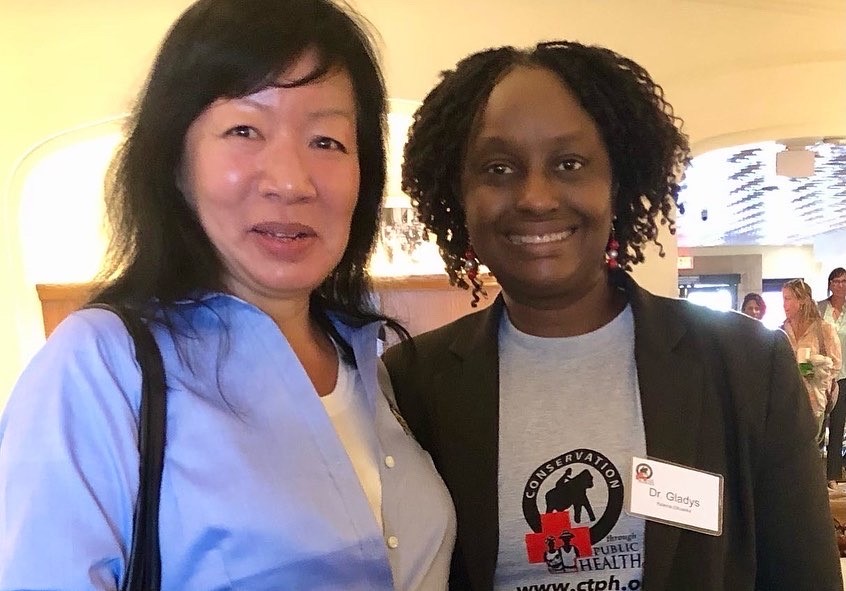
Gladys, to Meet You

Dr. Gladys Kalema-Zikusoka has spent most of her life saving Critically Endangered mountain gorillas in East Africa, first as a veterinarian, and now as CEO and Founder of Conservation Through Public Health (CTPH). Her work has been recognized around the world, most recently as a National Geographic Explorer and previously as winner of the Sierra Club’s 2018 EarthCare Award. She spoke with Denver Zoo about the connection between animal and human health, and the important role zoos can play in wildlife conservation.

Dr. Gladys: I decided at the age of 12 that I wanted to be a vet because I grew up with many pets at home. So, I decided I wanted to become a vet, but that wouldn’t happen until later. When I was in high school, the biology teacher wanted to revive the wildlife club, and I was very interested. When he came up to me and said he wanted to start a wildlife club I was so excited. I just jumped into it and started straight away.

Dr. Gladys: I worked in the Uganda Wildlife Authority for four and a half years, then did a combined, zoo medicine residency at North Carolina Zoo and North Carolina University. After that, we started Conservation Through Public Health. I became passionate about this idea of public health being critical to wildlife conservation after my first year with the Wildlife Authority. It was one of my first cases, nine months into the job. I got a call that the gorillas were losing hair and developing white scaly skin. We were able to save three of the adults, but not the baby, by treating them with ivermectin. We later learned that the condition was caused by the local communities’ unhealthy sanitary practices. I developed brochures and held workshops with over 1,000 people in villages where the gorillas would come. Education of the community by a team of four advocates led to the villagers coming up with ideas for mitigating the problems that needed solving.

I started my residency program thinking when I am finished there, I will go back and I’ll work for a non-profit organization to support the work. So, I spent time learning how to raise funding for all the various facets of the organization.

Dr. Gladys: One Health is a model that addresses the health of people and animals together because they’re all interconnected. Animals can make people sick, and people can make animals sick. You cannot address one without addressing the other. I think COVID-19 helped people to understand this better, that human health and animal health are truly inseparable. We saw COVID in humans, but also in gorillas, tigers, lions, and mink. You’ll always have zoonotic diseases jumping back and forth. One Health addresses things like family planning, nutrition, sustainable agriculture, and associated issues like degradation of the environment in foraging for usable resources.

Dr. Gladys: Zoos play a very important role in education. Most people will not see gorillas, tigers or lions in the wild for themselves, but they can learn so much about them by seeing them in zoos. Zoos and educational institutions can also be helpful with providing or soliciting funding. Zoos that carry products like Gorilla Conservation Coffee and other goods made by locals in other countries are also supporting those economies, helping them be less reliant on industries that are harmful to animals.

Dr. Gladys: The great thing is there isn’t just one way to help wildlife. No matter where you are in the world, or where you are in your life there’s something you can do to make a positive impact. Use social media to spread the word about important issues that need to be addressed. Buy Gorilla Conservation Coffee or other products made locally, send donations through zoos to support projects in the wilds. Even just being more conscious about your impact on wildlife can make a difference.

Denver Zoo, CPW Release Endangered Toads

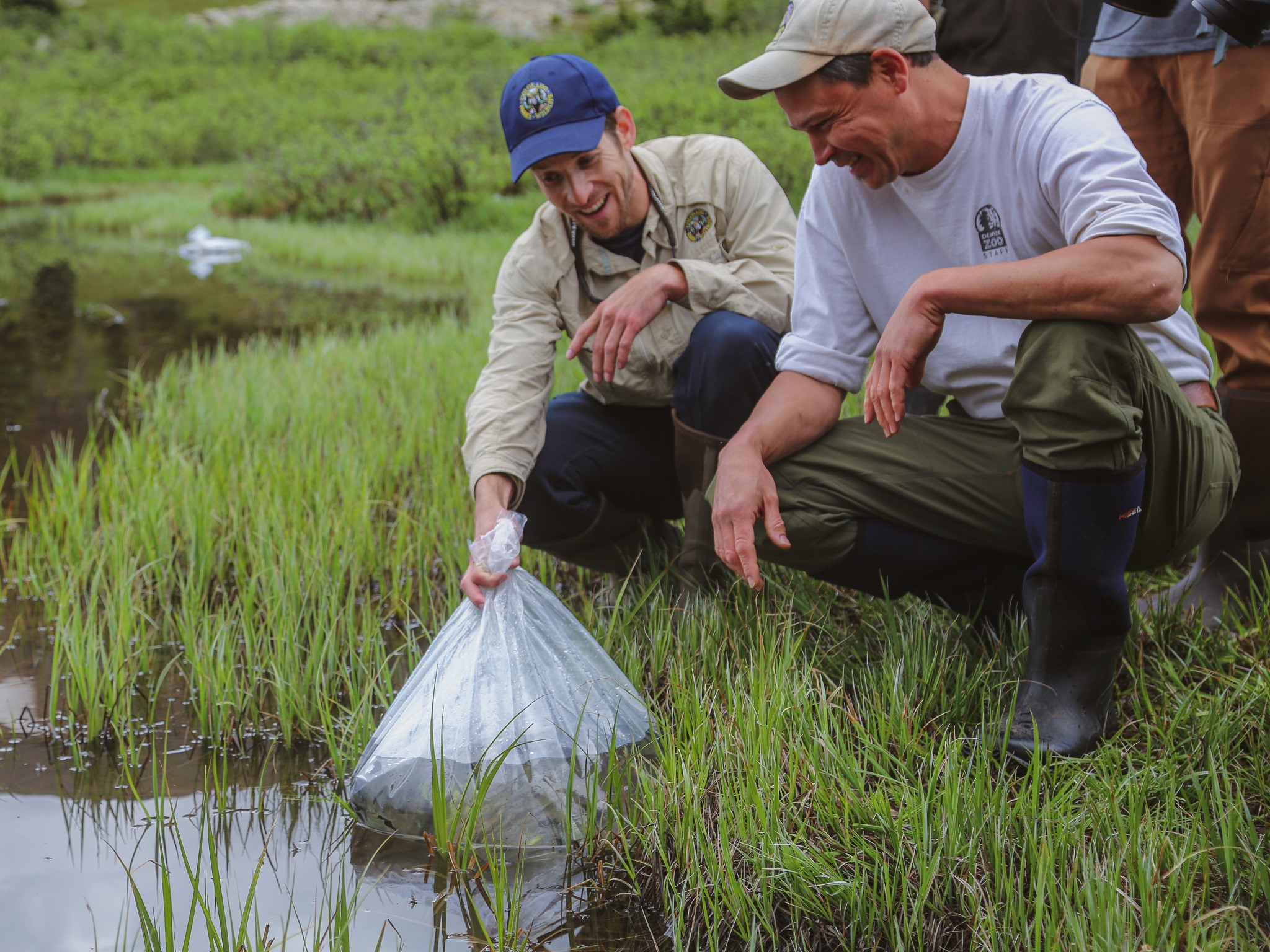
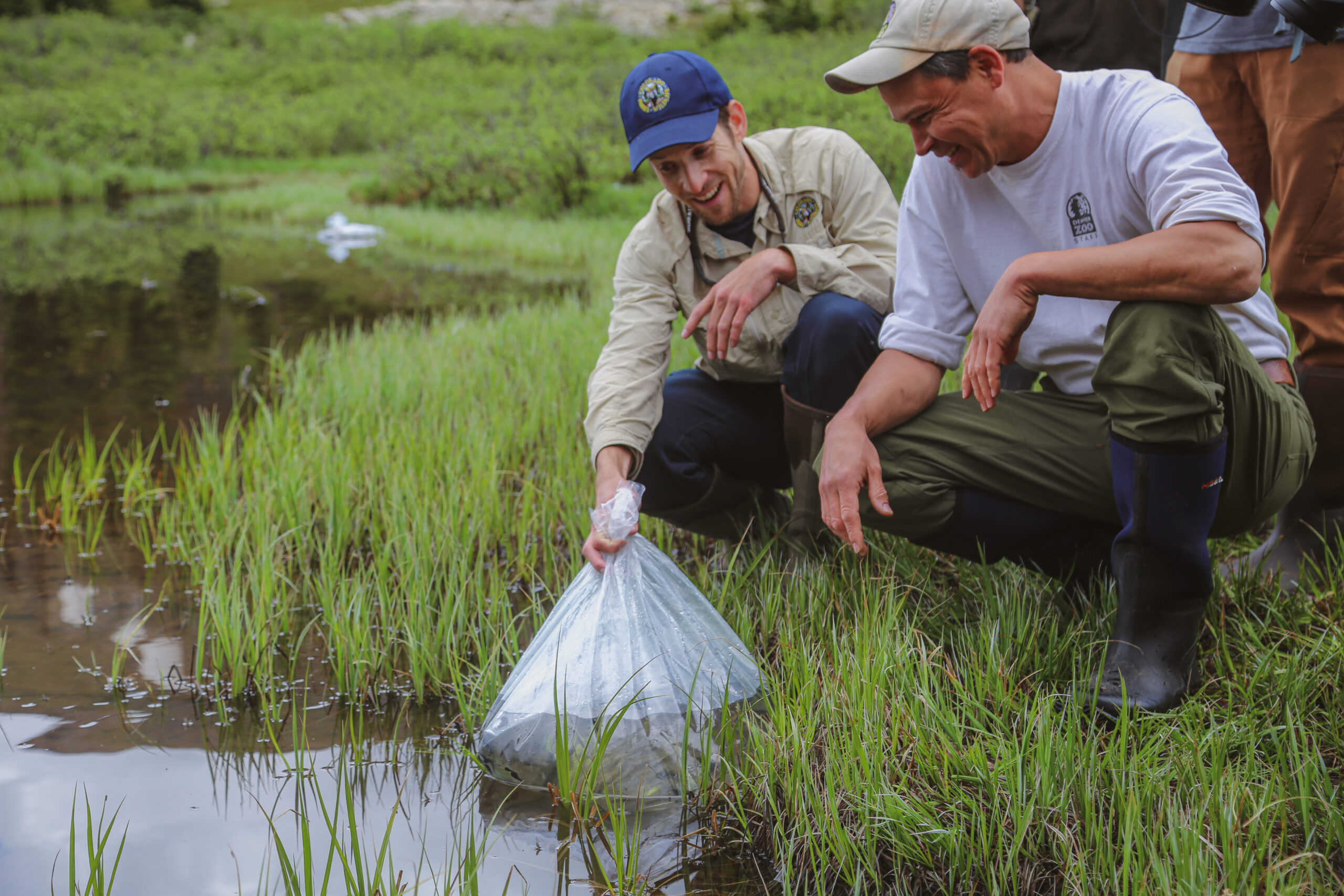
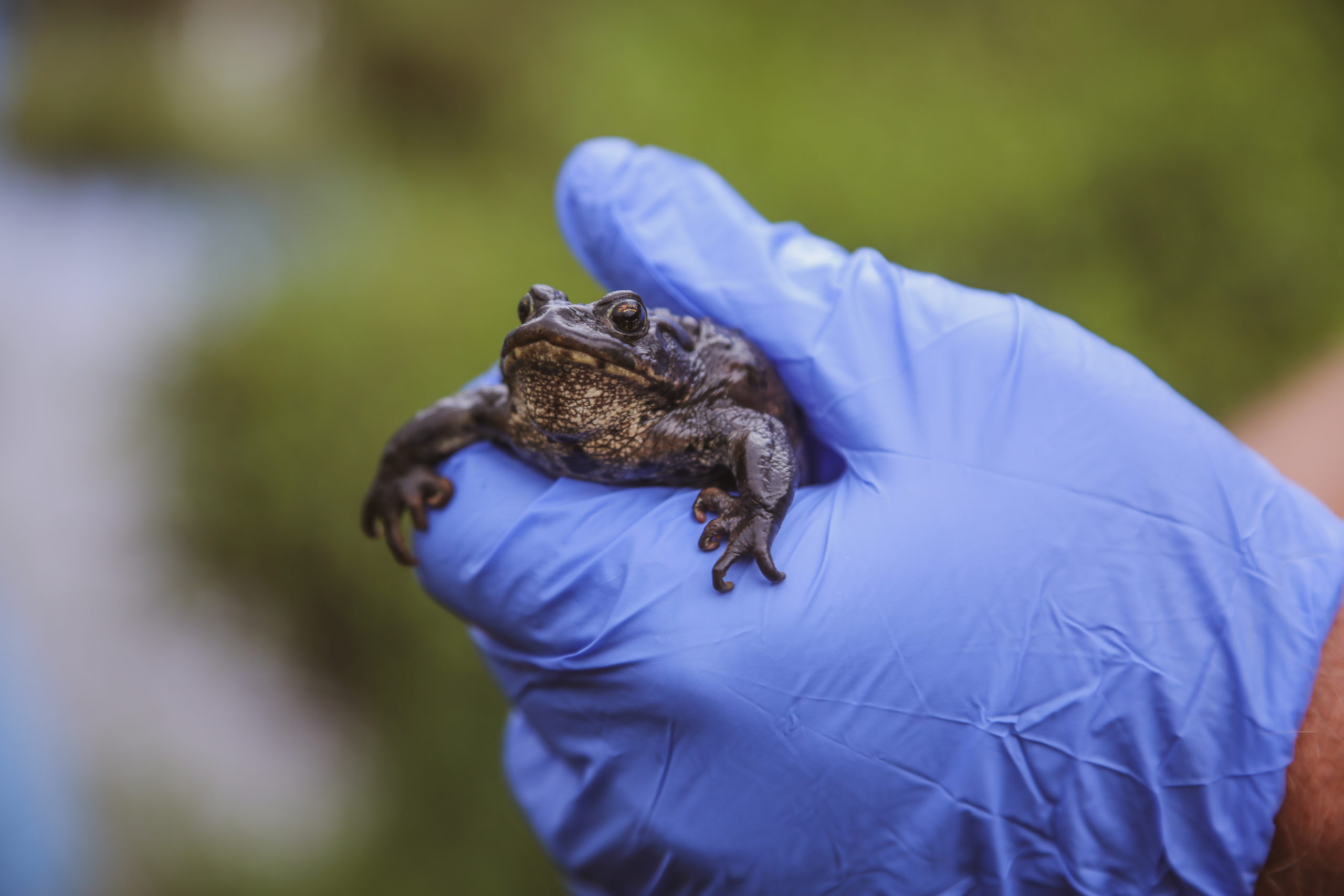
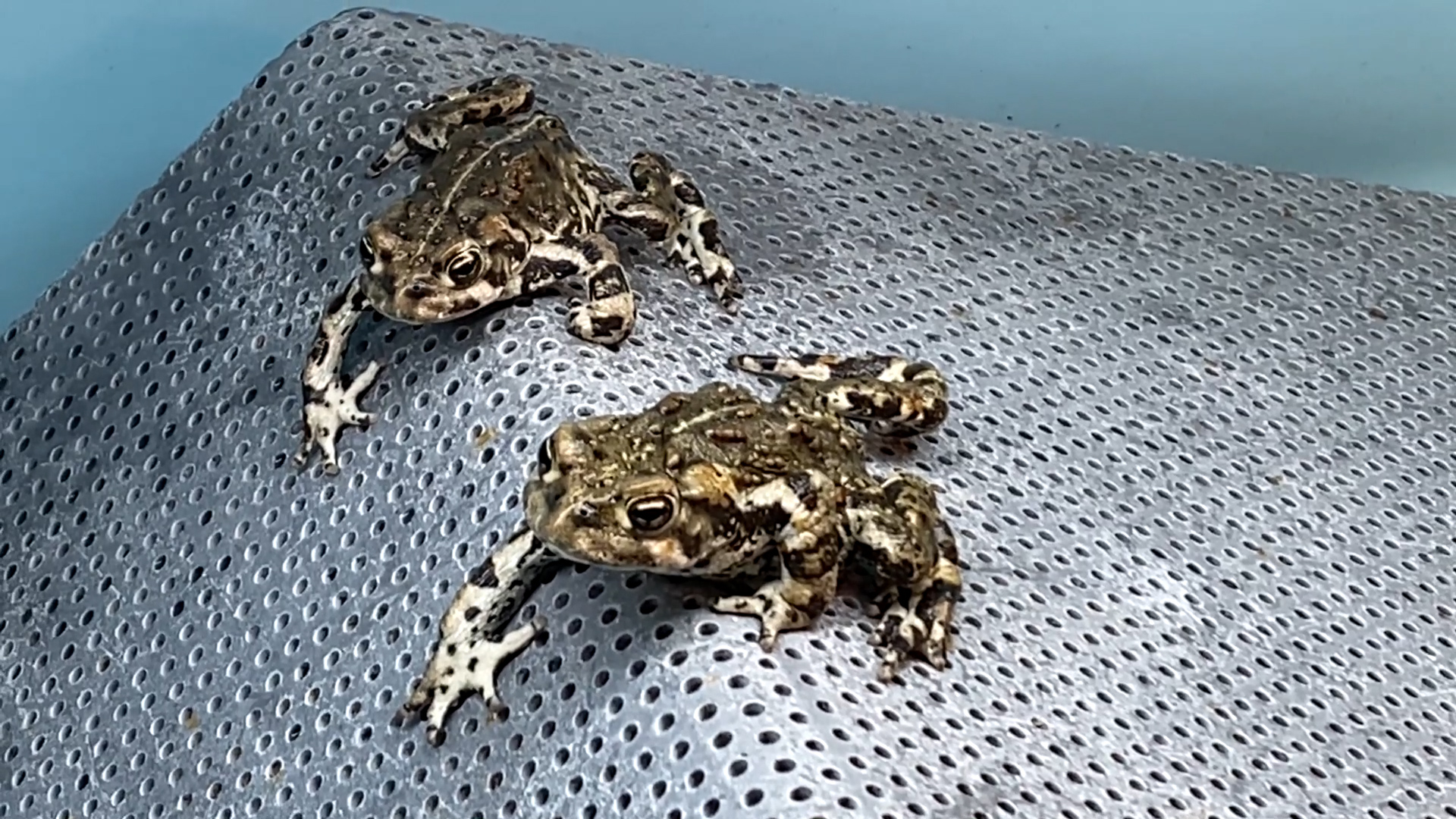
Last November, Denver Zoo and Colorado Parks & Wildlife (CPW) launched a new initiative aimed at boosting the state’s population of boreal toads, a species listed as endangered in Colorado and New Mexico. Starting with 95 adult toads from CPW’s Native Aquatic Species Restoration Facility in Alamosa, experts from the Zoo spent more than six months preparing the toads for breeding, and nurturing their offspring leading up to their release into the wild. On Tuesday, June 28, teams from the Zoo and CPW trekked into a remote site in Gunnison National Forest to introduce 570 tadpoles into wetlands that officials hope could eventually host an established population of rare amphibians.   

“This was the result of a tremendous amount of hard work and planning by our partners at Colorado Parks & Wildlife, and members of our animal care and field conservation teams,” said Erica Elvove, Senior Vice President for Conservation Engagement and Impact at Denver Zoo. “Boreal toads face an extremely uncertain future in Colorado and have a good chance of going extinct without human intervention. We’re committed to continuing this effort with CPW for many years to come, and doing our part to make sure the species remains part of Colorado’s ecosystem for future generations.”  

FieldConservation_BorealToadRelease_Borellis_220628_036

Once common in montane habitats between 7,000-12,000 feet in the Southern Rocky Mountains, the boreal toad has experienced dramatic population declines over the past two decades. The decline appears to be related to habitat loss and primarily infection by the chytrid fungus, which can infect the majority of the world’s 7,000 amphibian species, and is linked to major population declines and extinctions globally. Officials estimate there may be as few as 800 wild adult toads left in Colorado.   

“It was a very special day to join our partners from Denver Zoo to release boreal toad tadpoles that the Zoo produced at their facility,” said Daniel Cammack, Southwest Region Native Aquatic Species Biologist with CPW. “We’ve been stocking tadpoles at this site for about five years now, and we have high hopes that the tadpoles we introduced will contribute to a self-sustaining breeding population. It’s a pretty big win for boreal toad conservation.”  

We have been conserving endangered and critically endangered amphibian species for more than 15 years. In 2018, the Zoo became the first zoo in the Northern Hemisphere to successfully breed critically endangered Lake Titicaca frogs, and has since provided more than 250 healthy frogs to zoos and aquariums in the U.S. and Europe. In 2019, we used a hormone treatment to breed and produce more than 600 boreal toads, which were released in a remote area in southwestern Utah. And in 2021, we successfully bred critically endangered Panamanian golden frogs as part of the Association of Zoos and Aquarium’s Species Survival Plan.  

FieldConservation_BorealToadRelease_Borellis_220628_032

CPW has devoted significant resources in the past 20 years toward researching the cause of boreal toad declines in the state and exploring ways to recover the species. Specifically, CPW researchers focus on developing methodologies for reintroducing toads in historically occupied habitats, detecting chytrid fungus in the wild, marking and identifying individual toads, and improving breeding success at the Native Aquatic Species Restoration Facility, which plays a critical role in the state’s efforts to restore populations of boreal toads.  

Our experts estimate that it will take many years to bring the species back to a level where it is secure in the Southern Rocky Mountains, and expect the collaboration to be a multi-year program. Additionally, as part of the wild release program, we launched a community science project where volunteers monitor the species’ high-country habitat to help officials understand the health of current wild populations and determine suitable locations for future reintroduction of toads bred at the Zoo. For more information, visit DenverZoo.org/Boreal-Toad-Conservation-Team.  

FieldConservation_BorealToadRelease_Borellis_220628_004

A New Pair of Crocs

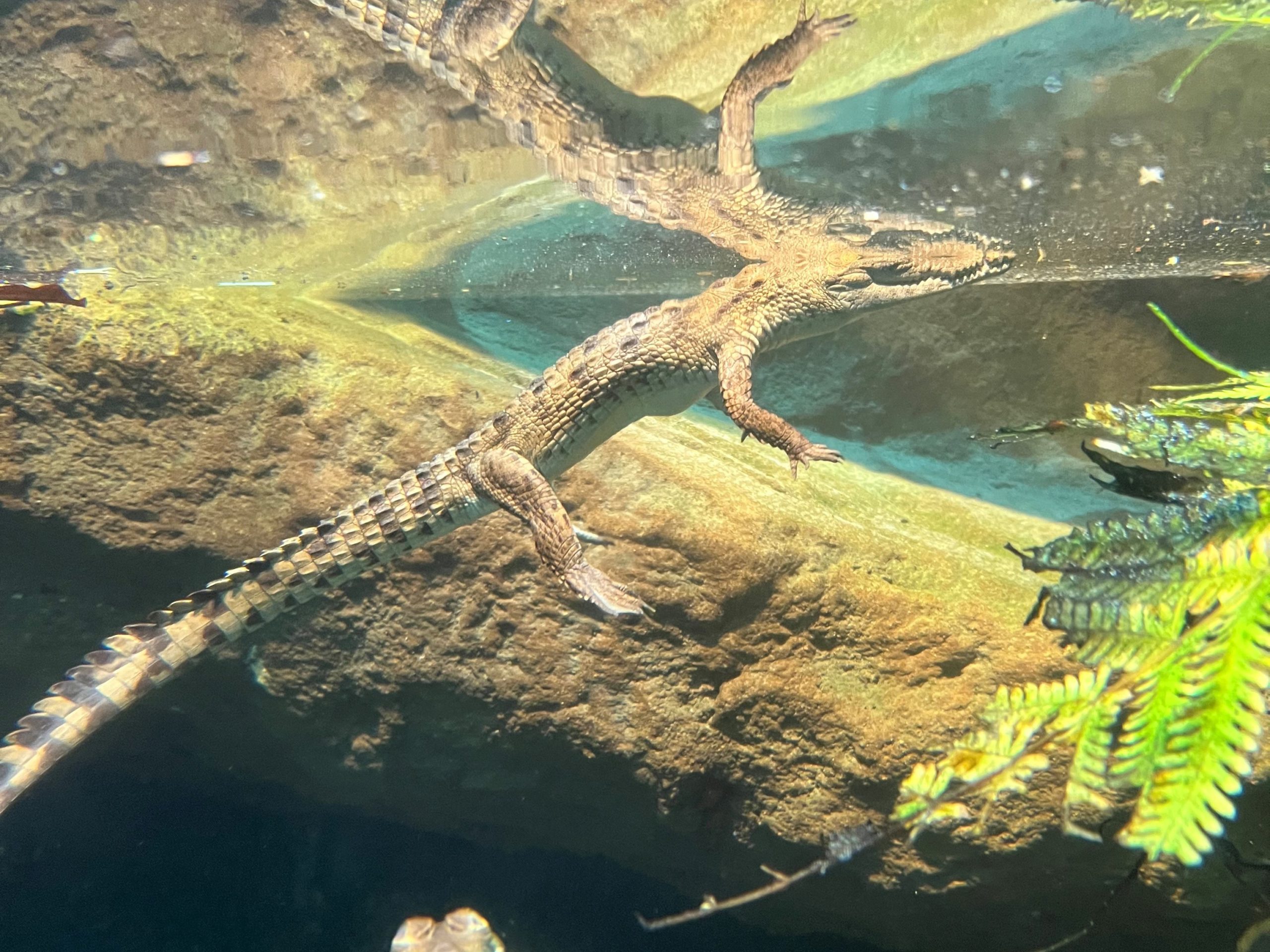
Tropical Discovery has two new crocodiles, but their presence here is for a limited time only. The critically-endangered, juvenile Orinoco crocodiles were two of many that hatched at Zoo Miami and Gladys Porter Zoo last year as part of a wild-release program. Orinoco crocodiles are native to the Orinoco River basin in Venezuela and parts of Colombia. They’re the most southerly species of crocodile, whose two biggest threats are habitat loss and being hunted for their meat. After hatching, the Species Survival Plan (SSP) managing Orinoco crocodiles reached out to other zoos to help raise the baby crocs, since raising that many crocodiles is a feat that requires more space and time than either zoo had. Enter Denver Zoo! 

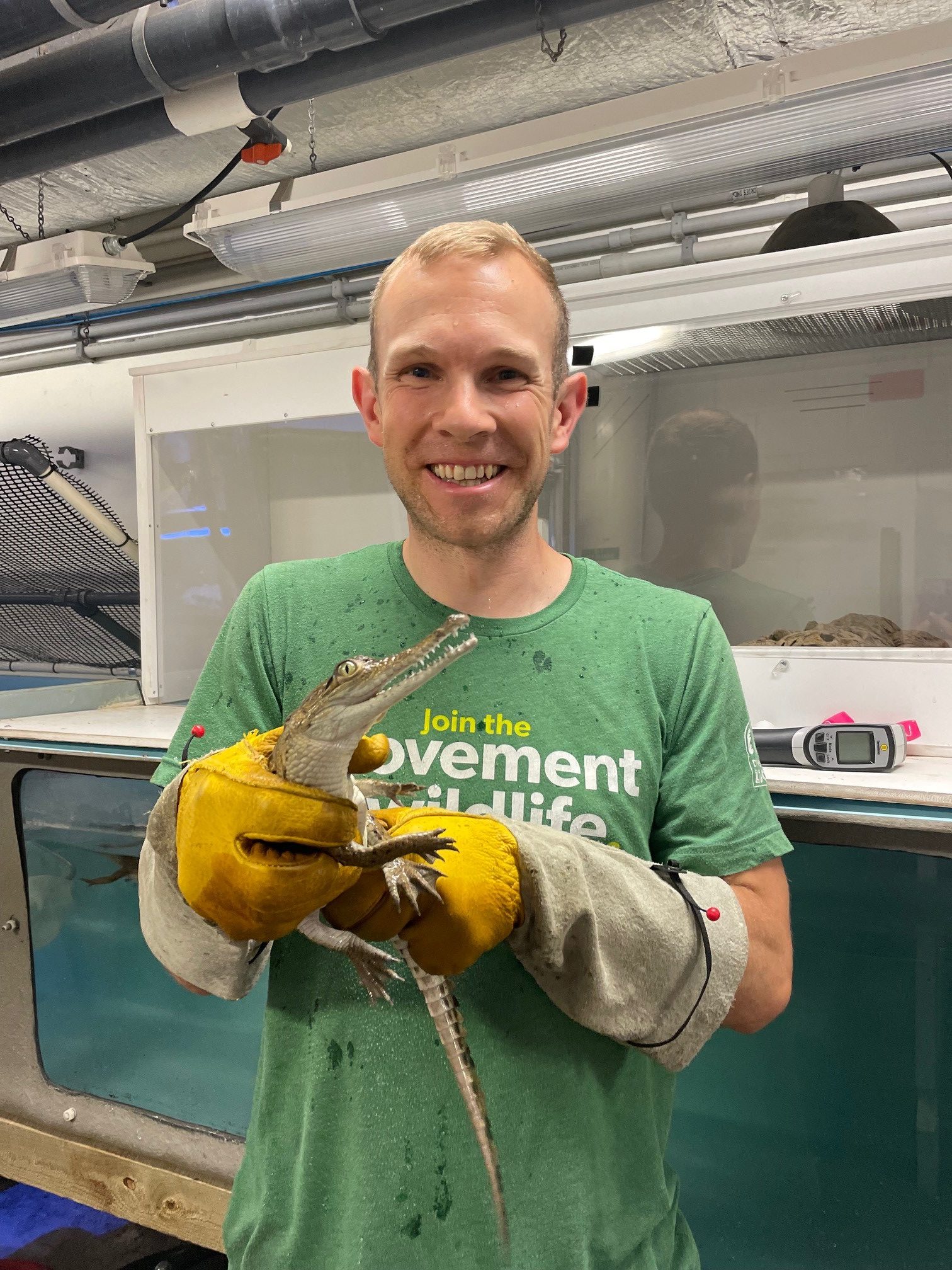
Tropical Discovery is home to thousands of fish, reptiles, and even a handful of mammals, making it a perfect place for two young crocodiles. Not only do we have the space to house them, our Tropical Discovery keepers have the expertise to assist with raising these crocodiles until they’re ready for release. To ensure that all the crocodiles grow at the same pace and can be released around the same time, our team will follow a rearing protocol set up by the studbook keeper for the Orinoco crocodile SSP. Guests can come see the pair in the habitat between capybaras and piranhas, and watch them grow over the next 18-24 months. We’ll manage their care until they reach a meter in length, they’ll be large enough to be released into the Capanaparo River at the Santos Luzardo National Park in Venezuela. Once they’re at the release site, some of the crocodiles will be fitted with a satellite tracking device for constant monitoring of their movements and habitat utilization. Being able to track their movements will give us a better idea of how to preserve and care for the species for years to come. 

As a conservation organization, we’re proud to lend our expertise and facility to this important effort. Whether we’re out in the field rehabilitating species, or providing a short-term pit stop for a wild-release program, we’re focused on our mission to inspire communities to save wildlife for future generations. We hope you’ll join us! 

Follow along on our  Facebook, Instagram, TikTok and Twitter for more conservation stories! 

croc and keeper

Denver Zoo vs. EEHV

Each Asian elephant life is precious, both to their endangered species and for the keepers in AZA-accredited zoos who care deeply for their wellbeing. But each Asian elephant life-both those in human care and in the wild-can be lost in a matter of days due to Elephant Endotheliotropic Herpesviruses (EEHV), a dangerous virus that affects the species and is responsible for about half the deaths of young elephants in zoos. Denver Zoo is part of the effort to produce effective treatments in the hopes of preventing any more heartbreaking losses.  

Asian elephant gestation is notoriously long–22 months to be exact. That’s almost two years of hard work, good luck, and high hopes for the keepers that take care of these elephant herds in zoos. But all of that can be lost in the matter of days due to Elephant Endotheliotropic Herpesviruses (EEHV), a dangerous virus that affects all Asian elephants and is responsible for more than half the deaths of all Asian elephants in human care. 

What is EEHV? 

For all that we know about EEHV in 2022, there was a time not too long ago that this virus stumped researchers, and was only known as the virus responsible for the death of a young calf at the Smithsonian’s National Zoo in Washington D.C. Researchers there identified the virus as EEHV in 1995. With the help of other Association of Zoos and Aquariums (AZA)-accredited zoos, researchers have made huge strides in learning about and treating EEHV.  

When elephants are young, they get exposed to the virus through other herd members. So, all elephants have EEHV present in their systems, but it only becomes a problem when it transforms into EEHV HD (the HD standing for hemorrhagic disease). Young elephants are checked weekly to monitor their viral loads, and when we notice it increasing and causing a need for treatment, that’s when it becomes EEHV HD. 

Blood testing is critical to monitor the viral load because EEHV HD itself is hard to spot, and often, when symptoms are noticeable, it’s already too late to treat. Symptoms range from lethargy, stiffness in legs, bruising or discoloration in the mouth and swelling. EEHV HD is a fast-moving disease, and these symptoms can change rapidly, so any response has to be early – and fast.  

Denver Zoo Steps Up 

Just because EEHV is most often fatal in young calves, Denver Zoo’s herd can play a role in helping research, treat, and hopefully one day prevent this disease. All five of our elephants are trained to stand for blood draws and some of them allow us to take large volumes of blood that can be sent to other zoos for blood transfusions in an emergency. We’re also able to send this blood to researchers studying the virus. Our bulls are never forced to participate in any of the training we do and the blood collection process has become such a positive experience for the bulls that some of them are very willing to stand there and provide these samples. 

Blood collection also allows us to store and build a supply of plasma. If there is an emergency at a zoo with an elephant who has the disease, we can send frozen plasma and be ready to collect fresh samples as well. We’ve been called on four times to send plasma across the country to Zoos with elephants fighting EEHV. Although only one of those calves survived, this type of intervention is still remarkable. 

The Big Picture 

The speed at which EEHV moves is difficult to manage and when we lose a baby elephant, that is a huge loss to the already low population of the endangered species.  The more we can collaborate to support the efforts to keep these babies alive and thriving, the better off the entire population is and the closer we get to meeting our goals of saving a species.   

Follow us on Facebook, Instagram, TikTok and Twitter for more amazing animal care and conservation stories  

Behind the Boreal Toad Project

Native Aquatic Species Coordinator Harry Crockett with Colorado Parks and Wildlife (CPW) answers some of our questions about how Denver Zoo got involved with boreal toads in Colorado, and how YOU can help save wildlife in our state. 

Denver Zoo: What inspired you to work for CPW? 

Harry Crockett: I always wanted to be a wildlife biologist, and always leaned toward things that live in the water, owing to a lifetime of fishing, working a number of seasons as a river trip guide, and other water-oriented passions. When I got my Masters at Colorado State University, my thesis project was in cooperation with Colorado Parks and Wildlife, so I got familiar enough with the agency to know I wanted to be part of it. I was lucky enough to get hired by CPW as a seasonal technician which made me even more sure of my career path. Working with the boreal toads has become one of the most compelling parts of my job.  

DZ: Why are boreal toads an important species to work on restoring in Colorado? 

HC: Aldo Leopold’s famous ecological insight that the first rule of intelligent tinkering is to keep all the parts, certainly applies to these toads–we don’t fully know the role they play in the montane environment but we know they have a role and it’s important. For those who need a more human-utilitarian reason to care about boreal toads, all amphibians are important indicators of aquatic and riparian system health because they are so much a part of both the aquatic and terrestrial worlds. They’re an early warning system about water quality and overall environmental health. Toads used to be very common throughout the Southern Rockies–there are many anecdotes from the 1960s and earlier of them being so abundant around montane wetlands at certain times of the year that one had to work to avoid stepping on them. And the fact that they have declined so greatly shows that something is badly amiss–an invasive disease in this case.  

On a basic level of connecting with another species, you don’t maybe think of toads as charismatic but boreal toads have a ton of personality. Interacting with them will definitely deepen your appreciation that even humble species are inherently important. I want my grandkids and all future generations to be able to go up in the mountains and encounter toads in their natural habitat, it’s part of the full experience of the greatness that is the Southern Rocky Mountains. 

DZ: How did Denver Zoo come to work with CPW on the boreal toad project? 

HC: The interest really started on the Denver Zoo side, going back more than 10 years, before I was even involved. Zoo staff would attend the Boreal Toad Conservation Team meetings every year, and we just kept up discussions about how we could increase our collaboration. For the past few years, the Zoo has housed and bred boreal toads for release in Utah, so we were very intrigued with that possibility for our toads from the Southern Rocky Mountain populations. When the greater space resources became available, CPW and the Zoo both jumped at the opportunity.    

DZ: What makes Denver Zoo uniquely qualified to be a partner in this project? 

The specific success at breeding boreal toads in captivity, that I mentioned above, was very compelling because that’s proven to be really hard to do. We had a lot of luck earlier on at the Mumma Native Aquatic Species Restoration Facility (CPW’s native species hatchery, producing 12 species of at-risk fish plus the boreal toad), but it’s been much more hit-and-miss for going on ten years now. The fact the Zoo was producing the same animal for Utah definitely caught our eye. But beyond that, we know the Zoo is a national leader in breeding and assisting in other ways with conservation of imperiled amphibians from around the world. To have such a great resource right here in our own backyard is certainly a unique opportunity.  

DZ: How can people do their part to preserve and protect Colorado’s natural species and spaces? 

HC: For the toads specifically, there are some very practical things you can do to help, and one of the biggest is to avoid behavior that might spread the chytrid fungus to new areas. Staying on trails is great; especially avoiding going from one wet area to another without changing/ drying / disinfection footgear in between. The same precautions will keep you from accidentally stepping on a toad or degrading sensitive wetland habitat. If you’re fishing, disinfect your waders when going from one body of water to another (you should be doing this anyway to avoid spreading whirling disease and other organisms that can imperil sport fisheries).  

More generally, support conservation in whatever way works for you. The Zoo has terrific volunteer and community science programs, and so does CPW.   Getting involved in a way that gets you interacting with a part of nature that you really care about is so much more personally rewarding than just writing a check, although donating money is also important if you can afford it.       

For more information about our boreal toad project click here and follow us on Facebook, Instagram, TikTok and Twitter for updates! 

Keeping Wildlife Wild on Mount Evans

By: Julie Krajewski, Colorado Conservation Specialist 

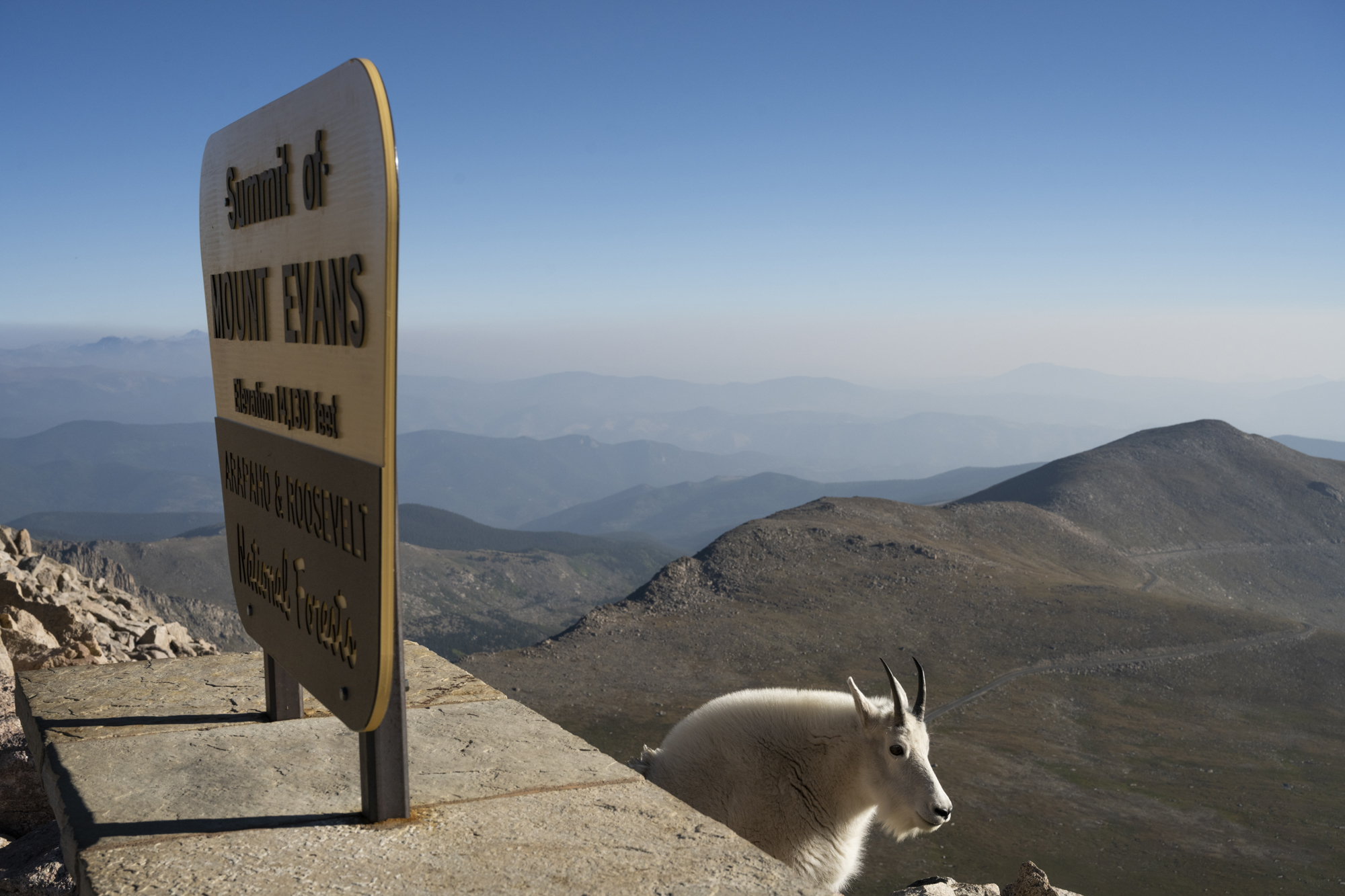
High on Mount Evans, visitors can enjoy views of mountain peaks, alpine lakes and glacier valleys, as well as the chance to see iconic Colorado wildlife, such as Rocky Mountain bighorn sheep, mountain goats, pika, and yellow-bellied marmots. The Summit Lake area is a National Natural Landmark and home to rare plants only found at Summit Lake and in the Arctic circle. With the highest paved road in North America providing the opportunity to drive to 14,130 feet, the Mount Evans Recreation Area attracts 200,000 visitors each year.  

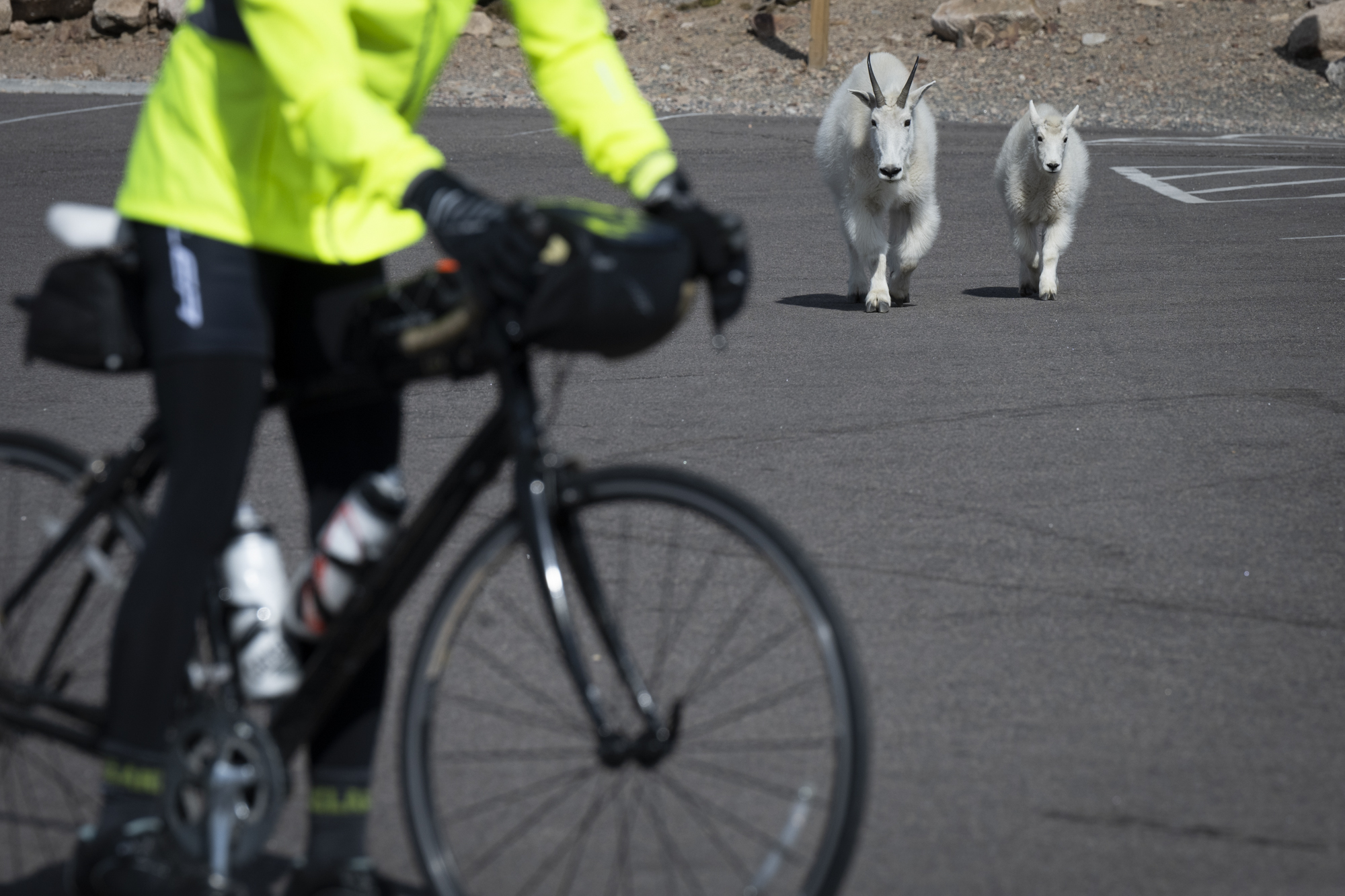
While it is unusual to see mountain goats and bighorn sheep in areas with high human activity, on Mount Evans, the sheep and goats often congregate around parking lots and roads. This close proximity to humans can pose serious risks for both tourists and wildlife. Sheep and goats are susceptible to many hazards when near humans, including increased stress, behavioral changes, disease risk, and exposure to human food as well as human and pet waste. Bighorn sheep and mountain goats may act aggressively towards humans if they feel threatened. Both sexes of sheep and goats have prominent horns and are capable of inflicting serious injuries. In 2010, a hiker was killed by a mountain goat in Olympic National Park. 

In 2020, Denver Zoo began to study and address human-wildlife conflict on this iconic fourteener. While the Mount Evans Scenic Byway is typically open during the summer months, it was closed due to COVID during the 2020 season creating an experiment for how the presence/absence of huge crowds of visitors impacts wildlife behavior. With support from a National Geographic grant, DZ scientists used remote cameras to document how wildlife used the landscape while the road was closed.  

This work continued during the summer of 2021, when the road reopened to visitors. Last summer, Denver Zoo’s Field Conservation team began investigating how to discourage wildlife from congregating in high-human use areas. Bighorn sheep and mountain goats seek out sources of salt and other minerals in their environment. In addition to naturally occurring mineral licks, sheep and goats are drawn to human-created sources of minerals. Some examples of these mineral sources are salt on vehicles and roads, and minerals in human urine found at restrooms and other places humans and their pets urinate. We took soil samples at different locations across Mount Evans to look for signs of higher salt content or other pollution. Also in 2021, Denver Zoo scientists experimented with the use of mountain lion urine as a deterrent to discourage bighorn sheep and mountain goats from coming into the parking lot at Summit Lake. With signs of a predator in the area, goats and sheep may be less likely to enter the parking lot and to congregate around human-created mineral sources.  

Aside from interactions with humans, there are other potential dangers to unusually large congregations of bighorn sheep and mountain goats. A higher density of animals in a small area can lead to increased competition for resources and increased aggression within the herds. Larger groups also create the potential for increased disease transmission. The primary threat to bighorn sheep populations today is pneumonia, caused by the bacterium Mycoplasma ovipneumoniae. This bacterium was introduced from domestic sheep herds to wild sheep and goats. While mountain goats typically don’t become ill from Mycoplasma, they can be carriers of the disease and can spread it to bighorn, which are very susceptible and face high mortality rates when infected (70-90%). Large congregations of sheep and goats can create super-spreader events that put entire herds at risk. 

Denver Zoo’s work on Mount Evans continues in 2022 as we collaborate with Denver Mountain Parks, US Forest Service, and Colorado Parks and Wildlife to make Mount Evans a safer place for both visitors and wildlife. Some ways that you can help keep wildlife safe and healthy are to only observe wildlife from a safe distance, back away if bighorn sheep or mountain goats approach you, utilize available restrooms, and practice Leave No Trace principles (pack out what you carry in). And never feed wildlife. Keep an eye out for Denver Zoo staff if you’re on the mountain this summer — we’d love to answer any questions you may have about how to share the land with wildlife! 

Follow our conservation work on social media by following us on FacebookInstagram, Twitter and TikTok!