

 Español
Written By: Matt Herbert, Latin America Conservation Program Director
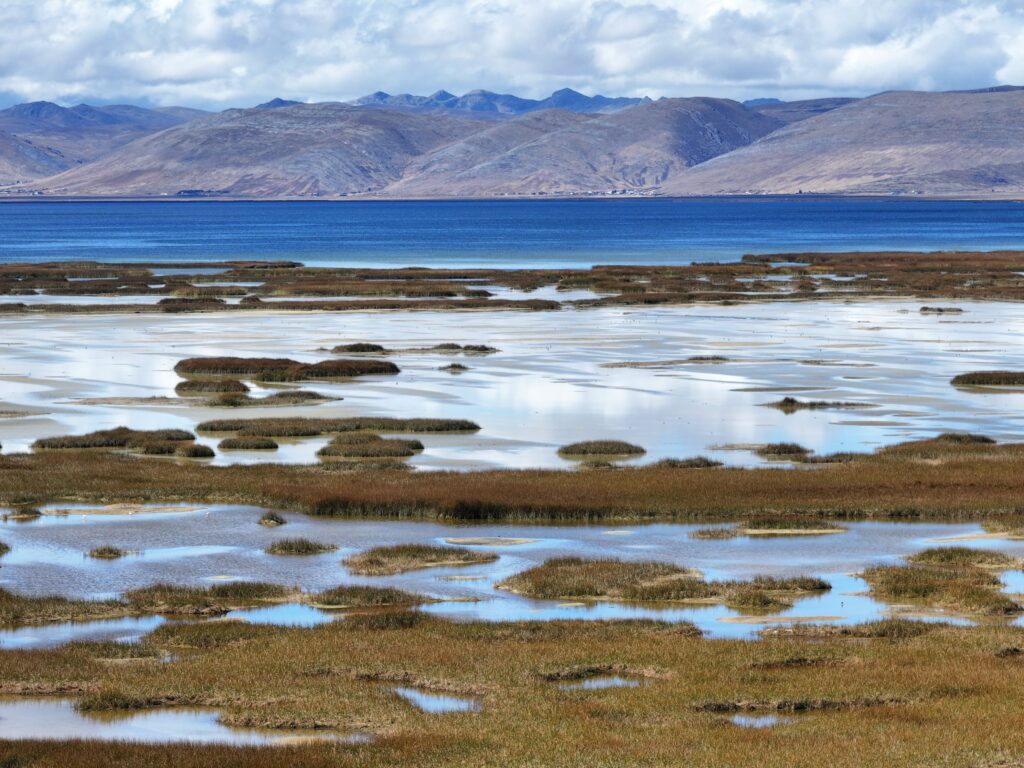
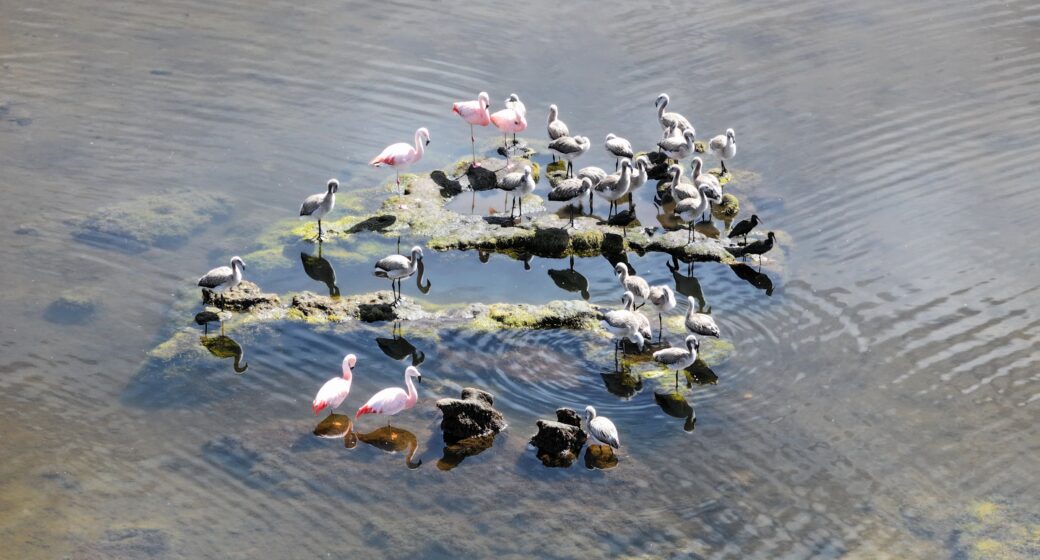
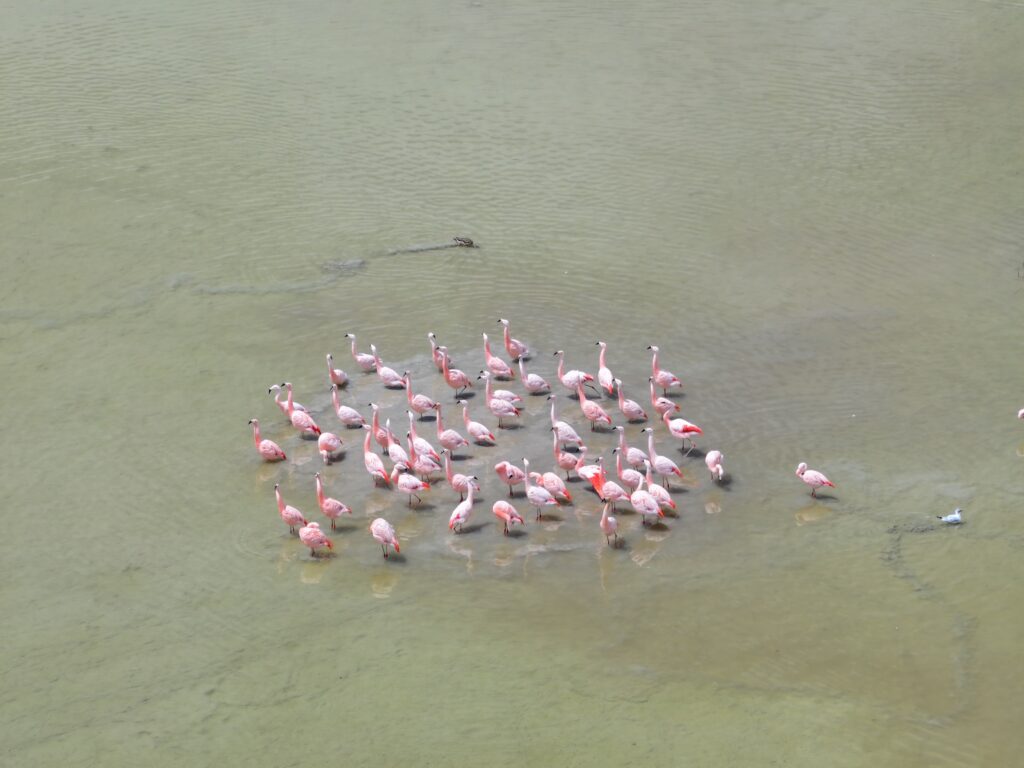
We have an exciting update from our Latin America Conservation Program. Through the innovative use of an aerial drone, we have recently published an important documentation of the first successful Chilean flamingo nesting in more than ten years in Lake Chinchaycocha (aka Lake Junin) in the Central Andes of Peru!
Chilean flamingos (Phoenocopteris chilensis) are one of two species of flamingos under our care at DZCA. When most people picture flamingo habitat, they picture warm, tropical wetlands and palm trees; Chilean flamingos in South America live in quite the opposite environment. They can live in the high Andes where the air is dry, their wetland habitat can get below freezing at night, and the elevation is too high for any trees—especially palm trees(!)—to grow. Despite their toughness, Chilean flamingos face many threats in the wild and need our help, especially in Peru. They are listed as Near Threatened on the International Union for the Conservation of Nature’s Red List due to habitat loss, poaching (for feathers and their eggs), and other factors. While their populations appear to be relatively stable in the country of Peru, they are little-studied their and need more resources to be focused on their conservation. That’s where DZCA plays an important role.
Our work with flamingos in the wild showcases our approach of using science—in this case applied ecological research—to better understand wildlife and inform our efforts to save it. Partnerships internal and external to DZCA were key in contributing to the success of the research. Five organizations representing academic, non-profit, and governmental entities from Peru and the USA made it possible: DZCA, Junin National Reserve, Grupo RANA, Island Foundation, and Cayetano Heredia Peruvian University. John Azua, Curator of Birds and Australasia, and Matt Herbert, Latin America Conservation Program Director, were key internal partners and co-authors of the publication.
“The recent nesting record of this species has generated great excitement and hope within the Junín National Reserve, marking its return after several years. The last records were reported between 2010 and 2015; since then, no new nestings have been observed, possibly due to threats such fluctuating water levels manipulated by the dam, as well as mining pollution.
This important finding confirms that the species still continues to use this ecosystem to reproduce, which encourages strengthening conservation and habitat protection efforts within the protected natural area.” -Juan Carlos Hurtado, Junin National Reserve Specialist.
Juan Carlos will ensure that the results are shared not only within the Reserve staff, but also with SERNANP, the Peruvian protected area management agency at the national level.
“This discovery wouldn’t have been possible without the drone shots. Thanks to the recordings and photos reviewed in the office, Henry and his team were able to observe the chick, something that couldn’t be seen in the field. This shows how valuable it is to have alternatives for biological assessments. -Luis Castillo, DZCA Central Andes Project Advisor.
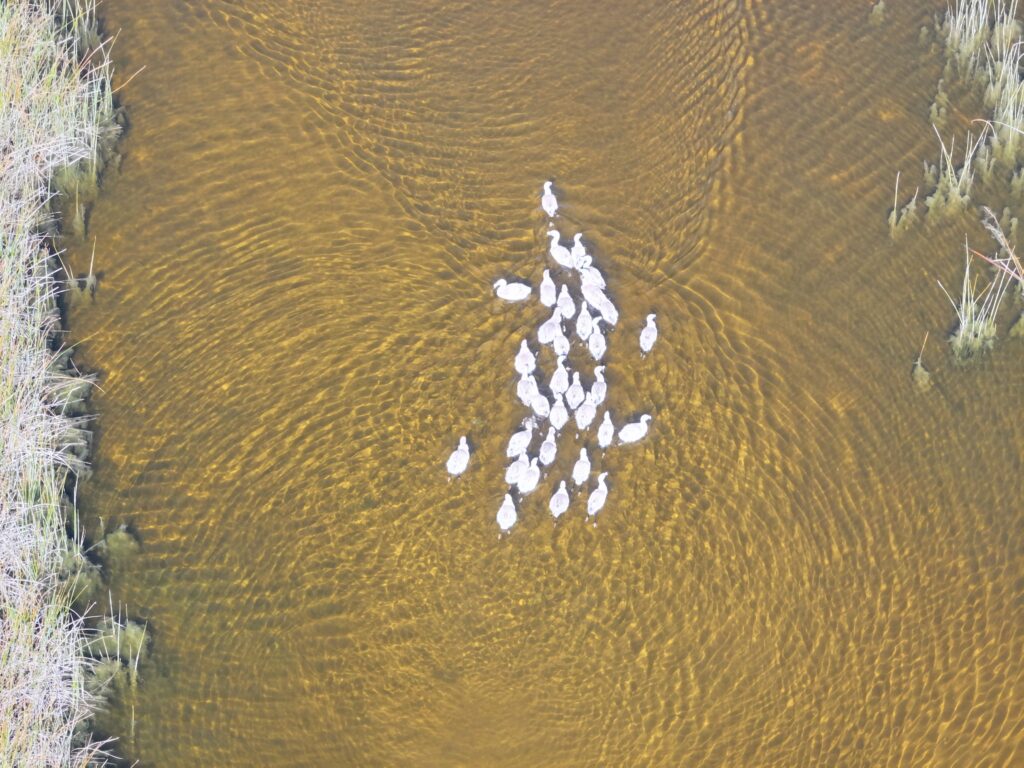
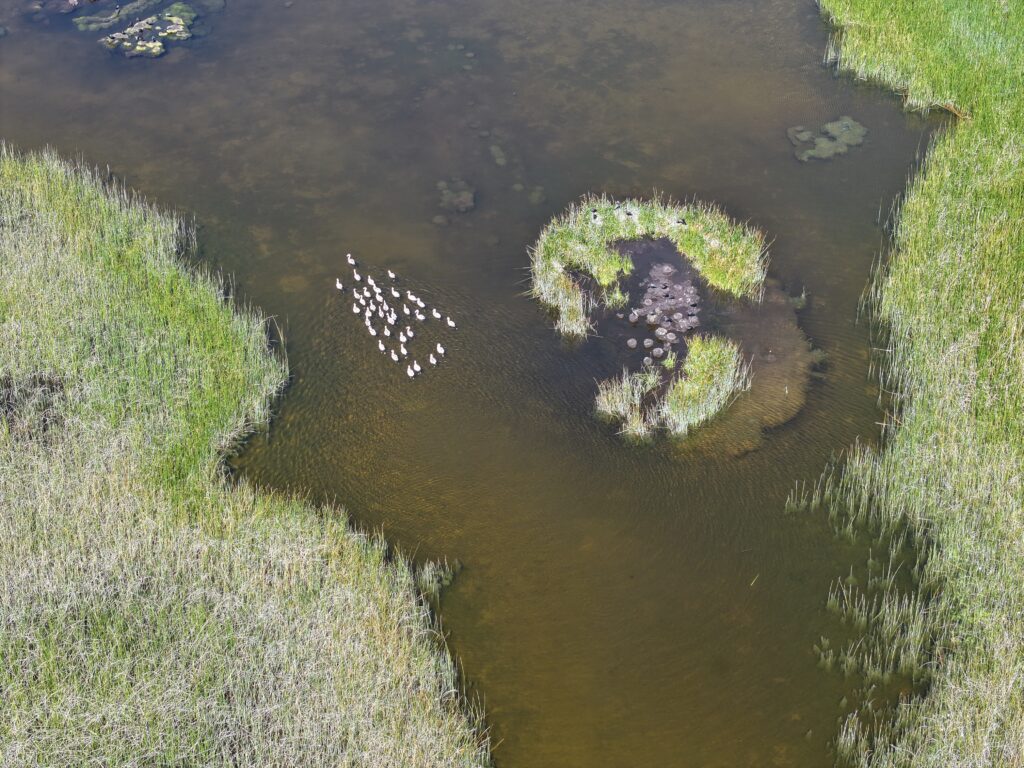
DZCA will do its part to disseminate the nesting information far and wide. On a local level, Henry and Luis will present the findings to the Lake Chinchaycocha (aka Lake Junin) Management Committee, a multi-party working group. On a broader scale, the findings will be added to the Global Biodiversity Information System, a digital database platform used by scientists around the world. Beyond information sharing to decision-makers, DZCA and our partners hope to install instruments to accurately measure lake level fluctuations in the areas where flamingo nests were found so we can more closely study the impact of those fluctuations on flamingo nesting success.
This is not the first time DZCA’s use of a drone has contributed to a deeper understanding of species and habitat in the wild in Latin America. Henry Tinoco and fellow contract staff members Luis Castillo and Dr. Roberto Elias’ recent use of drone for research and conservation work included a first-ever documentation of an Andean condor nest in the Central Andes of Peru. The knowledge gained from this research will help DZCA and our partners—including the Peruvian government agencies responsible for protected area and wildlife management—save wildlife for future generations.
You can access the full article and see more photos here: