Helping the Herd

By Stefan Ekernas, Rocky Mountain/Great Plains Program Director

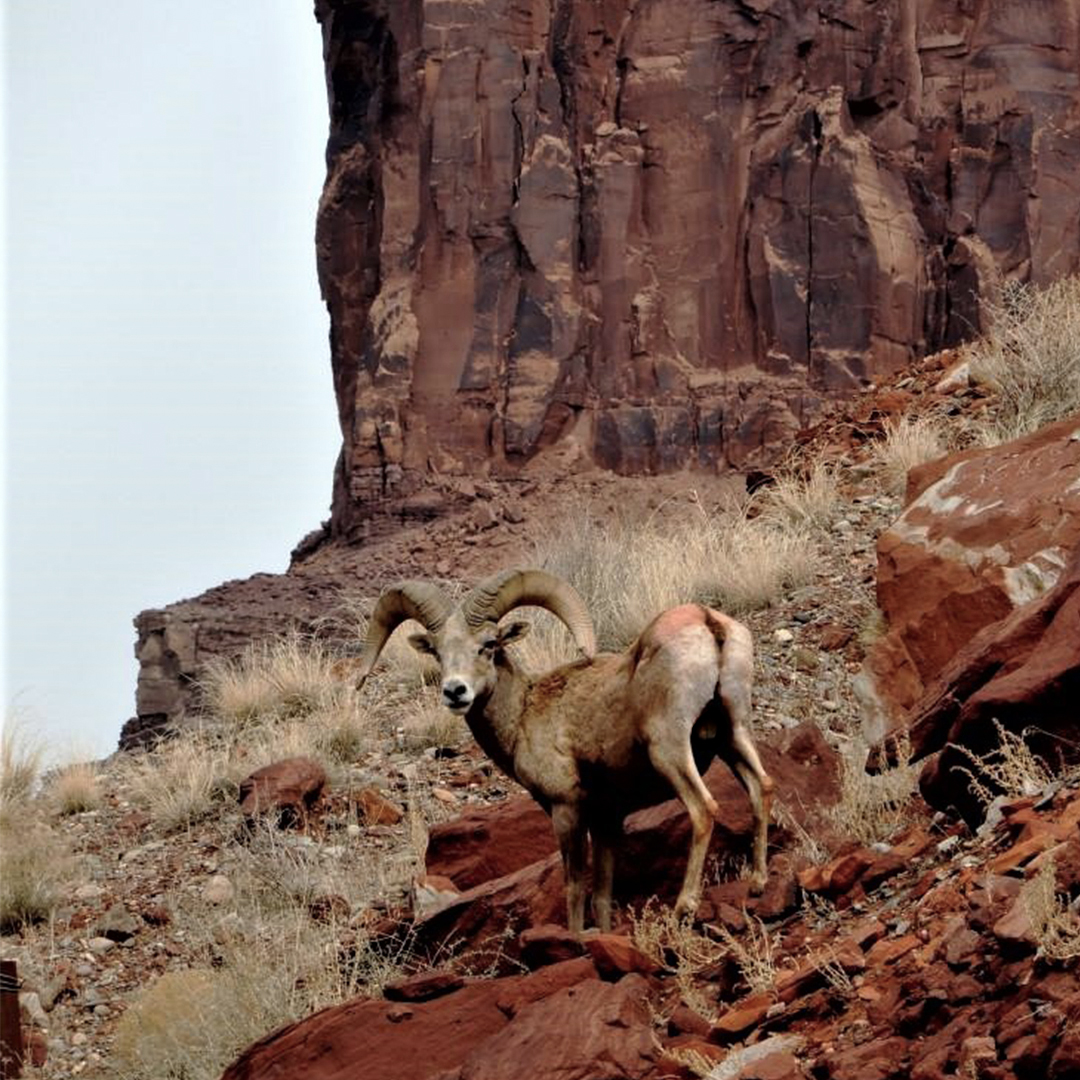
In December, Denver Zoo helped launch a new field project to conserve desert bighorn sheep on the Colorado Plateau. The project-supported by a $260,000 grant from the Bureau of Indian Affairs and U.S. Fish and Wildlife Service to the Navajo Nation-aims to stop a pneumonia epidemic sweeping through Navajo Nation’s bighorn sheep. The disease has triggered 70 percent declines in two of the Nation’s three bighorn populations. A collaborative team from Navajo Nation Department of Fish and Wildlife, Colorado State University, Wildlife Conservation Society, and Denver Zoo successfully prepared for and captured 90 bighorn sheep along the San Juan River.

Video Courtesy of Native Range Capture Services and Denver Zoo

Sheep were sampled for disease, fitted with GPS collars to track movements and survival, and released. The first phase of the project is aimed at understanding disease epidemiology and movements in bighorn. Our next step is to work alongside indigenous subsistence herders who tend domestic sheep that are likely reservoirs for pneumonia-causing pathogens. Led by a Navajo Nation graduate student, this second phase will investigate domestic sheep epidemiology and movements, with the goal of identifying conservation solutions that isolate bighorn from domestic sheep while supporting traditional livelihoods. 
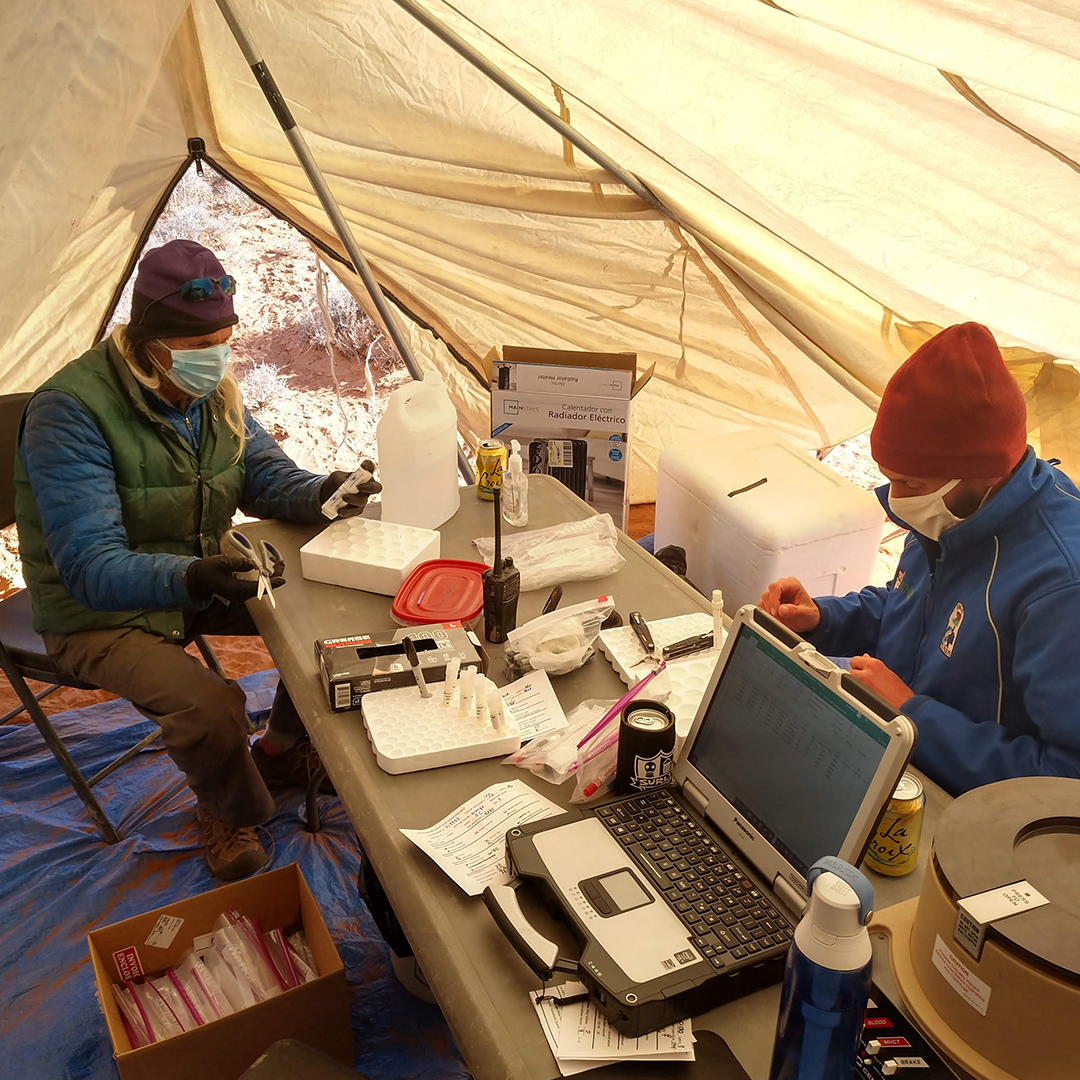
NavajoBighorn_embed01

Photo courtesy of Jess Fort, Navajo Nation Department of Fish and Wildlife

Bighorn once roamed in vast numbers across the Rocky Mountains, Great Plains, and Colorado Plateau. Current populations are a mere 5 percent of historical numbers-a shadow of former abundance. Over-hunting and livestock competition have taken a heavy toll, but the introduction of novel diseases has proven an even more insidious threat. 

Pneumonia outbreaks in bighorn result in mass mortalities that cause populations to plummet within a few years, followed by 10-20 years of high mortality in lambs that prevents populations from recovering. A complex combination of disease pathogens and hosts are involved, including the bacteria Mycoplasma ovipneumoniae, Mannheimia haemolytica, and Pasteurella multocida with bacterial infections possibly enabled by lungworms, all of which can be carried by multiple species of hoofed animals. Despite all the complexity, domestic sheep appear to be a key disease reservoir. And isolating bighorn from domestic sheep has proven successful in preventing outbreaks.

Interspersed among spectacular red rock canyons, sheep herders on Navajo Nation are the latest in a 500-year-long line of Diné people raising sheep on their ancestral lands for wool and meat. They make a living in an unforgiving landscape that receives only 2 inches of precipitation each year, using an their deep traditional ecological knowledge that all too often gets overlooked. For most of Diné history bighorn thrived alongside herders and their domestic sheep, but something changed in the 20th century. Driven to near-extirpation by the mid-1990s with only 34 animals remaining, the Navajo bighorn made a remarkable recovery to 600 animals in response to concerted conservation efforts-and by 2016 represented 1 in every 7 bighorn in Utah. Now, that recovery is threatened by disease. 
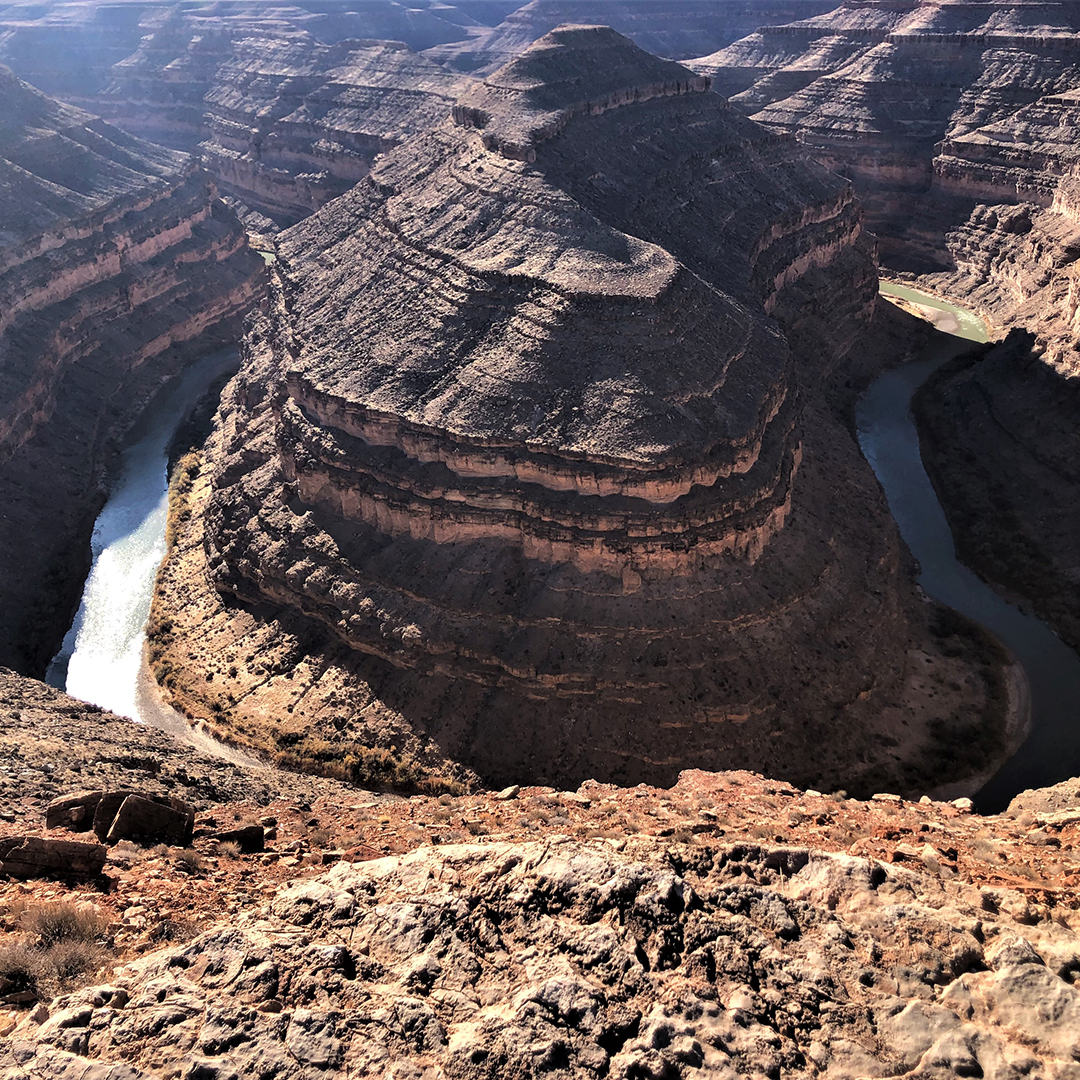
NavajoBighorn_embed02

Photo courtesy of Joel Berger, Colorado State University and Wildlife Conservation Society

Navajo Nation is enormous at 18 million acres. It carries a grim history of outsider interference, and is both under-resourced and lacks capacity to fully address this conservation challenge. Denver Zoo’s Conservation and Animal Health Departments are supporting Navajo Nation; filling gaps in capacity by providing ecological, epidemiological, community engagement, and veterinary expertise. The successful capture was an exciting first step in tackling the conservation challenges facing the Nation’s bighorn. Now comes the hard work of bringing communities into our work, and securing opportunities for the next generation of Native conservationists.
Conservation from Home

By: Jessica Meehan, Bird Keeper

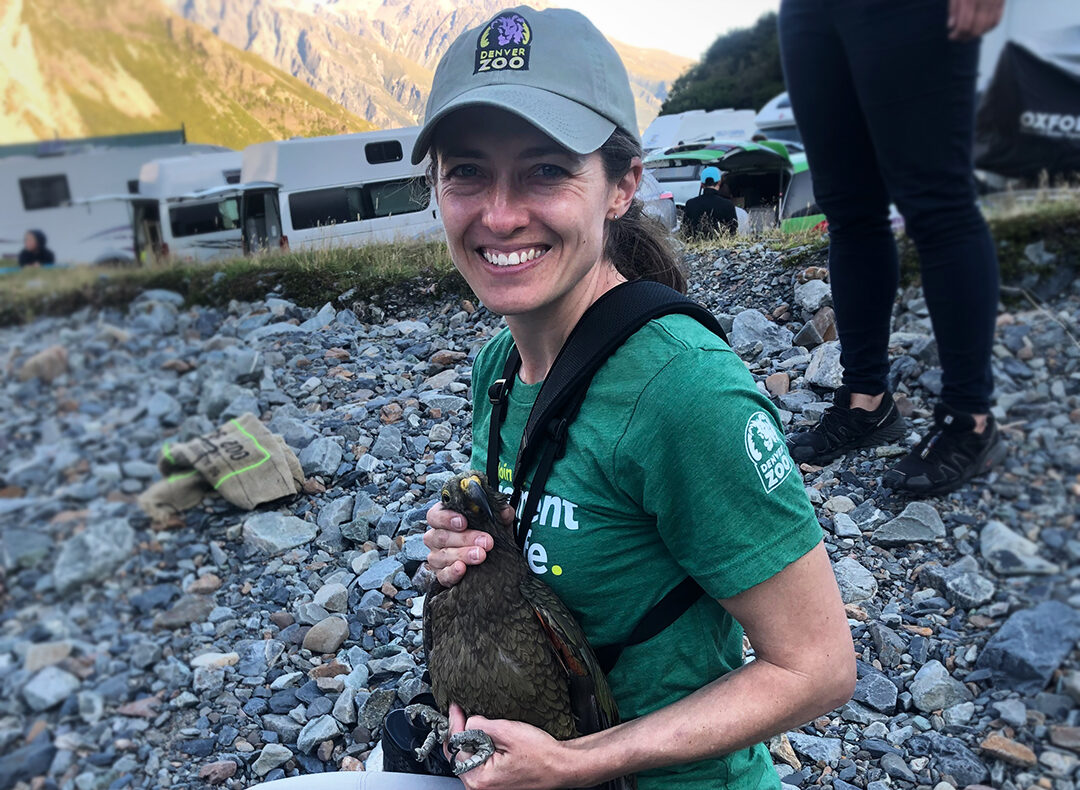
  2020 was a year for the history books. It was a year of struggle and hardship, but also determination and ingenuity. Throughout it all, Denver Zoo remained dedicated to wildlife conservation, in any form possible. Despite a ban on travel and significant budget cuts, Denver Zoo continued its support for the Kea Conservation Trust (KCT) for the third year in a row, albeit in a different way than years past. Kea are an endangered parrot species native to New Zealand. You can see them right here at Denver Zoo on the Avian Propagation Center’s Nurture Trail near Lorikeet Adventure throughout the winter (This alpine species loves the cold, so they’re a great one to see even on those chilly days). In addition to breeding the species to support the small North American zoo population, Denver Zoo provides funding to the KCT for their work in New Zealand. Funding has been used to purchase radio transmitters that are specially designed for kea to wear, allowing the KCT to track adult females to determine if they are successful in their nesting attempts. These transmitters were deployed in the Murchison Mountains, a region that had been largely unexplored by kea researchers. Denver Zoo funding has also been used to purchase tracking and field equipment, used in projects throughout the island, that previously had to be borrowed from the New Zealand Department of Conservation (DOC). In February 2020, I traveled to New Zealand to assist with the Lead-Free Kea Initiative. Little did I know it would be one of Denver Zoo’s last conservation trips of 2020. Denver Zoo’s commitment to the KCT continues with support for another initiative – a citizen science project called the Kea Sightings Database.  This website was created to assist kea researchers by allowing anyone living or traveling on the South Island to enter their kea sightings so trends in population, distribution, migration and individual birds can be tracked. Users can look at recent sightings at their location to see if they are likely to see kea in their region and look up banded kea they see to find out their name and a little about them – so if you saw a kea with the bands “yellow AG on blue” chewing on your shoe, you could find out his name was Jussy!  And perhaps most importantly, you could enter the data about your sighting into the database so researchers would know that Jussy was still alive and well. This incredible database isn’t the first to track kea sightings; there are actually 12 years of data from the KCT’s original sightings webpage waiting to be logged into the Kea Sightings Database! It will take many hours, weeks and months to get all of the old sightings entered into the database, and the kea researchers in New Zealand just don’t have the time needed to accomplish this monumental task. Enter Denver Zoo, helping conservation projects from across the world – even during a pandemic!  As part of the 2020 grant, Denver Zoo staff are getting paid time to enter historical data into the Kea Sightings Database. This work is critical to expanding our understanding of population trends in this endangered and declining population. Denver Zoo remains committed to conservation even during the toughest of times. Sometimes we have to get creative to find ways to support organizations from afar when travel isn’t possible, and this project shows that it is possible to make a big impact for an endangered species from across the world.

Advancing Sustainability

At Denver Zoo we recognize our operations directly impact the well-being of the natural environment. In order to carry out our mission, Inspiring Communities to Save Wildlife for Future Generations, we must start by focusing on operational sustainability on our 80-acre campus and throughout our supply chains. We are embracing the challenge of making our 127 year-old organization environmentally sustainable and resilient. We are dedicated to serving as an environmental leader, both in the industry and within our community.

Denver Zoo is proud of the three major publicly announced targets from our Sustainability Objectives and Targets program:

  • Energy: 25% reduction in energy use by 2025 from a 2018 baseline. 100% renewable electricity use by 2030.


  • Water: 50% reduction in water use by 2025 from a 2018 baseline.


  • Waste: Zero Waste campus by 2025 (defined as a 90% landfill diversion rate)


Waste Diversion and promotion of a circular economy: Our animals and operations produce a lot of waste! Most of that waste can be recycled, composted, donated, reused, or repurposed instead of being sent to a landfill. We are committed to reducing landfill waste wherever possible and supporting a more circular economy.

Water stewardship and conservation: Clean, accessible water is a pressing issue locally and globally. We are dedicated to keeping harmful contaminants out of our local waterways and reducing water use to support a clean water future for all.

Reduction of fossil fuel use through improving mobility, energy efficiency, and supporting renewable energy sources: From vehicles to computers, energy has transformed human life and connected us in unimaginable ways. Unfortunately, traditional fossil fuel energy is the primary cause of a rapidly changing climate and loss of biodiversity. We are committed to a clean-energy future that supports diverse ecosystems and robust economies.

Denver Zoo has already accomplished a lot in these areas! As of Earth Day 2023, we have achieved more than 70% reduction in annual water consumption since 1999, an average of 60% waste diversion from landfills, and continual reductions in annual energy use despite exhibit expansions.

We are at the tipping point right now and must reach beyond the low-hanging fruit of LED lighting retrofits, HVAC and water filtration system upgrades, and composting and recycling. We need to be innovative and pursue the latest in Net Zero Electricity principles, efficient and resilient building design, water conservation efforts, smart materials use and circular economy programs, and strategic greenhouse gas analysis and reduction. And we need your help! When you visit the zoo, help us by correctly recycling and composting (don’t wish-cycle- if you’re not sure put it in the trash!). Refill your water bottle at the refill stations located throughout the campus. Visit us by carpooling, walking, biking, or taking the bus. Your efforts protect the natural environment for wildlife and future generations. Thank you.

Ridwell

Our new partnership with Ridwell is one way we’re expanding the materials we recycle. Through Ridwell we’re able to recycle the plastic film produced from our behind-the-scenes operations. This includes plastic animal feed comes wrapped in to the plastic packaging from goodies in the giftshop. As of May 2023 we’ve diverted over 600 lbs of plastic wrap from the landfill. We continue to work with our suppliers and vendors to reduce the amount of plastic that enters the zoo, but Ridwell ensures that the plastic we can’t reduce is recycled.

Join Denver Zoo and Ridwell, the hard-to-recycle item experts, for a special event! On Sunday, June 25, Ridwell will be at the Zoo collecting waste items AND signing folks up for a one-month FREE trial. 

Ridwell will be collecting:

  • Plastic bags (grocery bags, produce bags, bread bags, etc.)
  • Dry cleaning bags
  • Bubble wrap
  • Air pillows
  • Plastic wrap (cling wrap)
  • Shrink wrap (from cases of water bottles, for example)
  • Ziploc bags (resealable plastic bags)
  • Plastic newspaper bags
  • Plastic shipping envelopes (without padding or liners)

The offer is only available to those who live within Ridwell’s service zone, which covers the majority of the Denver metro area.

To sign up for the free trial, audiences will need to provide their credit card information. They can cancel at any time during the trial period and will not be charged. If they continue with the service after the trial, their credit card will be charged automatically.

The discount offer is valid for two weeks after the hard-to-recycle collection event on June 25th (expiry July 9th).

Safe Passage for Local Wildlife

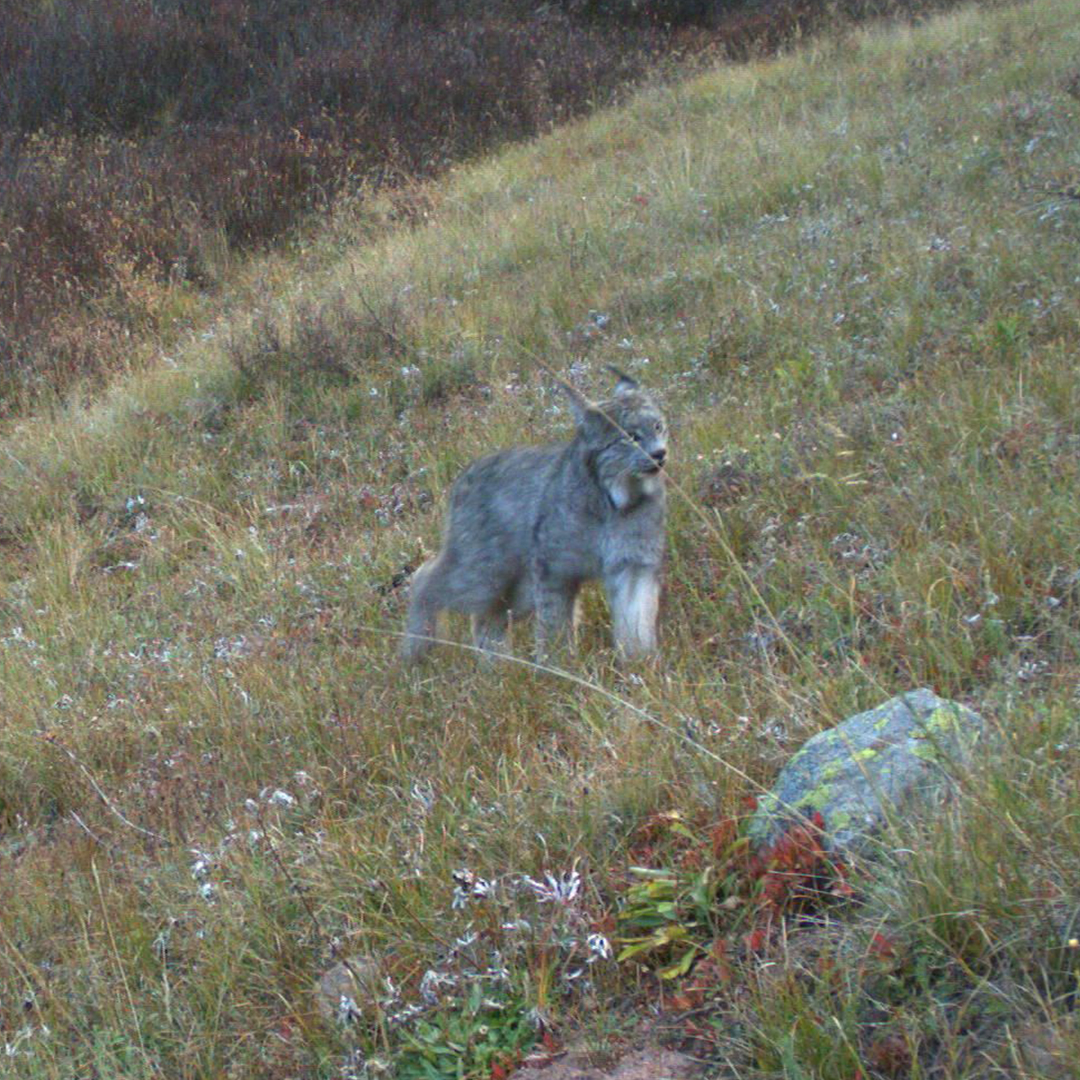
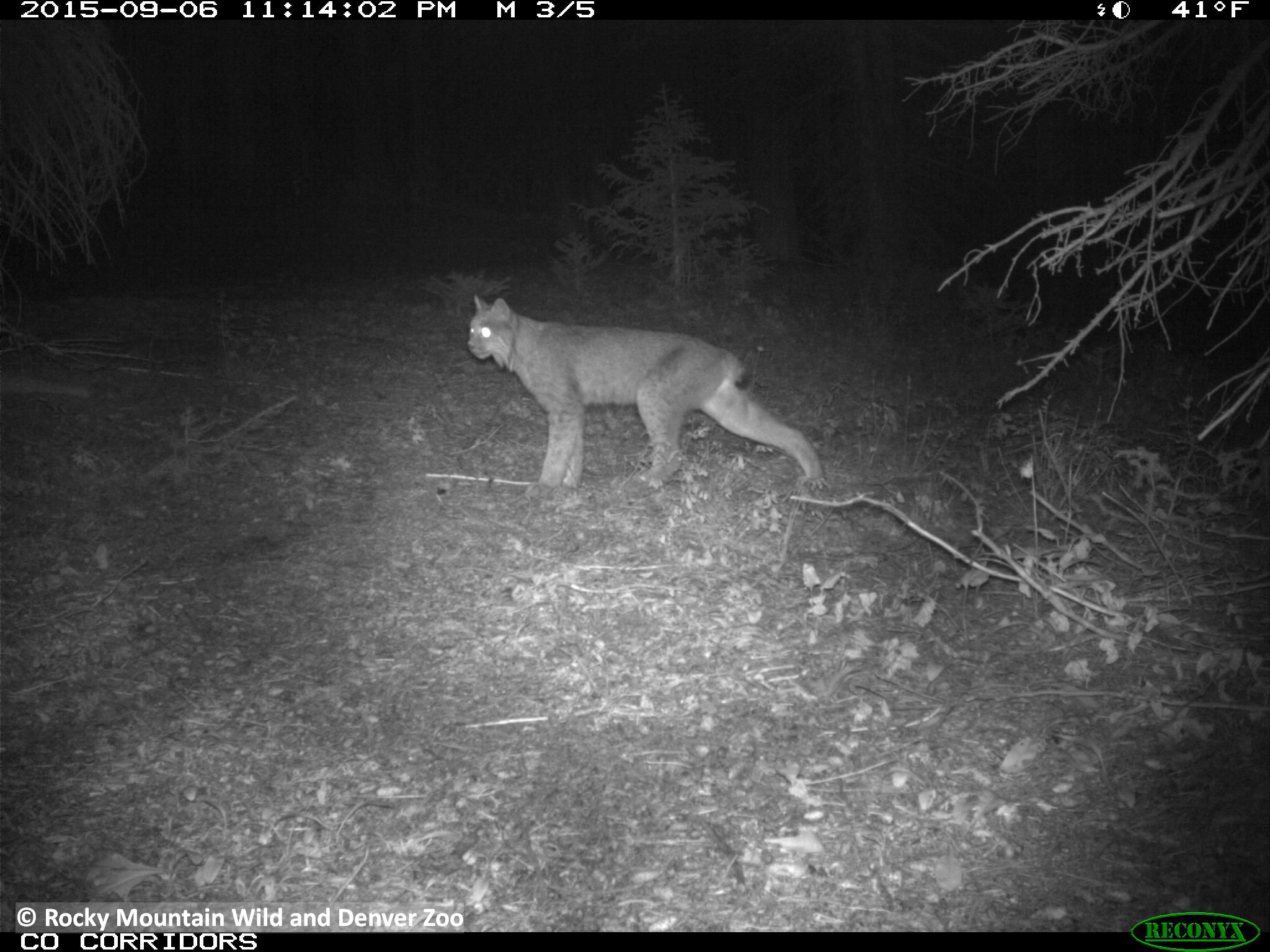
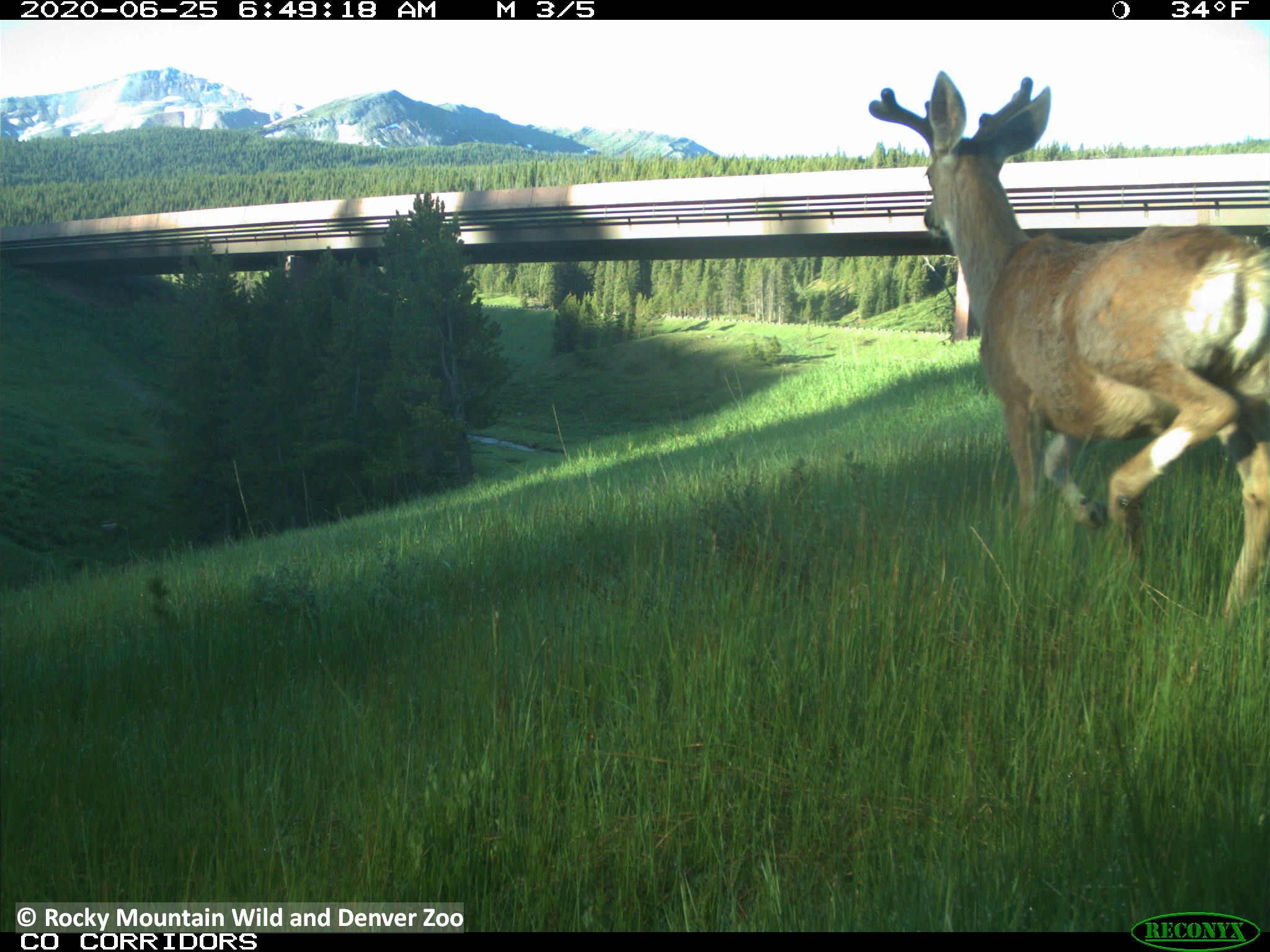
Every year, 4,000 wildlife-vehicle collisions occur in Colorado-with tragic consequences for both people and animals, not to mention upwards of $80 million in property damage. In 2018, Denver Zoo helped to found Summit County Safe Passages: a working partnership between state and federal agencies, non-profit organizations, the outdoor industry and mountain communities to help mitigate this critical issue with innovative wildlife crossing structures. Extensive surveying, including years of observing wildlife with camera traps, identified the busy stretch of I-70 at East Vail Pass as a prime location for the project. One of Summit County Safe Passages’ primary focuses is this high-conflict area, which averages more than 22,000 vehicles per day and is important habitat for numerous species, including the threatened Canada lynx.  Lynx can move over 2,000 miles annually through boreal forest in search of food, shelter, and mates-so intact landscapes are critical to this elusive cat’s survival.

Canada lynx at East Vail Pass

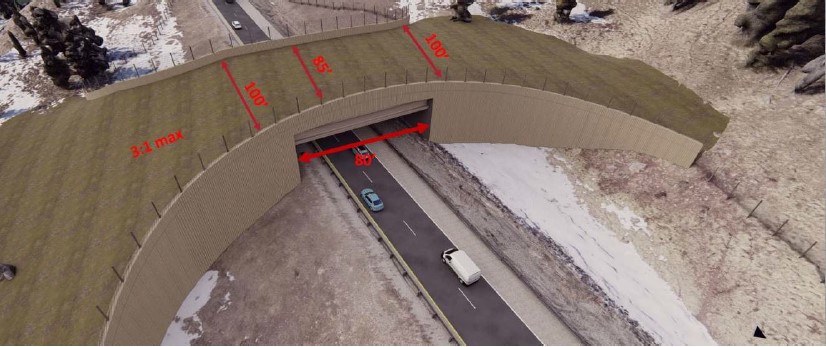
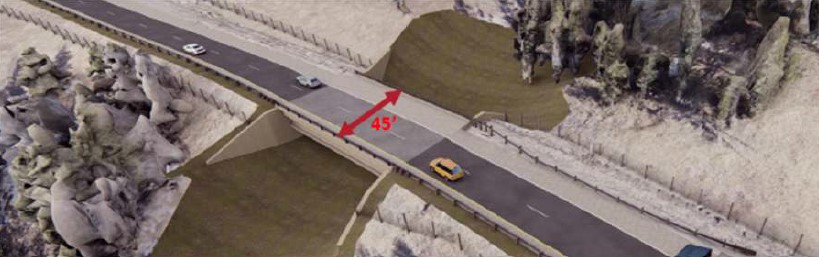
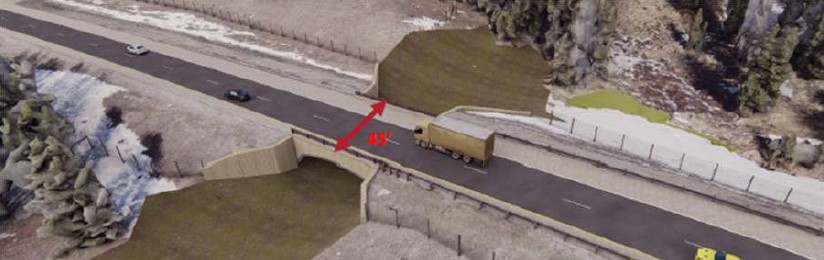
Canada lynx at East Vail PassOne Step Closer to Bridging the Gap Last month, we were thrilled to mark a major milestone in bringing these solutions to fruition: initial designs for the crossing structures. Funded by Vail Resorts, Arapahoe Basin Ski Area and the Center for Large Landscapes, the innovative design calls for three structures along a 1.5-mile stretch of westbound I-70. These structures will be placed across from large-span bridges along eastbound I-70 that local wildlife have already been using as unofficial underpasses; this yields significant cost savings, as the structures need to span only the two westbound lanes of traffic.

Cam14_2020_08052020_105

Large-span bridges along eastbound I-70 at East Vail Pass function as underpasses for wildlife. However, wildlife are unable to cross the two westbound I-70 traffic lanes, severing Eagle’s Nest Wilderness on the north side of the highway from White River National Forest on the south side Providing a mosaic of both under- and over-passes is important to allow different species to cross. Some species, such as elk, vastly prefer over-passes and are reluctant to enter all but the largest under-passes; other species, such as bears, prefer under-passes. Incorporating a variety of options (including different designs for the two under-passes) maximizes the utility of these structures for wildlife. Equally important is the educational component of including an over-pass, since motorists do not see under-passes. The new over-passes will allow us to reach eight million drivers per year with our message of collaborative cohabitation. Invested in the Safety of Iconic Species The Summit County Safe Passages Project is win-win solution for both wildlife and people, and will ultimately be an investment that pays for itself. But, as with all multi-entity collaborations such as this one, funding is phased-and largely philanthropic.If you’d like to support the next phase of this important project, which focuses on identifying wildlife use pre-construction and engaging key community and government stakeholders in supporting these wildlife crossings, please contact Stefan Ekernas, Rocky Mountain/Great Plains Program Director, Field Conservation Program, or consider making a donation by visiting: https://denverzoo.org/support/donate/. As always, Denver Zoo’s incredible member and donor community is an essential part of this collaboration. With your help, we can help secure safe passage for some of the Rocky Mountains’ most iconic species-and continue Inspiring Communities to Save Wildlife for Future Generations.  

Overpass

Over-pass wildlife crossing structure proposed for milepost 192.3 westbound I-70

Underpass 1

Under-pass wildlife crossing structure proposed for milepost 193.0 westbound I-70

Underpass 2

Under-pass wildlife crossing structure proposed for milepost 193.5 westbound I-70

OWB logo 2

Saving Species Behind the Scenes

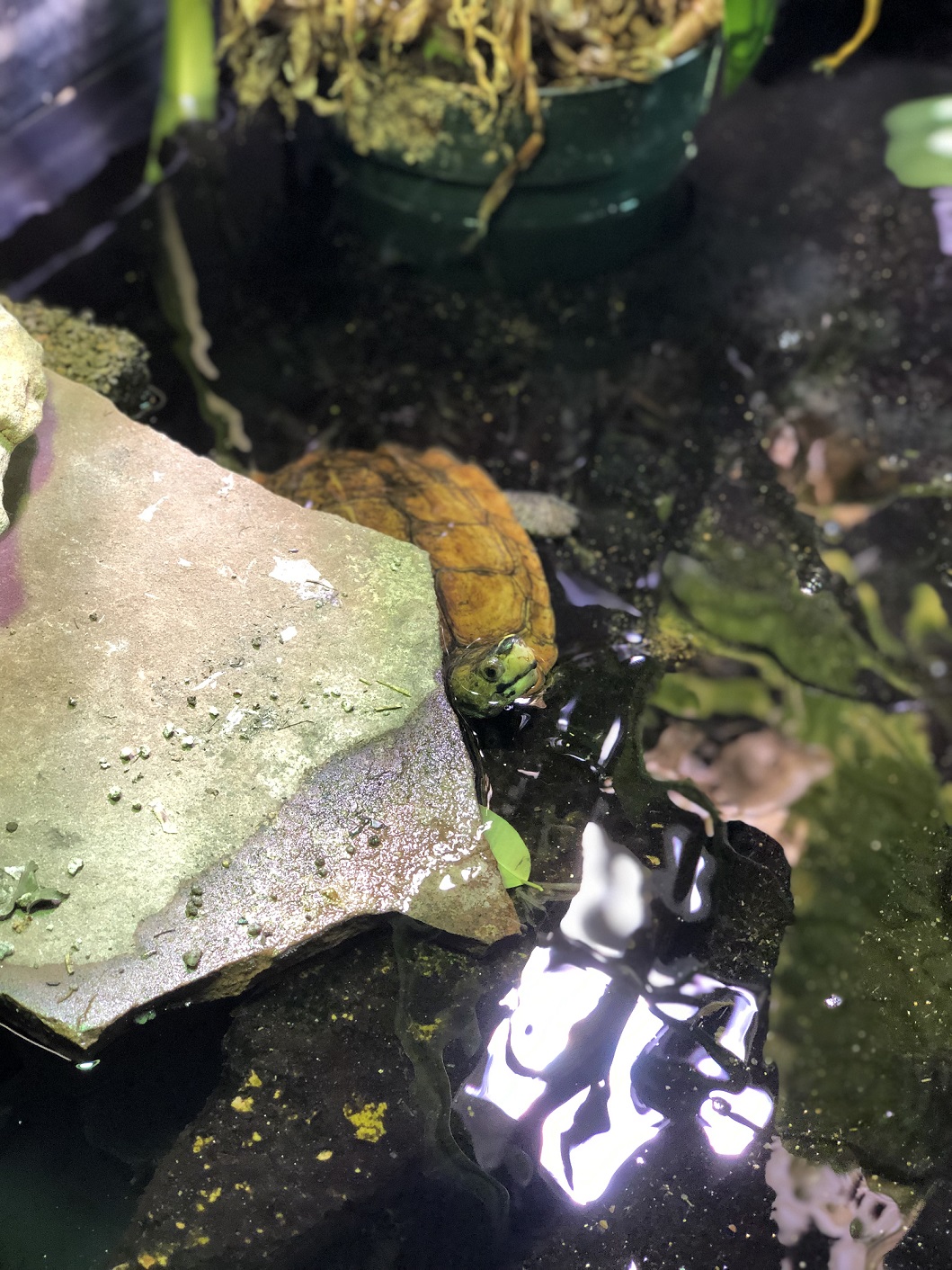
You could do lap after lap around Tropical Discovery, checking every habitat, every sign, and you wouldn’t find our Sulawesi forest turtles. The mysterious turtle species calls Denver Zoo home, but lives high above the guests touring Tropical Discovery, in a custom-made habitat on the second floor. Why would Denver Zoo have a species no one can see? And why is this species and our recent breeding success of it a big deal? 

SFT_Embed

A Dwindling Species 

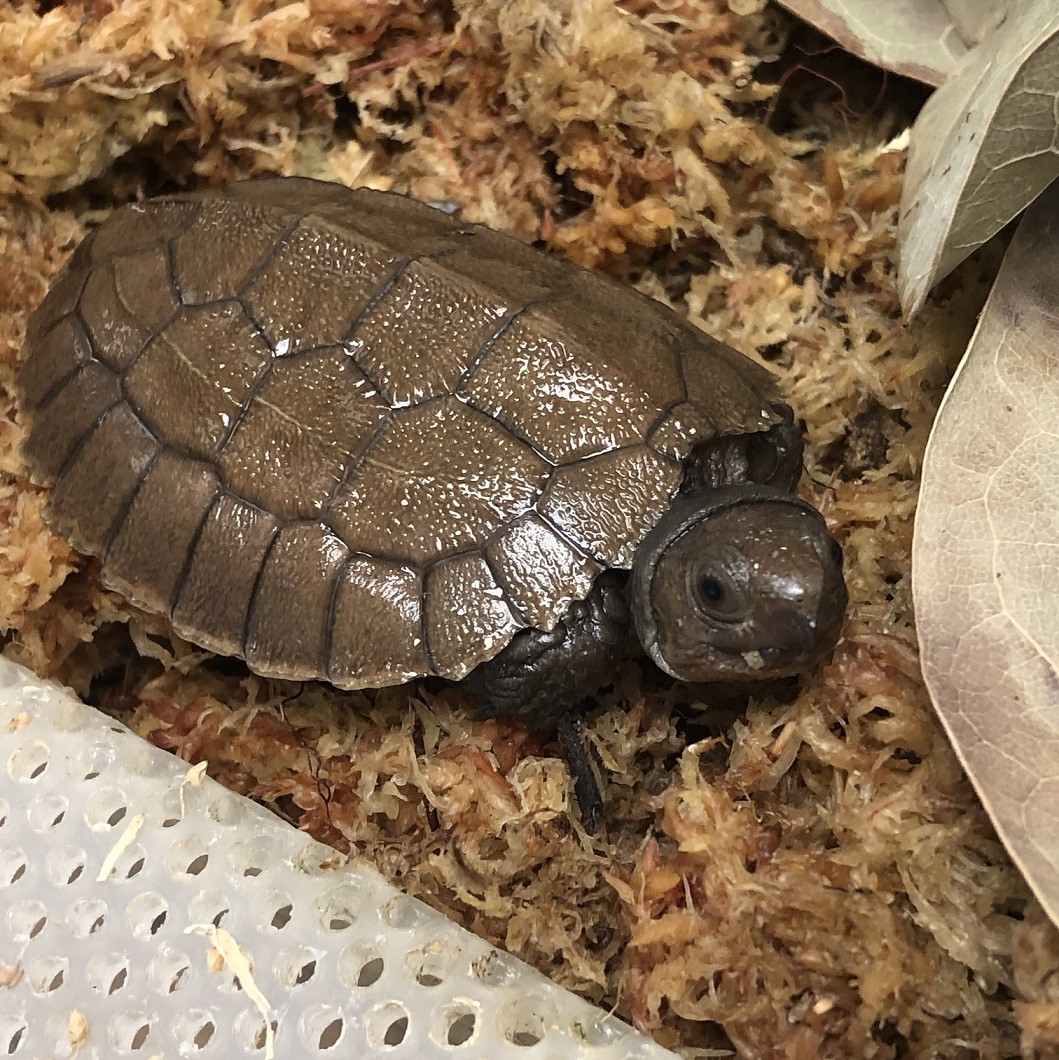
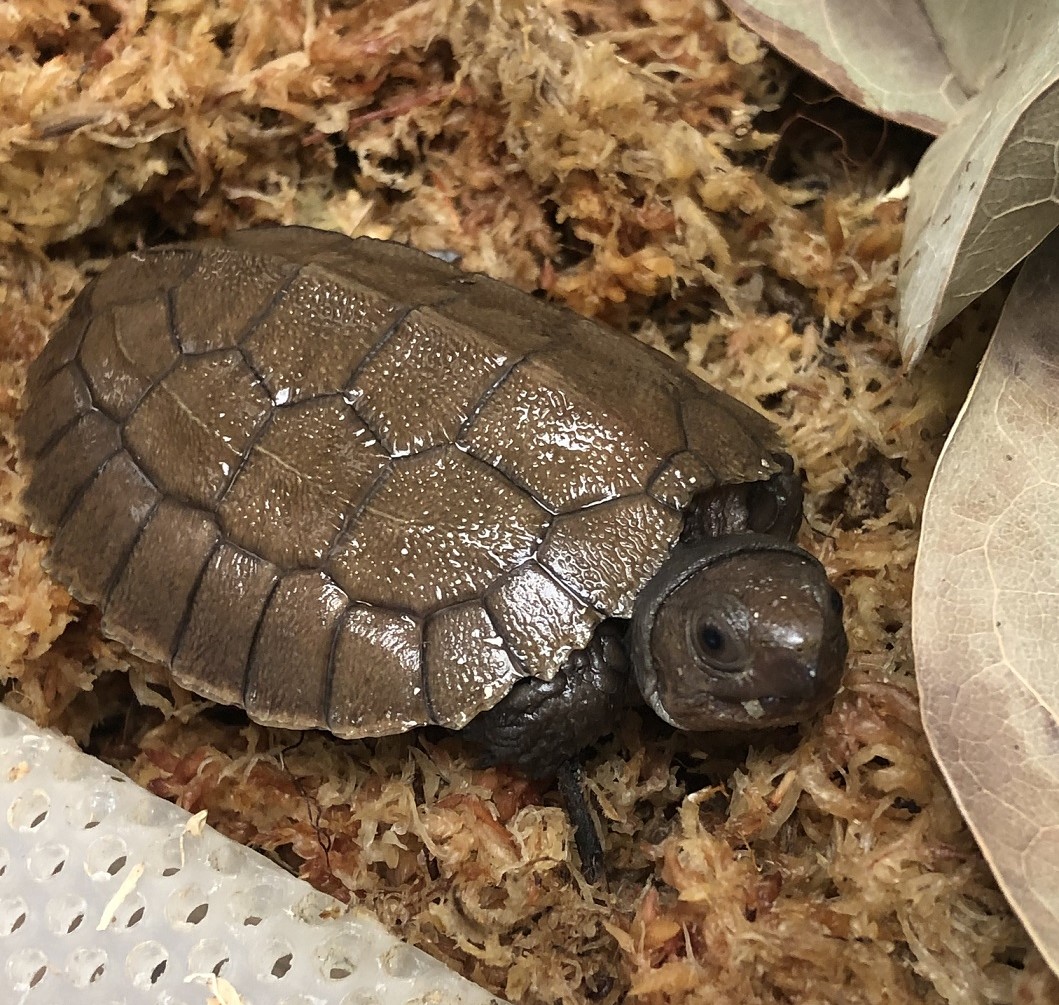
At first glance, the Sulawesi forest turtle doesn’t look like a remarkable species. Native to the northern forests of the island of Sulawesi in Indonesia, adult turtles average just under a foot long, and have a brown shell. Males can be identified by their white heads, and tend to be larger than females. They’re also one of the most critically endangered turtle species in the world. We don’t know exactly how many remain, but they’re increasingly hard to find in their native habitat. The biggest threats to the species include habitat loss, wildlife trade and human consumption. Despite being outlawed in 2002, the turtles are still exported illegally, causing the species to suffer. Unlike many turtle species that lay dozens or even hundreds of eggs at a time, the Sulawesi forest turtle will lay only one to two eggs per clutch, and only lay eggs a few times a year, making it hard to increase the population. 

SFT_embed1

SFT to the SSP 

Sulawesi forest turtles are now a part of the Association of Zoos and Aquariums Species Survival Plan, and Denver Zoo is one of the institutions caring for and breeding these turtles. The Sulawesi forest turtle is a reclusive, shy species, and wouldn’t thrive in a typical Zoo habitat, so the individuals here at the Zoo are living the life in a large habitat upstairs in Tropical Discovery, designed to mimic their natural habitat and encourage breeding. Taking the time and care to create an ideal environment for these turtles has led to a successful breeding program, and we’ve had 22 successful hatchings since we started taking care of the species, with two more eggs incubating as of August 2020. Newly-hatched turtles are pretty cute, but we tend not to get too attached because it won’t be long before these turtles get a recommendation from the SSP, move to another AZA facility, and do their part to aid in the survival of the species. 

So even though you can’t see them, know that your support of Denver Zoo is helping us save this, and many other threatened, endangered, critically endangered and extinct in the wild species every day.  

Learn more about how you can support Denver Zoo, and be sure to follow us on FacebookInstagram and Twitter for all your latest Zoo news!

Happy Colorado Day!

By: Stefan Ekernas, Rocky Mountain/Great Plains Program Director

Colorado’s wildlife is spectacular, and includes the nation’s largest populations of both elk and bighorn sheep. With a burgeoning human population that increasingly goes to recreate in the same wild places where wildlife lives, and in the face of a changing climate, Denver Zoo works to connect communities in conservation to find solutions for people to co-exist with and indeed allow wildlife to thrive. Our strategy is to build alliances by harnessing partnerships, connecting people to connect landscapes for wildlife. We work alongside a diverse array of land managers, communities, industries, universities, and non-profits to save an equally diverse array of wildlife from bison to boreal toads.

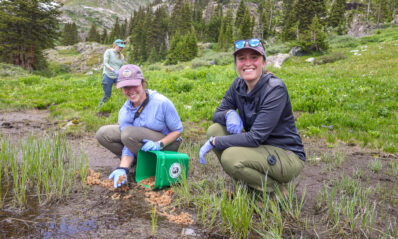
In the high-alpine peaks we work to save the inimitable American pika, a diminutive mountain-top dwelling cold specialist. Pika thrive above the tree line, surviving winters not by hibernating but instead by industriously collecting grass “hay piles” during the brief alpine summer and spending the rest of the year in rock crevices living off their summertime work cozily bundled in dense fur. In a warming climate, the very cold-adaptations that allows these critters to survive winters at 14,000′ threaten to become a liability. To understand how pika respond to climate change and find conservation solutions, Denver Zoo uses over 300 community science volunteers to collect field data on pika, working hand-in-glove with Rocky Mountain National Park, White River National Forest, Colorado Parks & Wildlife, CU Boulder, and Rocky Mountain Wild.

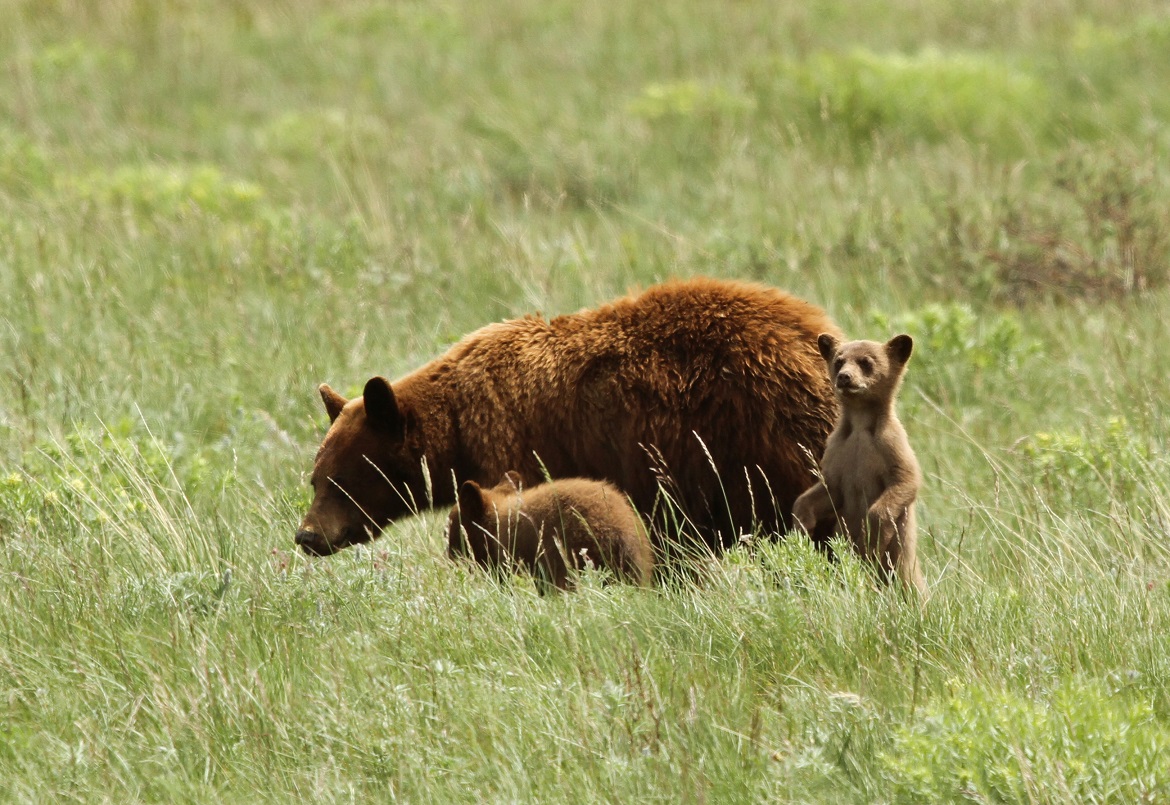
While wildlife on Colorado’s alpine peaks are primarily threatened by climate change, the human footprint is more pronounced below the tree line. Highways cut through wilderness areas, threatening migration routes for bighorn, elk, deer, moose, bear, lynx, bobcat and mountain lions. Wildlife over-pass and under-pass crossing structures across highways offer a win-win solution to save wildlife from cars, save people from wildlife collisions, and restore intact landscapes. As a member of Summit County Safe Passages, Denver Zoo is working to build wildlife crossing structures across I-70 and Route 9. We use community science to survey wildlife and evaluate proposed crossing structure locations, working alongside Colorado Department of Transportation, Colorado Parks & Wildlife, the ski industry, mountain towns, Summit County, US Forest Service, and other non-profits.

A less visible, but no less dangerous, threat to wildlife is the spread of diseases such as chytrid fungus that threatens amphibians worldwide including Colorado’s boreal toad. Adapted to living in oxygen-rich cold water found only in high altitude wetlands from 8,000-12,000′, boreal toads are a state-listed endangered species undergoing precipitous declines from the introduction of chytrid fungus. In 2019 Denver Zoo became the first institution to successfully breed chytrid-resilient boreal toads in a zoological setting, and we released 682 toadlets into the wild. This program is a potential game-changer for the species, simultaneously allowing us to supplement wild populations, creating an assurance population, and buying time for boreal toads to adapt to this novel pathogen.

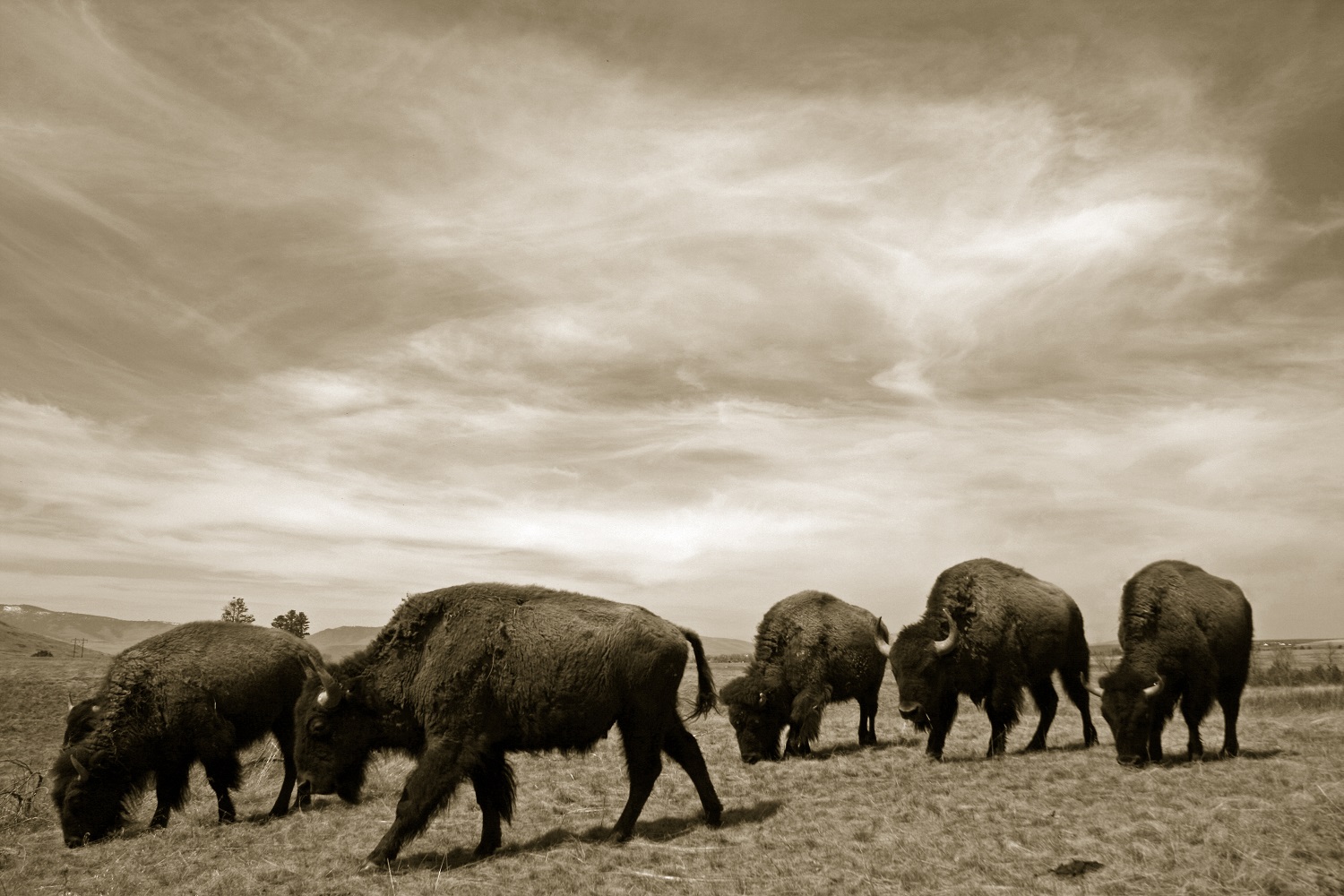
In Colorado’s prairies, Denver Zoo works with Denver Mountain Parks to restore bison and the prairies they are such an integral component of. The partnership began more than 100 years ago when Denver Zoo reintroduced bison to Genesee Park in 1914. You can still see the crates used to transport the original animals, and see their descendants roam next to I-70 at Genesee Park as well as in Daniels Park.

From the peaks to the prairies, Denver Zoo is committed to keeping our state beautiful and full of the wildlife that make it special. Happy Colorado Day!

CODay_Embed

Less, Then Zero

When it comes to resource consumption, we believe that less is more. That’s why we are committed to achieving Zero Waste by 2025, which means keeping 90 percent of our waste out of landfills. From the composting, recycling and repurposing we do all over campus to our new staff uniform shirts made from recycled water bottles, we’re working to reduce our impact on the environment, and take positive action to secure a safe and healthy planet for animals and humans. Read on below to learn about what we do to protect the environment and our community, and how your actions can make a difference for wild animals, both in our care and around the world.

What We Do at the Zoo

We have a rich and meaningful heritage as an organization committed to the conservation of animals across the globe and as a leader in animal care. But our commitment to species conservation extends to our commitment to protect the environment and our community through our sustainability program, which guides us towards our goal of operating in the most environmentally, socially and economically friendly manner, and ensures we are taking positive action to secure a safe and healthy planet for all living things. Our eight priority sustainability objectives include:

  1. Responsible sourcing of materials, food and services
  2. Waste diversion and promotion of a circular economy
  3. Water stewardship and conservation
  4. Reduction of fossil fuels through improving mobility, energy efficiency and supporting renewable energy sources
  5. Economic growth that supports positive social and environmental impacts
  6. Social leadership with the Zoo and surrounding communities
  7. Design for resilience to promote thriving environments in a changing climate
  8. Integrate ecosystem and biodiversity values into planning and development processes

Read more about the Zoo’s sustainability initiatives and how they support actions to mitigate the impact of climate change and other issues in an effort to protect wild animals and wild places.

Simple Ways YOU Can Make an Impact

Today, with at least a million species on the brink of extinction, our role as a Colorado wildlife conservation champion is more important than ever-and you, the members of our community, are absolutely critical to our success. There are many ways you can make a difference in your day-to-day lives, but none are as simple as reduce, reuse and recycle. We recently partnered up with Swire Coca-Cola, USA, our local Coca-Cola bottler and REPREVE to highlight how we’re keeping 90% of our waste out of landfills through composting, recycling and repurposing materials here on our 80-acre campus. Here’s a great video we recorded last year on how you can help!

*This video was recorded in 2019 before the current COVID-19 crisis hit Denver. Denver Zoo is enforcing all applicable city, county and state safety mandates.

Learn more about our Zero Waste initiative and other ways you can help wildlife by preserving their natural habitats and keep pollutants and toxics out of the environment at the Zoo and at home.

Amphibians in Need

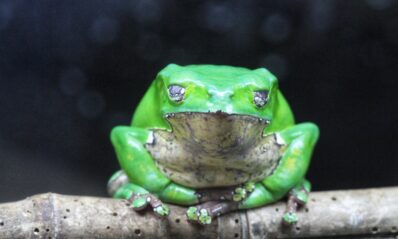
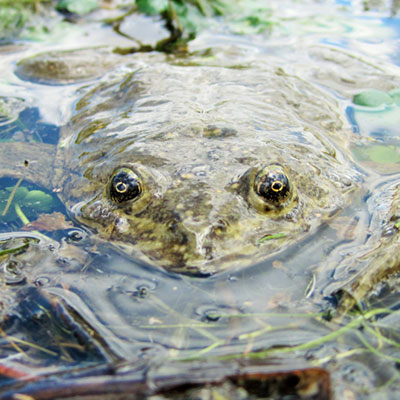
The world is undergoing a sixth mass extinction, and amphibians are particularly hard hit. Amphibians – frogs, toads, salamanders, newts, among others – are indicator species that signal ecosystem health because they are highly sensitive to changes in both aquatic and terrestrial environments. More than 40% of the world’s amphibian species are threatened with extinction, primarily from habitat degradation, overharvest, and invasive species. Denver Zoo is on the front lines fighting to reverse these declines, both on campus and in the field, from the Rocky Mountains to Peru’s Andes. Denver Zoo has been working in Peru since 2007 to conserve the two largest completely aquatic frogs in the world: the Lake Titicaca frog (critically endangered) and Lake Junín frog (endangered). These amphibians are two of 63 species of Andean water frogs (genus Telmatobius), of which 85% are endangered. Adults of both species measure up to 6-7 inches in body length, and Junín tadpoles are truly huge reaching 7.8 inches long. Both frogs spend their entire life in the waters of high-altitude Andean lakes. Lake Titicaca frogs are endemic to Lake Titicaca, a 12,500′ elevation lake located on border between Bolivia and Peru. Lake Titicaca is the world’s highest navigable lake, and it is facing a multitude of environmental threats including mining pollution, untreated sewage, and solid waste. Lake Titicaca frogs are very sensitive to pollutants, which they absorb through the large folds of skin that allow them to breathe underwater. Two exotic invasive species, the rainbow trout and kingfish, prey on tadpoles and frog eggs, and they compete with adult frogs for native fish that are adult frogs’ main source of food. Over-harvest is also a major threat, as many people consume Lake Titicaca frogs in juices and shakes believing the frogs to have medicinal properties. The Lake Junín frog is endemic to the 13,400′ elevation Lake Junín watershed in central Peru, and is facing similar threats including pollution, exotic invasive species, and over-harvest. This region is known as Peru’s mining capital with some of the country’s most severe pollution, which local people frequently cite as causing harm to both their health and their environment. Communities living around the lake are mainly farmers making a living from growing crops and sheep. People use frogs as a protein source and report frogs to now be very difficult to find, but they still consume the few that are found.


In our own backyard, Denver Zoo is working to conserve boreal toads, a cold-adapted toad found from 8,000′-12,000′ elevation. The boreal toad is a state-listed endangered species in Colorado that has seen precipitous declines with the introduction of chytrid fungus. Chytrid fungus is driving amphibian extinctions across the globe, with boreal toads in Colorado the latest potential victim. Serious counter-measures are desperately needed.

How is Denver Zoo helping to conserve these endangered species? Whether at home or in Peru, we apply our considerable captive breeding skills and engage communities and institutions in our conservation work. In Peru we train and equip rangers in two National Reserves to monitor amphibians; we finance and mentor students of biology, veterinary medicine and other careers; we advise and finance a local zoo with education and captive breeding programs; support the Peruvian Government in developing Conservation Strategies for our two focal species; and provide assistance to the Binational Conservation Plan for Lake Titicaca frog Committee. In the Rocky Mountains, we have a captive breeding and reintroduction program for Utah boreal toads, which appear to have high chytrid resistance. Building on that success, we are now working to expand our work in Colorado. You can help us save boreal toads by reducing your water use at home, which leaves more water for wetland-dependent wildlife. Amphibians across the globe face a gauntlet of threats. At Denver Zoo, we believe the only way to reverse these trends is to combine world class animal care, cutting-edge field conservation, and innovative approaches to inspiring communities to save wildlife.

One World, One Health

Kerry Owens, Certified Veterinary Technician

  A passion for animal health and saving endangered species led me to Denver Zoo more than a decade ago. And I didn’t want to limit my work to just the animals that call Denver Zoo home. But how can one Certified Veterinary Technician (CVT) have an impact on a species that lives on the other side of the world? By approaching animal health with a concept known as One Health-an understanding that the three pillars of animal health, ecosystems, and human health are inseparable. You cannot save endangered species without saving their ecosystems. You cannot save ecosystems without people. You cannot have healthy people without healthy ecosystems. You cannot have the health of one without the other.

Why One Health

The term One Health was coined back in 2004, and is now supported by institutions like the World Health Organization (WHO), the Centers for Disease Control and Prevention (CDC) and the American Veterinary Medical Association. And One Health is used right here at Denver Zoo. When we treat an animal, we’re not just looking at the individual, we’re considering those three factors – animal health, human health and ecosystem health.

Putting it All Together

My day-to-day routine at the zooincludes everything from vaccinating zebras to using medical laser treatments on hyenas, but I’m able to put some of that One Health training to use when I step away from Denver Zoo and in threatened ecosystems. I’ve assisted the Denver Zoo field conservation team by restoring watersheds at the Rio Mora National Wildlife Refuge in New Mexico and supported our work at the Ikh Nart Nature Reserve in Mongolia, where I conduct health assessments on vultures. These raptors are a great example of why One Health matters. Vultures keep ecosystems clean and free of diseases by eating carcasses. Their ultra-acidic stomach acids kill the pathogens found in the carcasses, thus cleaning ecosystems up for animals and humans. Healthy vultures keep all kinds of other creatures from getting sick. But my work in Mongolia and New Mexico has been about more than animal health. One Health means I’m monitoring water tables, working with livestock owners and sheep herders to implement responsible practices and restoring vegetation where needed. All of these things contribute to a healthy ecosystem, one that gives animals and people a home, healthy air, clean water and edible food.

Everyone Has a Role

One Health can seem like an overwhelming idea, but it’s also quite simple-we’re all connected. We use this philosophy at Denver Zoo to help the animals in our care, and to help threatened and endangered species, but you don’t have to be a CVT, zookeeper or conservationist to practice One Health. Take a moment to think of the ways the three pillars of One Health are connected in your life. Do you have plants in your backyard? What species do they support? Do you buy products that are sustainably sourced and helping maintain habitats for animals in the rainforests? The more you think about One Health, the more opportunities you’ll find to practice it in your daily life, and the more you’ll see just how connected we really are.

Accreditation is Everything

By Brian Aucone, Senior Vice President of Animal Sciences

  There are nearly 2,300 “zoos” across the United States, but not all of them are created equal. That reality has once again been brought to the forefront with the recent release of the Netflix docuseries, Tiger King: Murder, Mayhem and Madness, which delves into the underworld of big cat breeding and some of its most infamous characters. The people and places featured in the show are notorious for housing animals in appalling conditions, mismanaging breeding for profit, and perpetuating the black-market wild animal trade and animal cruelty. Only 10 percent of zoos in the U.S.-238 to be exact-are accredited by the Association of Zoos and Aquariums, which holds its member zoos to the highest standards of physical and mental care for wildlife-standards that are unachievable for the vast majority of other zoos. That means when you visit Denver Zoo and our AZA counterparts around the country, you can rest assured that you are supporting an accredited organization that provides excellent care to its animals and helps save wildlife around the globe. Here are a few key differentiators between Denver Zoo and other “zoos,” and why you should support AZA-accredited organizations, now more than ever:

  • We have an expert animal care staff that includes nutritionists, behaviorists, caretakers, animal welfare specialists, veterinarians and veterinary technicians, who are all focused on providing the absolute best care to every single one of our nearly 3,000 animals. We are among the most qualified wildlife care experts in the world.
  • We work around the globe to help save wildlife and wild places in countries like Mongolia and Peru, and even here in our own back yard of Colorado. Working with local communities, to understand their needs living alongside wildlife, together we solve complex issues that benefit people and animals. Our expertise and partnerships have created meaningful and lasting conservation impact for thousands of species.
  • We create meaningful connections to wildlife for the millions of guests who walk through our campus. Many of these individuals would never have the opportunity to see wildlife in person, and seeing animals in-person remains the most impactful way to create empathy. We are the window into the wonders of the wild world.
  • We participate in national and international breeding programs, called Species Survival Plans, that ensure a future for the magnificent wildlife in our care. Without these breeding programs, species like the black footed ferret, Panamanian golden frog, and California condor would most likely be extinct.
  • We reach tens of thousands of children around Colorado through our conservation education programs, teaching them the wonders of wildlife and how they can help. On our campus, we reach millions of guests through our comprehensive conservation messaging and educational programming. No one else in Colorado is doing this at our scale.
  • We were the first zoo to receive the AZA’s Green Award, which recognizes the efforts of zoos and aquariums take to reduce their environmental impact, and we continue to strive to operate in the most environmentally, socially and economically friendly way possible.

When you visit Denver Zoo and other AZA-accredited facilities, you are making a positive impact on the thousands of animals in our care and their wild counterparts around the world. We look forward to welcoming you back to the Zoo in the near future, and greatly appreciate any donations to our Emergency Support Fund that help us offset the cost of caring for animals during our closure due to COVID-19.