Keeping Wildlife Wild on Mount Evans

By: Julie Krajewski, Colorado Conservation Specialist 

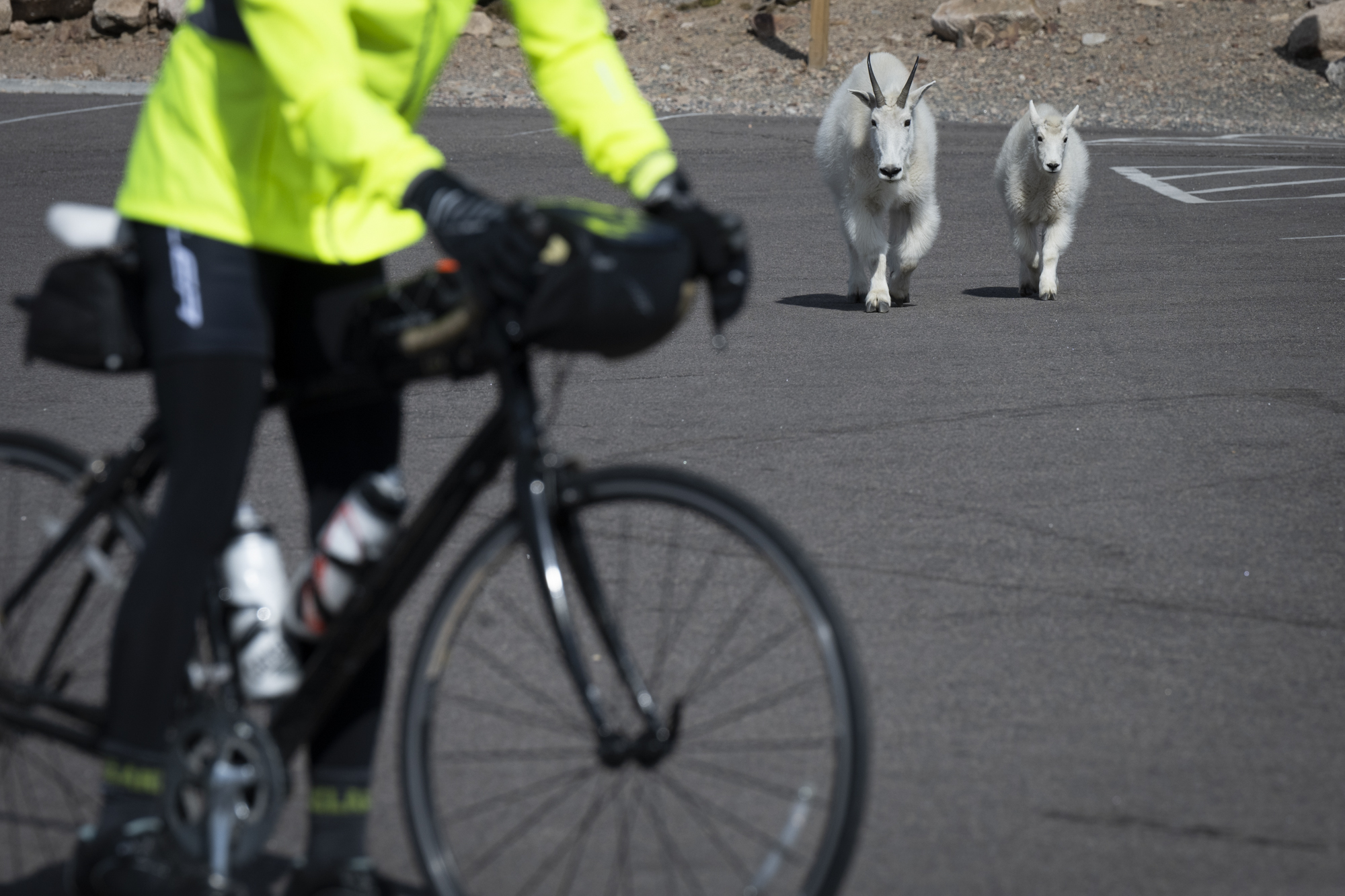
High on Mount Evans, visitors can enjoy views of mountain peaks, alpine lakes and glacier valleys, as well as the chance to see iconic Colorado wildlife, such as Rocky Mountain bighorn sheep, mountain goats, pika, and yellow-bellied marmots. The Summit Lake area is a National Natural Landmark and home to rare plants only found at Summit Lake and in the Arctic circle. With the highest paved road in North America providing the opportunity to drive to 14,130 feet, the Mount Evans Recreation Area attracts 200,000 visitors each year.  

While it is unusual to see mountain goats and bighorn sheep in areas with high human activity, on Mount Evans, the sheep and goats often congregate around parking lots and roads. This close proximity to humans can pose serious risks for both tourists and wildlife. Sheep and goats are susceptible to many hazards when near humans, including increased stress, behavioral changes, disease risk, and exposure to human food as well as human and pet waste. Bighorn sheep and mountain goats may act aggressively towards humans if they feel threatened. Both sexes of sheep and goats have prominent horns and are capable of inflicting serious injuries. In 2010, a hiker was killed by a mountain goat in Olympic National Park. 

In 2020, Denver Zoo began to study and address human-wildlife conflict on this iconic fourteener. While the Mount Evans Scenic Byway is typically open during the summer months, it was closed due to COVID during the 2020 season creating an experiment for how the presence/absence of huge crowds of visitors impacts wildlife behavior. With support from a National Geographic grant, DZ scientists used remote cameras to document how wildlife used the landscape while the road was closed.  

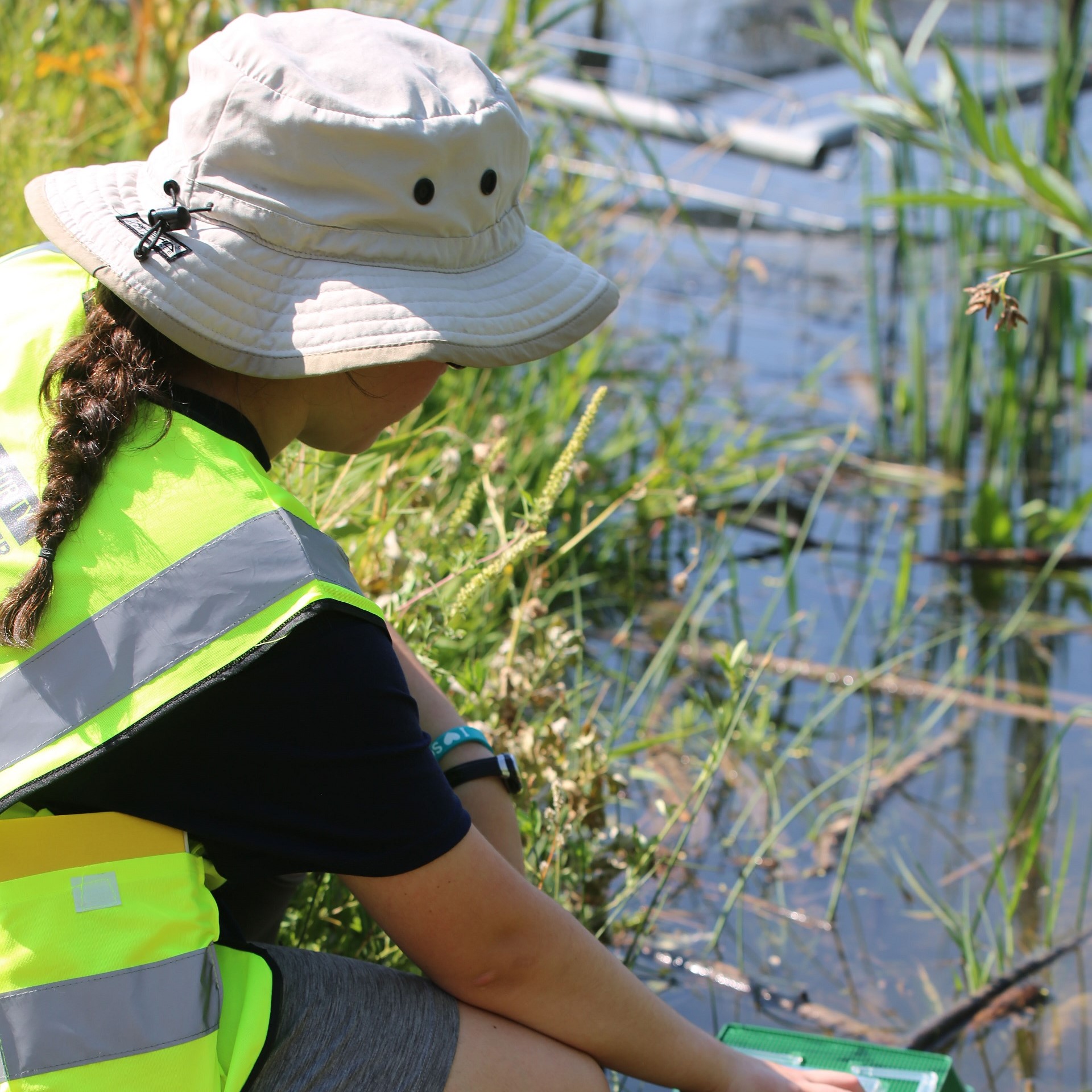
This work continued during the summer of 2021, when the road reopened to visitors. Last summer, Denver Zoo’s Field Conservation team began investigating how to discourage wildlife from congregating in high-human use areas. Bighorn sheep and mountain goats seek out sources of salt and other minerals in their environment. In addition to naturally occurring mineral licks, sheep and goats are drawn to human-created sources of minerals. Some examples of these mineral sources are salt on vehicles and roads, and minerals in human urine found at restrooms and other places humans and their pets urinate. We took soil samples at different locations across Mount Evans to look for signs of higher salt content or other pollution. Also in 2021, Denver Zoo scientists experimented with the use of mountain lion urine as a deterrent to discourage bighorn sheep and mountain goats from coming into the parking lot at Summit Lake. With signs of a predator in the area, goats and sheep may be less likely to enter the parking lot and to congregate around human-created mineral sources.  

Aside from interactions with humans, there are other potential dangers to unusually large congregations of bighorn sheep and mountain goats. A higher density of animals in a small area can lead to increased competition for resources and increased aggression within the herds. Larger groups also create the potential for increased disease transmission. The primary threat to bighorn sheep populations today is pneumonia, caused by the bacterium Mycoplasma ovipneumoniae. This bacterium was introduced from domestic sheep herds to wild sheep and goats. While mountain goats typically don’t become ill from Mycoplasma, they can be carriers of the disease and can spread it to bighorn, which are very susceptible and face high mortality rates when infected (70-90%). Large congregations of sheep and goats can create super-spreader events that put entire herds at risk. 

Denver Zoo’s work on Mount Evans continues in 2022 as we collaborate with Denver Mountain Parks, US Forest Service, and Colorado Parks and Wildlife to make Mount Evans a safer place for both visitors and wildlife. Some ways that you can help keep wildlife safe and healthy are to only observe wildlife from a safe distance, back away if bighorn sheep or mountain goats approach you, utilize available restrooms, and practice Leave No Trace principles (pack out what you carry in). And never feed wildlife. Keep an eye out for Denver Zoo staff if you’re on the mountain this summer — we’d love to answer any questions you may have about how to share the land with wildlife! 

Follow our conservation work on social media by following us on FacebookInstagram, Twitter and TikTok!   
Flight Safety Rising

According to the U.S. Fish and Wildlife Service, collisions with building glass cause an average of 600 million bird deaths per year. Denver is situated along the busy Central Flyway, which migratory birds use to make the annual journey from their breeding grounds in the north to their wintering grounds in the south. More than 300 bird species pass through or nest in this essential corridor, and the majority of the fatal collisions occur during peak migratory seasons-particularly at night, when birds are on the move.

While there is no single solution to this deadly conflict, there are a variety of small, everyday conservation actions that organizations and individuals can take to help reduce the number of casualties. In celebration of World Migratory Bird Day (May 14), we caught up with Katie Vyas, Director of Animal Welfare, to find out exactly how Denver Zoo is working to create a safer world for birds…and what you can do to help!

Fatal Attraction for Flyers

Humans, like animals, need water to survive. That’s why cities spring up along riparian corridors, like our very own South Platte River basin. Of course, avian migratory routes also tend to follow rivers, as they are natural sources of food, water and shelter. Birds, unfortunately, cannot see glass; they only see what the surface reflects. This is problematic both during the daytime, when these surfaces reflect the surrounding foliage and sky, and after dark, when interior lights can attract and confuse nighttime migrators.

Stopping On-Campus Collisions

Almost any building glass can be deadly to birds, from LoDo skyscrapers to your living room windows-and even some of the buildings on our 84-acre campus. Just over three years ago, Denver Zoo began collecting data on native bird strikes. We identified three problematic areas: our gorilla habitat, our clouded leopard habitat and Village Hall. Thanks to a generous donor who funded the installation of anti-bird-strike window decals, we’re happy to report that no additional bird deaths have been recorded!

Powerful Partnerships Take Flight

While Denver Zoo is home to ~3,000 animals representing ~450 species-many of them avian-we’re still just a tiny slice of the Mile High City! So, we’re thrilled to be working with several local and national partners towards a more comprehensive solution to this very man-made problem. Here’s a quick roundup of these organizations and how their efforts combine to support a safer environment for birds.

Urban Bird Treaty (UBT): Founded in 1999, this program is a unique collaboration between the U.S. Fish and Wildlife Service and American cities dedicated to protecting local and migratory bird populations. Since becoming a designated UBT member in 2014, the City of Denver has onboarded local entities such as Denver Parks and Recreation and Rocky Mountain Arsenal National Wildlife Refuge to participate in habitat conservation, invasive species control and light management programs like the one below.

Lights Out Denver (LOD): Part of Denver’s commitment as a UBT city, Lights Out Denver works to boost awareness of migratory bird collisions with the city’s buildings, with the goal of preventing as many as possible. In addition to educating homeowners and businesses about the dangers of building glass and how to make windows safer for birds, LOD uses BirdCast to anticipate migratory swells and request “lights out” nights in order to reduce collisions. Denver Zoo is proud to support this important work by assisting with research on downtown bird strikes during spring and fall migrations.

SAFE North American Songbird (NAS): As an accredited member of the Association of Zoos and Aquariums (AZA), Denver Zoo is also an active supporter of Saving Animals from Extinction: North American Songbirds. Since 2019, this program has harnessed the collective expertise of its member organizations to work towards secure sustainable wild populations of North American songbird species. Created and managed by zoo-based conservation organizations like ours, NAS is an effective combination of education, on-the-ground conservation and civic action.

Citizen Conservation: What YOU Can Do

Wildlife conservation is a group effort-and if you’ve read this far, you’re just the kind of person we need! Here are a few relatively easy things you can do to support a healthier environment for birds, both those that are just passing through your neighborhood and the ones who share our city year-round. 

1. Keep cats indoors (or contained in a “catio”). Cats kill an average of 2.4 billion birds/year. 
2. Reduce evening lighting, particularly during peak spring and fall migratory seasons.  
3. Bird-proof your windows with bird-safe glass or decals + by keeping plants at a distance. 
4. Choose sustainable products like certified Bird Friendly® coffee + grass-fed beef.
5. Become a community science volunteer with Lights Out Denver. Click here for details.

Buffalo Healing

By Stefan Ekernas, PhD, Director of Colorado Field Conservation 

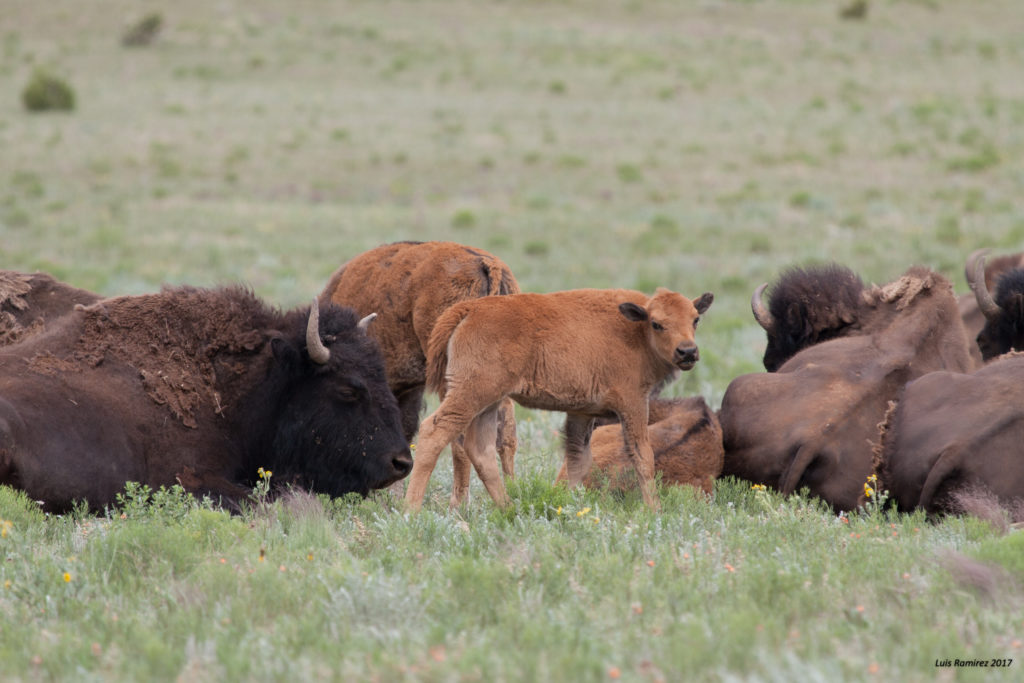
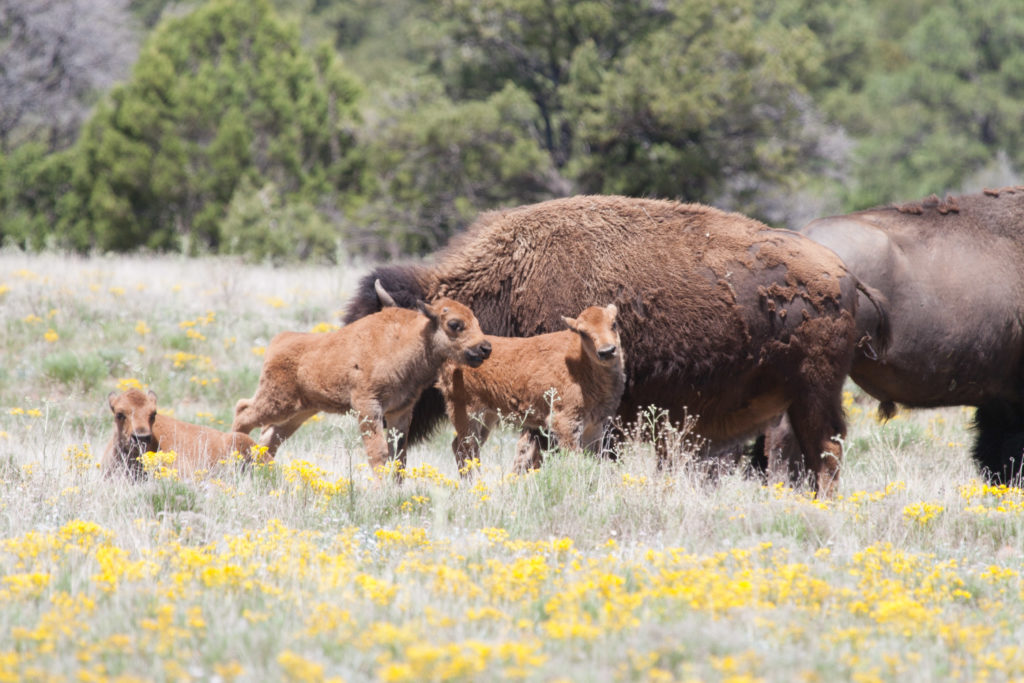
Bison are our national mammal for a reason. They are icons of the American West, symbols of strength, resilience, sacred connections between people and animals, and the power of conservation. The US government used market hunting of bison as an economic tool to drive Native Americans off the Great Plains in the 1800s, for the benefit of European descendants to settle frontier lands, including Denver. The intended outcomes were broken Indigenous communities and domesticated landscapes.  

This effort was only partly successful. Grassland landscapes were ravaged, especially tall grass and mixed grass prairies, but large swaths of rain-deprived shortgrass prairies remain unplowed to this day. Degraded and fragmented, yes, but not destroyed. Bison made a remarkable recovery, from about 1,000 animals in 1889 to nearly 400,000 today. Still a mere 0.1% shadow of their former abundance, but enough to blacken landscapes with fur in some special places, if you know where to look. Resilient Indigenous communities and cultures persisted too, while simultaneously being marginalized, actively persecuted well into the second half of the 20th century, and often forgotten. But still here. And like buffalo, even thriving in some special places, if you know where to look. 

_MG_7653

I often get asked whether the correct name for this animal is bison or buffalo. Within scientific taxonomy, there is only one correct answer: American bison are bison, and buffalo are something else entirely, encompassing different genera within the subtribe Bubalina that includes Africa’s Cape buffalo as well as Asia’s wild and domesticated buffalo. But ask Leroy Little Bear, a Blackfoot Confederacy member, who among other accolades founded the Native American Program at Harvard, and he will tell you that they are buffalo and part of his nuclear family. So let me ask you: have you ever met anyone who doesn’t know the correct name of their own brother? Who has greater legitimacy in giving name to a life, the taxonomist or the family member? 

Both are right. Scientifically they are bison, and socio-culturally they are buffalo. The lesson I take is that by blending Western and indigenous knowledge, we gain a more holistic understanding of bison and their relationships to animals and people. 

_MG_0057

Bison are integral to both prairies and the Indigenous cultures who have long called them home. Remove bison, and both will be less than whole. Restore bison, and a process of rejuvenation begins, in a One Health approach that balances human, animal and environmental health. The end result will not be a return to the way the prairie and its people used to be; in fact, there will be no end, only evolution. And we can give name to that evolution, and its name is healing

Denver Zoo began work on bison conservation more than 100 years ago. We obtained bison from Yellowstone in the early 1900s, bred and cared for them, and then reintroduced these animals to Genesee Park in 1914, in partnership with City of Denver’s then-newly-formed Denver Mountain Parks. The bison you see today along I-70 at Genesee Park and further south at Daniels Park are descendants of those animals, and inside a Genesee barn you can still see the crates in which the 1914 animals were transported. Back then, we thought that was enough. Bison were safe from extinction; the American Bison Society dissolved itself in 1935, considering its mission completed, and after 1914, Denver Zoo stopped bison field conservation work for 98 years.  

In 2012 we picked the torch back up, entering a ground-breaking collaboration as a founding partner at Rio Mora National Wildlife Refuge in northern New Mexico. There, Denver Zoo helped devote federal conservation land to reintroducing tribally-owned and -managed bison. A few years later we came full circle, expanding our bison conservation work to partner once again with Denver Mountain Parks. 

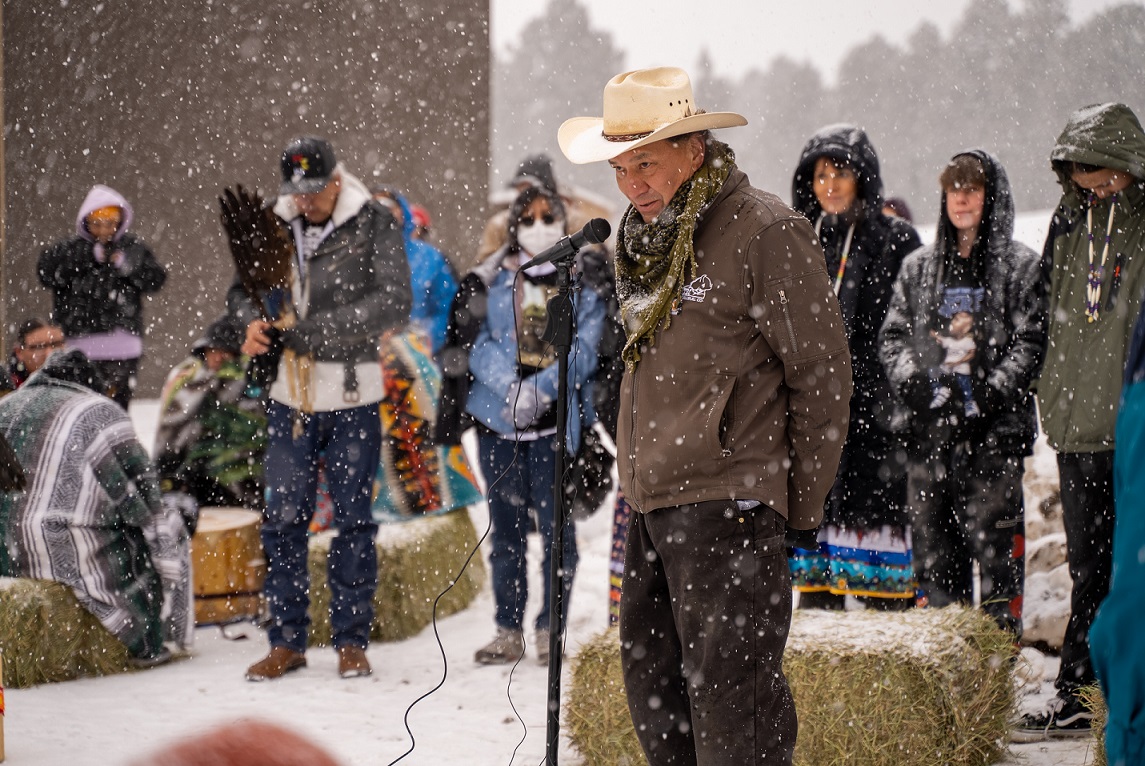
tallbull speech_Denver Parks and Recreation photo cred

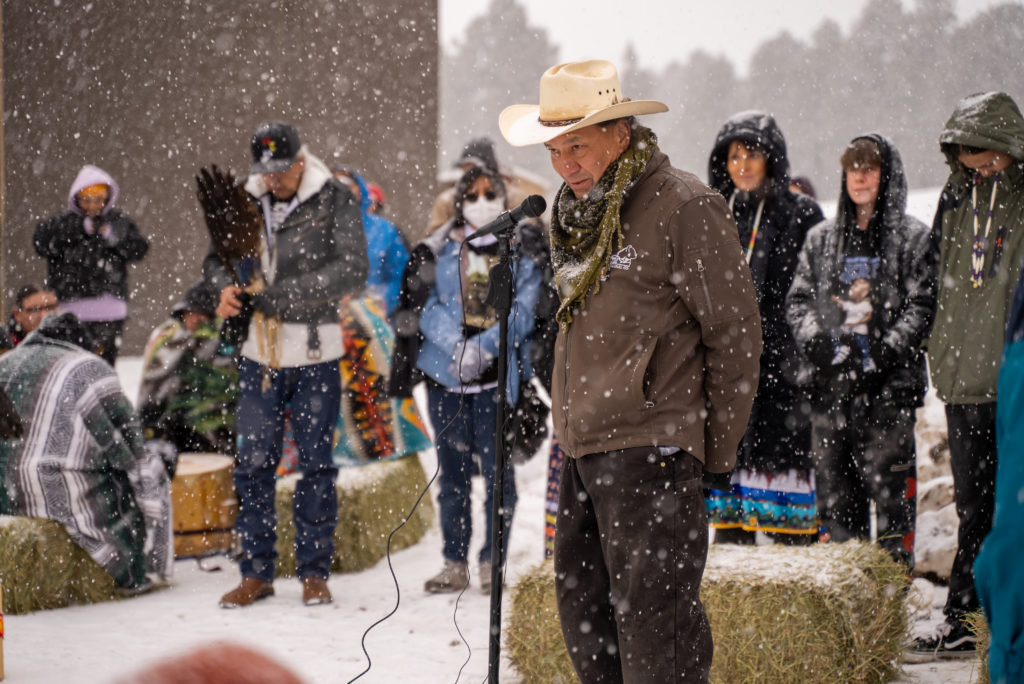
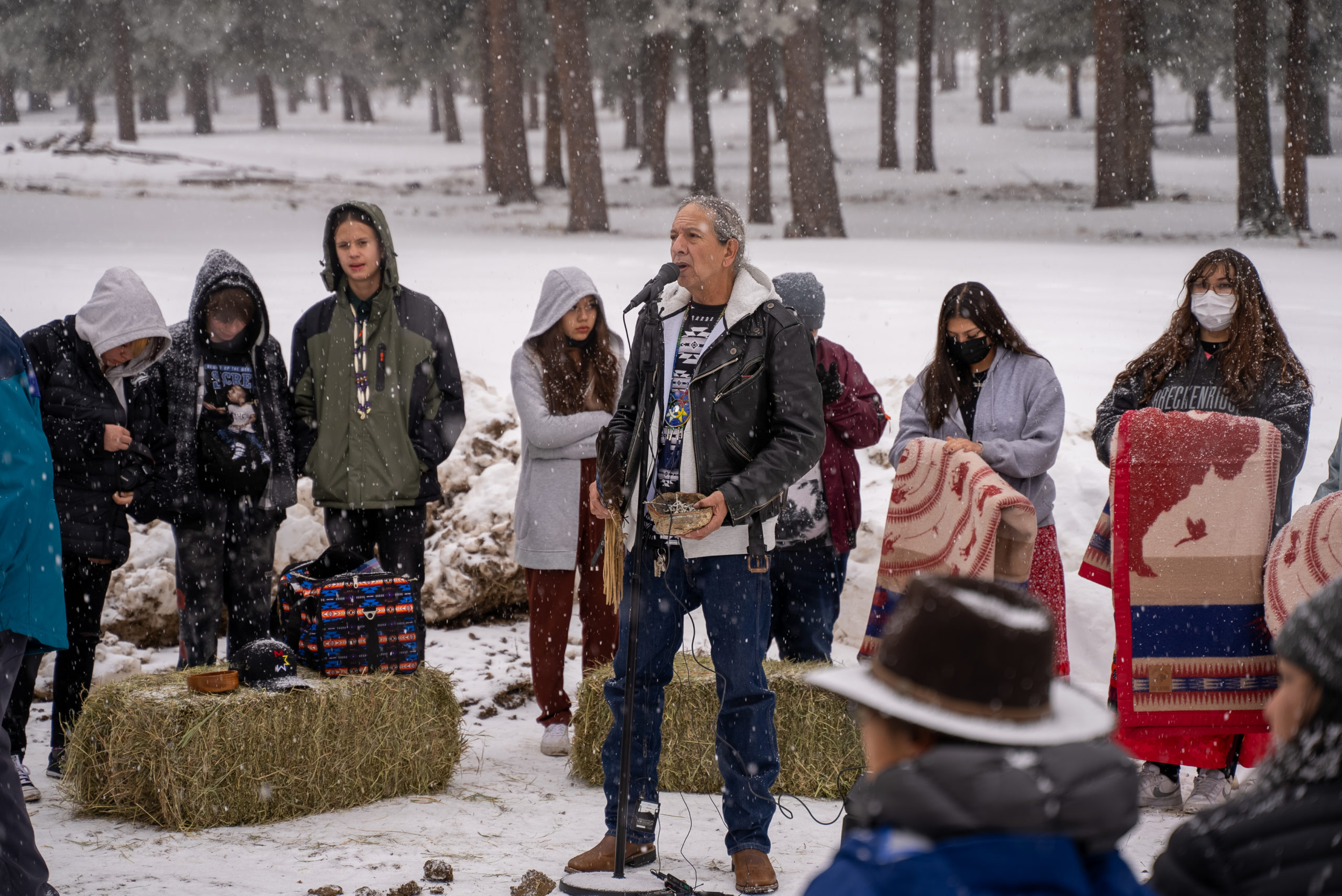
In March of 2022, that partnership achieved a new high. For 50 years, Denver Mountain Parks had been auctioning excess bison calves at Genesee and Daniels Parks to manage the herds. Early last year, I and others at Denver Zoo began conversations with Denver City officials about donating excess bison to Native tribes rather than auctioning them off. To the enormous credit of Denver Mountain Parks, Denver Parks and Recreation, Mayor Hancock’s administration and others, the City immediately picked up that idea and ran with it. 2022 was the first year without an auction. Instead, 33 buffalo were returned to Native tribes for reparations. Elders and students from American Indian Academy of Denver held prayer ceremonies for the buffalo to bless the animals and pass on cultural knowledge to the next generation. Denver Zoo sponsored the Denver March Powwow, which the bison donation was timed to coincide with. And on March 21st, Mayor Hancock, Denver Parks and Recreation leaders, tribal governments, buffalo managers, Native elders and students offered speeches, prayers, and songs while buffalo were loaded onto trailers to be transported to tribal conservation herds in Wyoming and Oklahoma.   

In the middle of the ceremony, Jason Baldes – who is Eastern Shoshone and picked up the buffalo for reintroduction to Northern Arapaho’s herd on Wind River Reservation – turned to me and said, “This is exactly how it ought to be done.” And what specifically is the “it” that Jason referred to?  

Buffalo healing. 

sid whiting leading ceremony_Denver Parks and Recreation photo cred

Celebrating Women in Conservation 2022

In celebration of Women’s History Month, and International Women’s Day (March 8), we wanted to share a unique experience Denver Zoo offers to female conservationists around the globe.

Women are an untapped resource for conservation. As the primary users of natural resources around the world, they are full of vital knowledge about wildlife and the environment and capable of driving change within their own communities. However, on a global scale and in the field of conservation, women’s roles are marginalized and underrepresented.

Untapped is a project that looks to give women the tools they need to gain knowledge, have a voice and feel empowered to become active leaders in wildlife conservation.

In 2020, Denver Zoo received a generous donation from the Del Mar Global Trust to support our Untapped program. That year, we were honored to award the Tap Into Change Scholarship to Rethabile Setlalekgomo, a Motswana Master student (note: Motswana is the adjective used to describe a person from Botswana). Retahbile is training to become a field ecologist- one of the first females in Botswana to do so.

In the planning stages of her study, Rethabile discovered an abundance of data on spotted hyena which lead her to her project focus: estimating habitat-specific densities of spotted hyena (Crocuta crocuta) in Northern Botswana using camera traps and acoustic recorders.

The study centers on testing and developing novel methods of surveying spotted hyenas through passive acoustic monitoring devices. This research provides density estimates throughout the reserve, which can be extrapolated across the Okavango Delta. Previous studies have relied heavily on camera trapping for population monitoring, but the use of passive acoustic recorders is growing. These techniques are mostly used in isolation and are rarely combined.

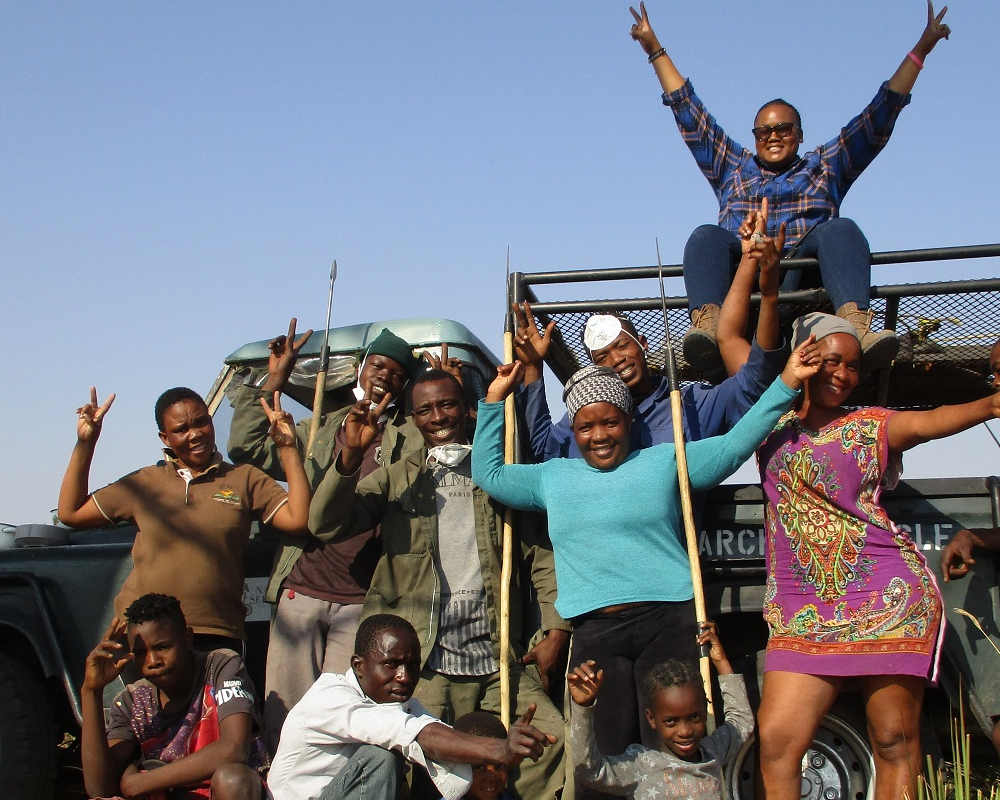
In addition to her study, and with the support of an assistant, Rethabile was also able to start a “Women in Conservation” club in Khwai village. Khwai village is dominated by the bushmen community. Rethabile held workshops with the community members (mostly women and young girls) to discuss careers in conservation and sustainable utilization of natural resources found in and around Khwai village. On days where Rethabile was not the main speaker, community members allowed her a glimpse into their cultural activities such as grass cutting for thatching houses, harvesting wild fruits and vegetables, how to hunt using a spear (no animal was killed) and weaving beautiful baskets and jewelry using dried reeds.

Rethabile used the funds she was awarded for her field supplies, to support her community engagement work and was able to leverage additional funding to hire her female field assistant! Additionally, Rethabile purchased 5-liters of much-deserved ice cream to indulge herself after long hot field days.

When asked about her Untapped opportunity, Rethabile exclaimed, “the funds provided by Denver Zoo and the Del Mar Global Trust REALLY made fieldwork more fun, easy and quick. Much appreciated and wishing you many more years of supporting women. KE A LEBOGA”! *

The 2021 Tap into Change scholarship was awarded in December to two highly deserving women:  Jhusely Navarro and Onon Baatarkhuu. Jhusely is an early career conservationist and environmental educator working to conserve endangered species in Peru. She will apply the scholarship funds to pursue an advanced degree focusing on women and development. Onon is a former wildlife researcher and currently a school teacher in Mongolia, who will use the funds for an Eco-club for her students.  Congratulations to these very deserving recipients from 2021!

Thank you, Del Mar Global Trust, and to all of our donors who support the Denver Zoo’s conservation efforts. Your investment is empowering female conservationists around the world.  If you’d like to learn more about the Untapped program, or apply for our scholarship, visit our field conservation page.

*Ke a leboga means “thank you” in the Setswana language.

Bill to Fund Wildlife Crossings Introduced in Legislature

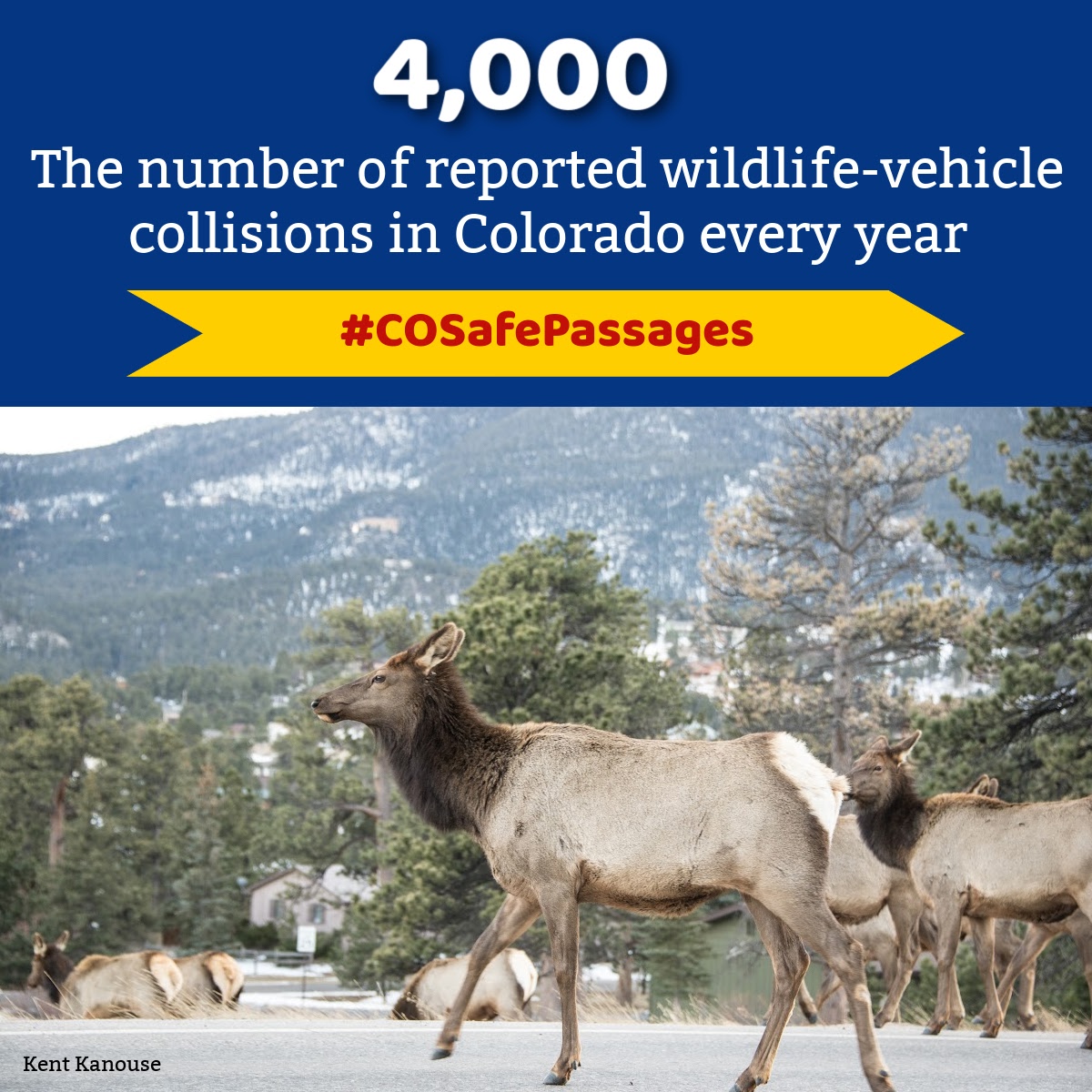
Denver, CO (March 8, 2022) – A bill in the Colorado State Legislature proposing funding for wildlife road crossing projects across the state was introduced today in the Senate. The bill, Senate Bill 22-151  Safe Crossings for Colorado Wildlife and Motorists, was introduced by Senators Jessie Danielson (D-SD20) and Tammy Story (D-SD16) and Reps. Julie McCluskie (D-HD61) and Perry Will (R-HD57) and has support from diverse stakeholders including sportsmen and sportswomen, land and wildlife conservation organizations, and other community leaders. The bill would create a “Colorado Wildlife Safe Passages Mitigation Fund,” (Fund) which would allocate $25 million for wildlife crossing projects on stretches of roads and highways with high rates of wildlife-vehicle collisions (WVCs) or where the ability of wildlife to move across the landscape has been hampered by high traffic volumes. 

WVCs are a significant issue in Colorado, costing not only money, but also the lives of people and wildlife. Colorado law enforcement reports an annual average of nearly 4,000 WVCs, though it is estimated that a more accurate figure is 14,100 when unrecorded collisions are considered. WVCs have tragic consequences, including hundreds of human injuries and some fatalities, the death of thousands of animals, and an annual cost of approximately $80 million in property damage, emergency response, medical treatments, and other costs. This figure does not include the value of lost wildlife-likely $24 million-or the impact on the health of wildlife populations.

The Fund would help advance projects identified in the Colorado’s Department of Transportation (CDOT) 10-year pipeline of 25 projects with wildlife infrastructure components, as well as projects identified by the Colorado Wildlife and Transportation Alliance, state agencies, and county or Tribal governments. It would also provide a much-needed source of matching funds to leverage federal grants under the new wildlife crossing program-$350 million over five years-that was established in the Infrastructure Investment and Jobs Act. The fund would also assist with private land conservation efforts adjacent to crossing projects to ensure their effectiveness is not diminished by future land use or development.

Colorado is a leader in the West when it comes to wildlife crossing solutions, with 64 bridges, culverts – or tunnels – and fencing to exclude animals from roadways and guide them to safe crossings. Time has shown that these crossings are highly effective. For example, in 2015-16, Colorado’s first two wildlife overpasses, five wildlife underpasses, 10.3 miles of wildlife exclusion fencing on both sides of the highway, and other mitigation features were constructed on State Highway 9 between Kremmling and Green Mountain Reservoir. These investments resulted in a 92% reduction in crashes with wildlife reported to law enforcement and a 90% reduction in carcasses. Yet more needs to be done. Even with the state’s significant investment in wildlife crossing infrastructure to date, Colorado Parks & Wildlife estimates that more Western Slope mule deer does are killed each year in WVCs than from the annual hunter harvest. Wildlife losses from vehicle collisions harm wildlife populations, the state’s $62.5 billion outdoor recreation economy, and the outfitter and hunting communities.  

Because so many Coloradans are impacted by WVCs, there is broad bipartisan support for wildlife crossings from voters across the state. In fact, a recent poll found that 73% of voters in Colorado and New Mexico supported wildlife crossing solutions, including building overpasses on highways. Advocates of this bill give substantial credit to Governor Jared Polis for his 2019 Conserving Colorado’s Big Game Winter Range and Migration Corridors executive order that has helped focus state agencies and resources on protecting habitat for wildlife movement. The concept for creating the Fund was referenced in a 2021 joint policy report issued by the Department of Natural Resources and CDOT that was set in motion by the Governor’s executive order.

Diverse interests, including hunting and fishing organizations, Tribal representatives, wildlife advocates, and local jurisdictions are hopeful that the Colorado State Legislature will pass the Safe Crossings for Colorado Wildlife and Motorists into law this session, moving forward a true win-win initiative to make Colorado’s roads safer for people and wildlife.

CO Safe Passages Intro_ Facebook-IG

New Flamingo Habitat Coming Soon

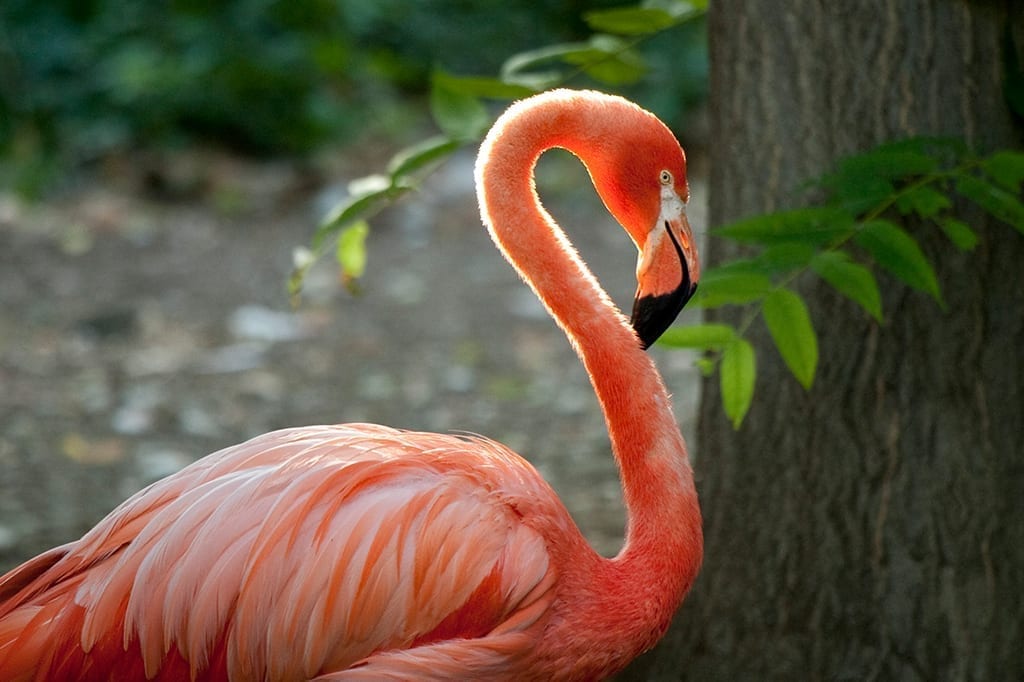
Our Chilean and American flamingos are about to get a new home! With topography inspired by the Andean highlands, the new habitat will provide both the flamingos and their fans year-round access to both indoor and outdoor living spaces-including multiple wading pools, nesting islands and multiple vantage points for viewing our most fabulous flock. Construction will begin this winter, with the grand public opening slated for 2023.  

Flockstars at Denver Zoo 

With rock star names (and personalities to go with them), our flamingos are fan favorites at the Zoo, and the leading ladies and gentlemen of one of our most popular Up-Close Looks.  Our Chilean flamingos are much lighter in color, and can be found in the Andean highland regions of Chile, Argentina, Peru and even Brazil. While our American flamingos have bright, pinkish-orange feathers, and are often found in coastal areas of the Caribbean including the Bahamas, Cuba, and the Yucatan Peninsula. In 2018, we welcomed two male Chilean flamingo chicks, Swift and Legend. And in late 2021, we welcomed three more with the addition of Jonas, Denver and Diamond-who all hatched and were hand-raised at our Avian Propagation Center to give these fragile birds the best chance of survival. Two-year-olds Swift and Legend are fully integrated with the flock, while our youngest chicks, Jonas, Denver and Diamond join them for walks when the weather allows. 

Flocking to Help 

Flamingos aren’t just a species we care for here at the Zoo. We also work to save flamingos abroad, including taking part in an international effort to rescue more than 1,800 abandoned lesser flamingos in South Africa in 2019. Using their skills and background knowledge of working with flamingos, two of our bird keepers and a veterinarian technician were able to rehabilitate and eventually release many of the rescued flamingos back into their native range.  

Spreading Our Wings 

We’re excited to open a new habitat for our flamingos next Spring. Construction starts this winter, so pardon our dust on your next visit. Follow us on FacebookInstagramTwitter and TikTok for more updates about the flock and their new home! 

A Conservation Celebration

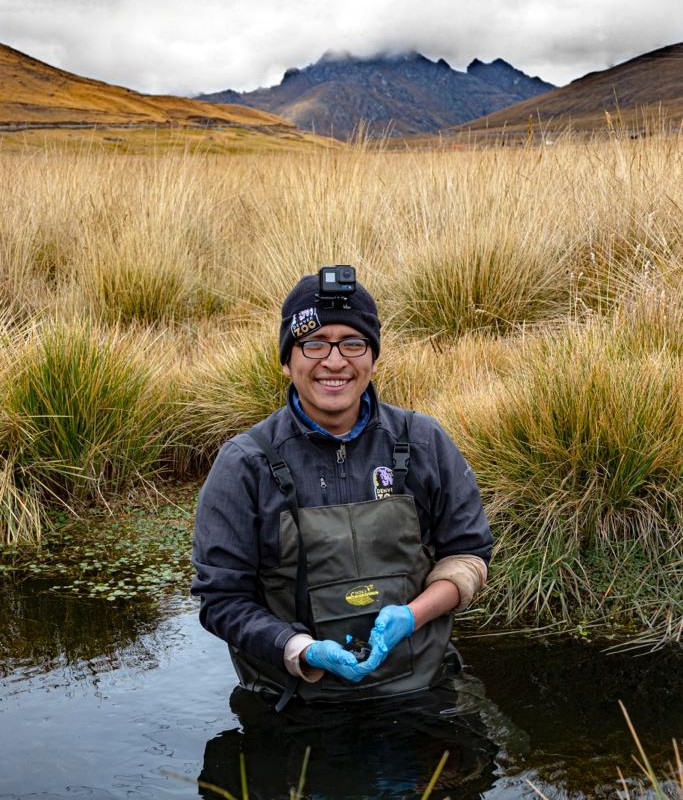
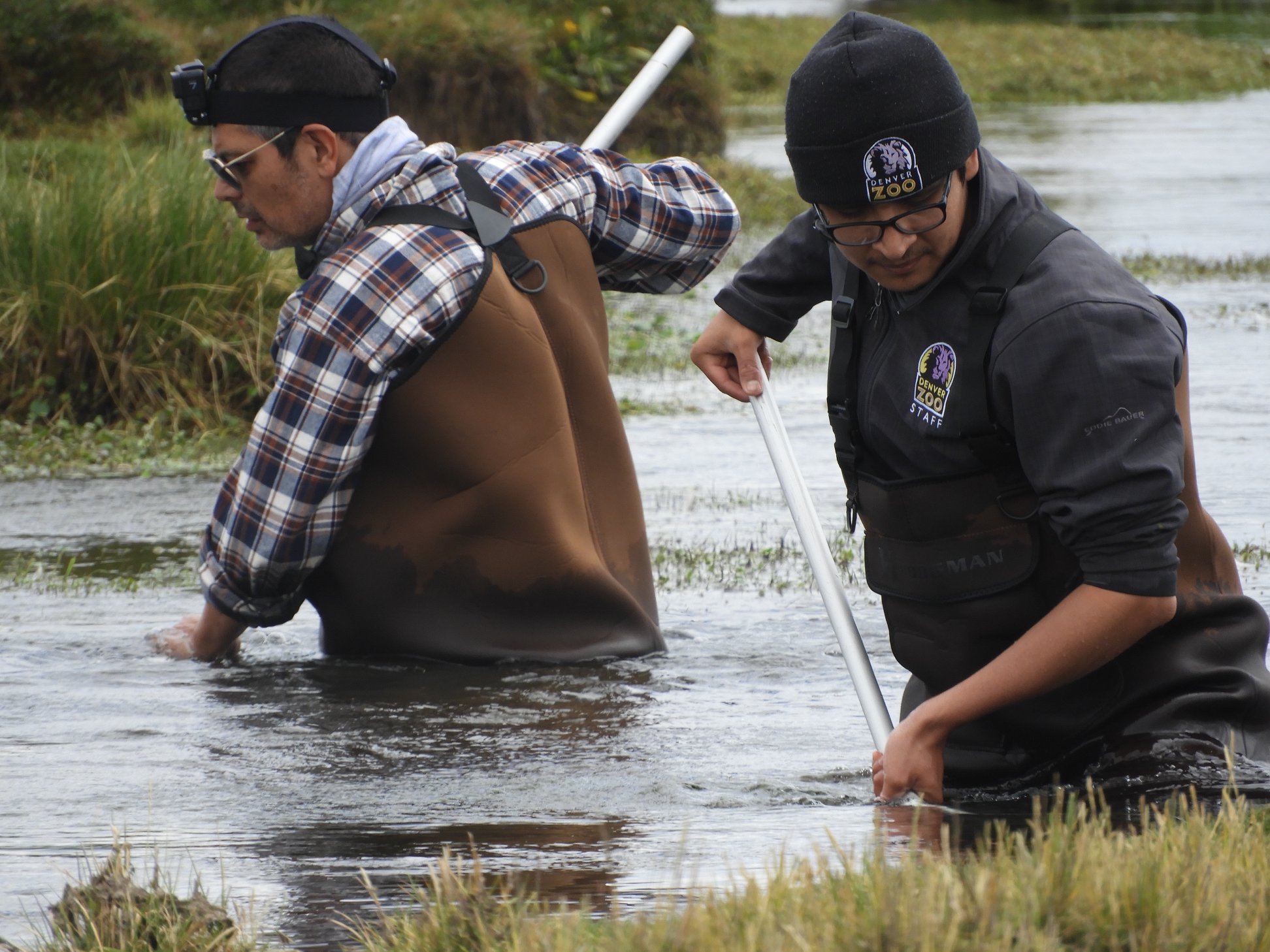
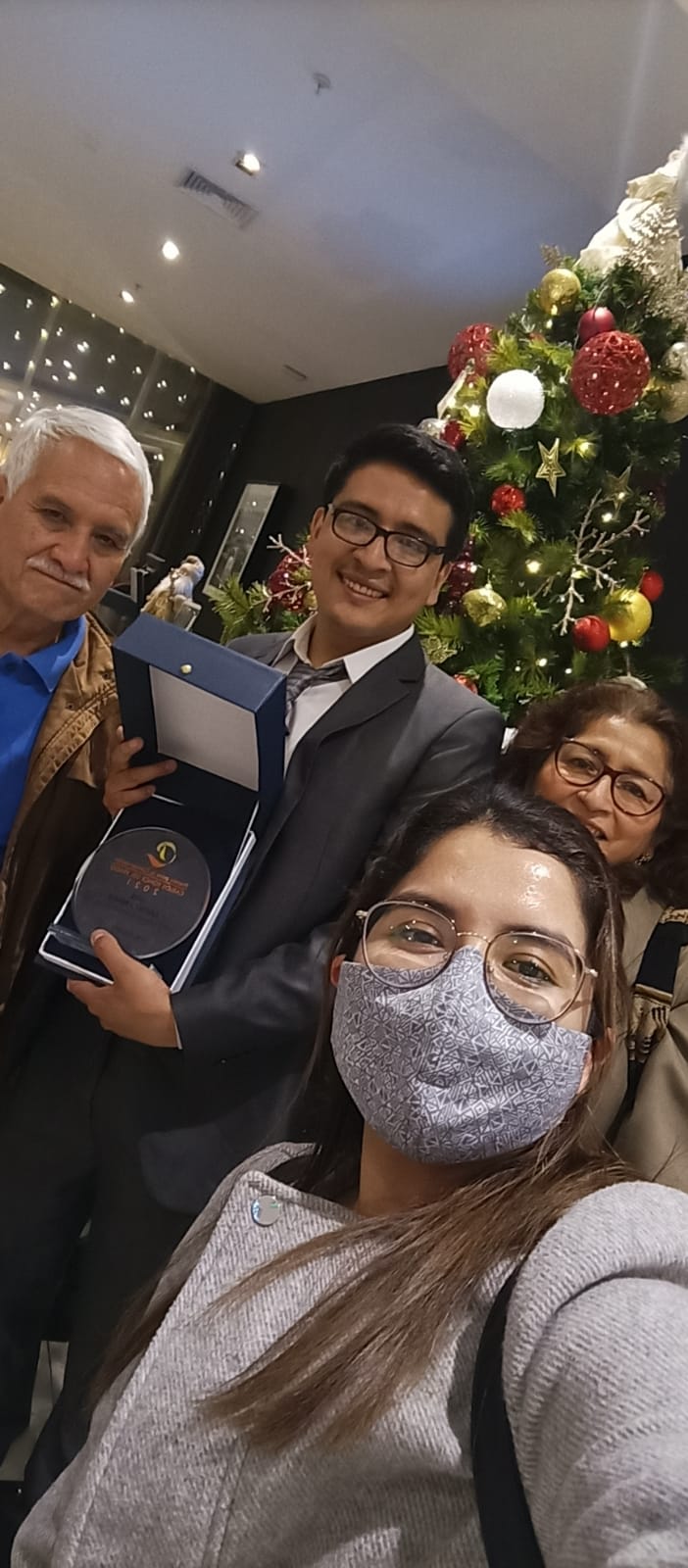
In December 2021, Luis Castillo, Denver Zoo’s project coordinator in Peru, won the most important conservation award in his country, the Carlos Ponce del Prado 2021 Award (CPPA) in the Outstanding Young Conservationist category. This award is promoted by Conservation International, the Andes Amazon Fund and the National Fund for Natural Areas Protected by the Government with the support of the Ministry of the Environment and the National Service of Natural Protected Areas. Each year, the CPPA recognizes leaders who inspire us in the path of conservation and who have risen to address challenges to conserve the biodiversity of Peru.     Luis was born in Lima, Peru and graduated as a biologist from the University of San Marcos. His entire professional career has been dedicated to studying and conserving endangered endemic species of frogs in the regions of Junin and Pasco, in the central Andes of Peru. In 2017, as a graduate student, he did research, funded by the Denver Zoo, on the habitat preference of Lake Junin giant frog’s (Telmatobius macrostomus) tadpoles, which enabled him to complete his bachelor’s thesis and his first publication about these little-studied amphibians which are found only in streams and lakes over 13,000 feet above sea level.

Luis (right) conducting his research in Lake Junin

Luis (right) conducting his research in Lake Junin

As if his graduate studies weren’t keeping him busy enough, Luis also co-found a non-profit organization called Grupo RANA, with the aim of conserving these and other native species in Lima, Junín and Pasco, Peru. Since its creation in 2017, Grupo RANA has been carrying out environmental education projects with children from local schools, where the conservation of the environment is encouraged with an emphasis on aquatic amphibians. A year later he became a National Geographic young explorer, which included grant funds to advance scientific understanding of the presence and distribution of these species of endangered frogs in the Lake Junin watershed.   

In 2018, Luis became a member of the Denver Zoo team as project coordinator for our Peru Program. True to his passion and studies, his work remains focused on these frogs.  Luis is in charge of all Denver Zoo-led the conservation activities in Junín and Pasco. He serves as Denver Zoo’s on-the-ground liaison to government institutions and communities in Peru, at local and regional levels, in order to carry out the conservation strategy developed in 2013, with help of IUCN and led by Junin National Reserve, US Peace Corps and Denver Zoo.  

Last year, Denver Zoo initiated a community-based monitoring and habitat protection project- called the Frog Guardians of Lake Junin- which aims to empower local communities to conserve their own natural resources, with an emphasis on aquatic amphibians of the high Andes. In addition to leading that effort, Luis is collaborating with local partners to advance Denver Zoo’s efforts to conserve Chilean flamingos (Phoenicopterus chilensis) in Lake Junin. He has participated in population monitoring, helped establish flamingo conservation priorities for Denver Zoo and our partners, and organized community celebrations for International Flamingo Day. 

Luis (center) recieves his award

Conserving the Boreal Toad in Colorado

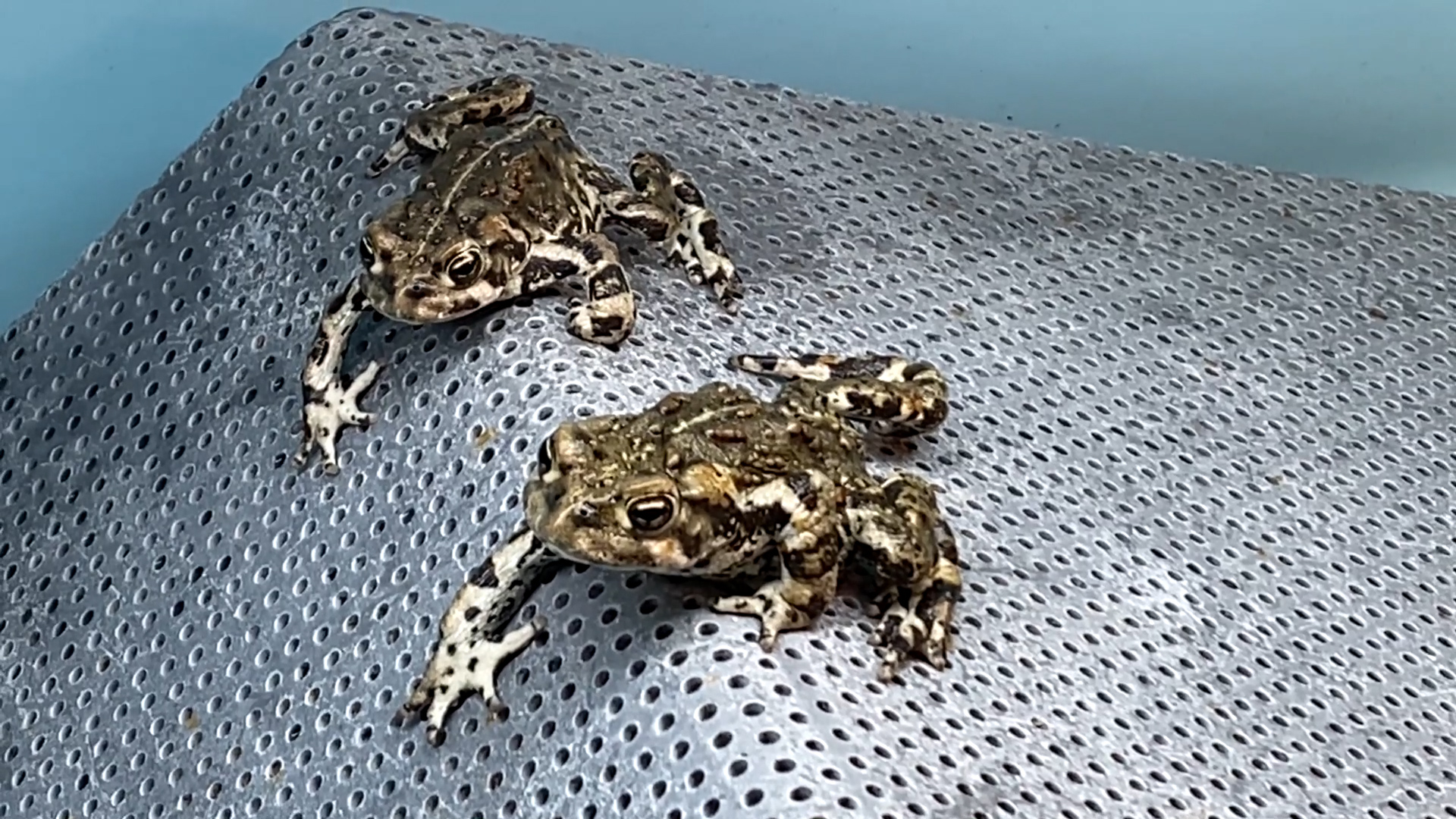
On Wednesday, Nov. 10, a team of conservation and amphibian experts from Denver Zoo traveled to the Native Aquatic Species Restoration Facility (NASRF) in Alamosa, Colo. to pick up precious cargo: 95 boreal toads that will serve as an additional breeding population for their species. The toads were brought back to a specially-designed facility at the Zoo where they were put into brumation-a natural state of inactivity during winter months-before attempting to breed them in the spring. Officials from the Zoo and Colorado Parks and Wildlife (CPW) hope to raise and release as many as 20,000 tadpoles into the Colorado wilderness next summer, and provide a significant boost to the dwindling species that is listed as endangered in Colorado and New Mexico.

“Boreal toads are in a lot of trouble, but their numbers are still relatively strong even though their population is in decline,” said Stefan Ekernas, Rocky Mountain/Great Plains Program Director at Denver Zoo. “Colorado Parks and Wildlife has done a tremendous amount of work on the conservation of boreal toads for almost 30 years, and we’re excited to join in the effort to help the species make a meaningful recovery while there’s still time.”

Once common in montane habitats between 7,000-12,000 feet in the Southern Rocky Mountains, the boreal toad has experienced dramatic population declines over the past two decades. The decline appears to be related to habitat loss and primarily infection by the chytrid fungus, which can infect the majority of the world’s 7,000 amphibian species, and is linked to major population declines and extinctions globally.

“We have had success in the past producing boreal toad eggs and tadpoles at NASRF, but it is challenging, and with the increasing need for more animals, we need to step up breeding and reintroduction efforts,” said Harry Crockett, Native Species Aquatic Species Coordinator for CPW. “This is a great opportunity for boreal toad conservation and collaboration with a strong conservation partner in Denver Zoo. We will really benefit from their expertise, experience in the conservation and breeding of boreal toads and other endangered amphibian species.”

Denver Zoo has been active is amphibian conservation for more than 15 years. In 2018, the Zoo became the first zoo in the Northern Hemisphere to successfully breed critically endangered Lake Titicaca frogs, and has since provided more than 250 healthy frogs to zoos and aquariums in the U.S. and Europe. In 2019, the Zoo used a hormone treatment to breed and produce more than 600 boreal toads, which were released in a remote area in southwestern Utah. And this year, the Zoo successful bred critically endangered Panamanian golden frogs as part of the Association of Zoos and Aquarium’s Species Survival Plan.

The NASRF, which is operated by CPW, is dedicated to protecting and restoring threatened and endangered aquatics species native to Colorado. The state-of-the-art facility currently raises 12 species of threatened and endangered fish, including federally endangered bonytail chub and other state species of concern, as well as the boreal toad. Since its inception in 2000, the NASRF has protected 16 different fish species and has stocked more than 2.1 million fish in rivers, streams and lakes across the state. It’s one of only a few hatcheries of its kind in North America.

Officials from the Zoo and CPW estimate that it will take many years to bring the species back to a level where it is secure in the Southern Rocky Mountains, and expect the collaboration to be a multi-year program. Additionally, as part of the wild release program, the Zoo will launch a community science project where volunteers monitor survival of released toadlets and evaluate potential release sites around the state.

Good Hope for African Penguins

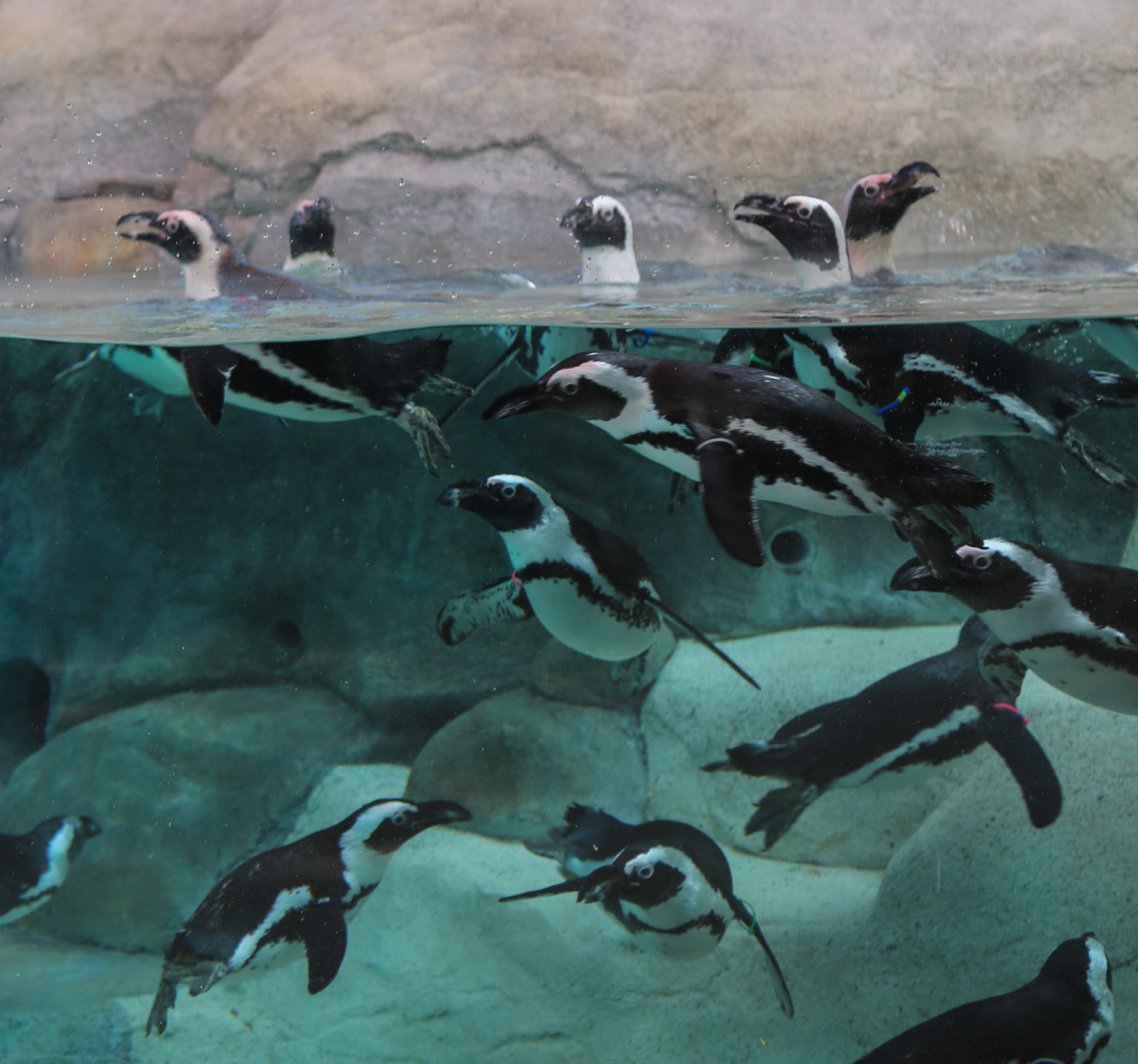
If you happened to miss the noisy brays of excitement-both ours and the birds’-Denver Zoo’s waddle of 17 African penguins got some deluxe new digs last month. On September 30, after about a month of private penguin acclimation, Pinnacol African Penguin Point opened to great public fanfare.

With a clear 10,000-gallon swimming pool surrounded by heated rockwork and fitted with cozy burrows, Penguin Point was indeed inspired by the distinctive landscapes of the species’ hometown habitat. But there’s more to this tuxedo-clad tale than just topography. Read on to learn more about the unexpected conservation success story of Boulders Beach, how Denver Zoo is involved…and what YOU can do.

The African Penguin: A Species’ Deadly Demise

The African penguin (Spheniscus demersus) lives exclusively in the warm waters of coastal Southern Africa, from Namibia to Port Elizabeth, including many of the surrounding islands. The birds are social breeders, nesting in colonies like the one at Boulders Beach-a quiet coastal community which has unwittingly become one of Cape Town’s most beloved tourist attractions.

But over the past 100 years, wild African penguin populations across the South African coast have declined more than 98%-from more than a million breeding pairs to just about 25,000 pairs. Overfishing, plastic pollution, climate change, habitat encroachment and oil spills are all significant contributing factors. The species was first classified as endangered by the Union for the Conservation of Nature and Natural Resources (IUCN) in 2010. But by 1983, the colony at Boulder’s Beach had already been reduced to just two breeding pairs.

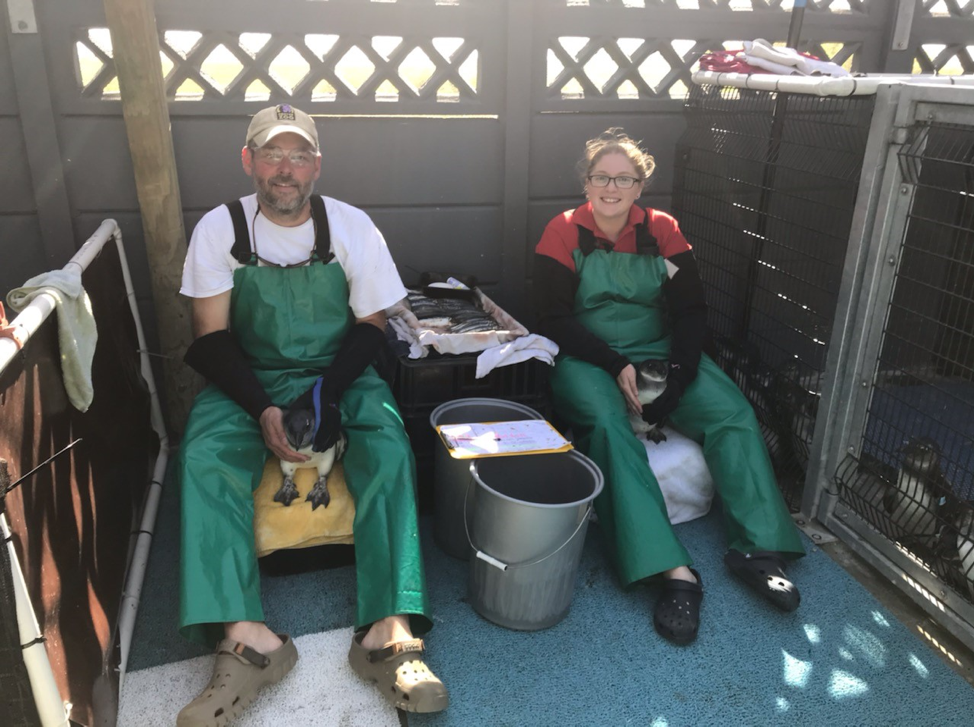
Travis Garrett (Denver Zoo) and Aimee Sugrue (Mystic Aquarium) hand-feed sardines to African penguin chicks Travis Garrett (Denver Zoo) and Aimee Sugrue (Mystic Aquarium) hand-feed sardines to African penguin chicks
Many of the remaining wild African penguin colonies live within coastal nature preserves or on small, protected islands mostly uninhabited by humans-which removes at least one of the stressors mentioned above. But Boulders Beach is in a bustling suburb of Cape Town, South Africa’s second-largest city. And, since it’s the only place in the world where humans can get close to these charismatic class clowns, Boulder’s Beach experiences a population boost of 60,000 every year, from penguin tourism alone.

Reduced Fishing. When the Boulders Beach colony was established in the early 1980s, the most serious threat to local penguin populations was commercial fishing in False Bay. As the area’s natural supply of anchovy and pilchard dwindled, the penguins had to swim farther and farther to find food. And, since penguin pairs take turns fishing and minding their nests, these extended absences left mates, eggs and offspring dangerously vulnerable to predation, dehydration and starvation. Government-mandated reductions in pelagic trawling helped the food supply-and the penguins-to start bouncing back.

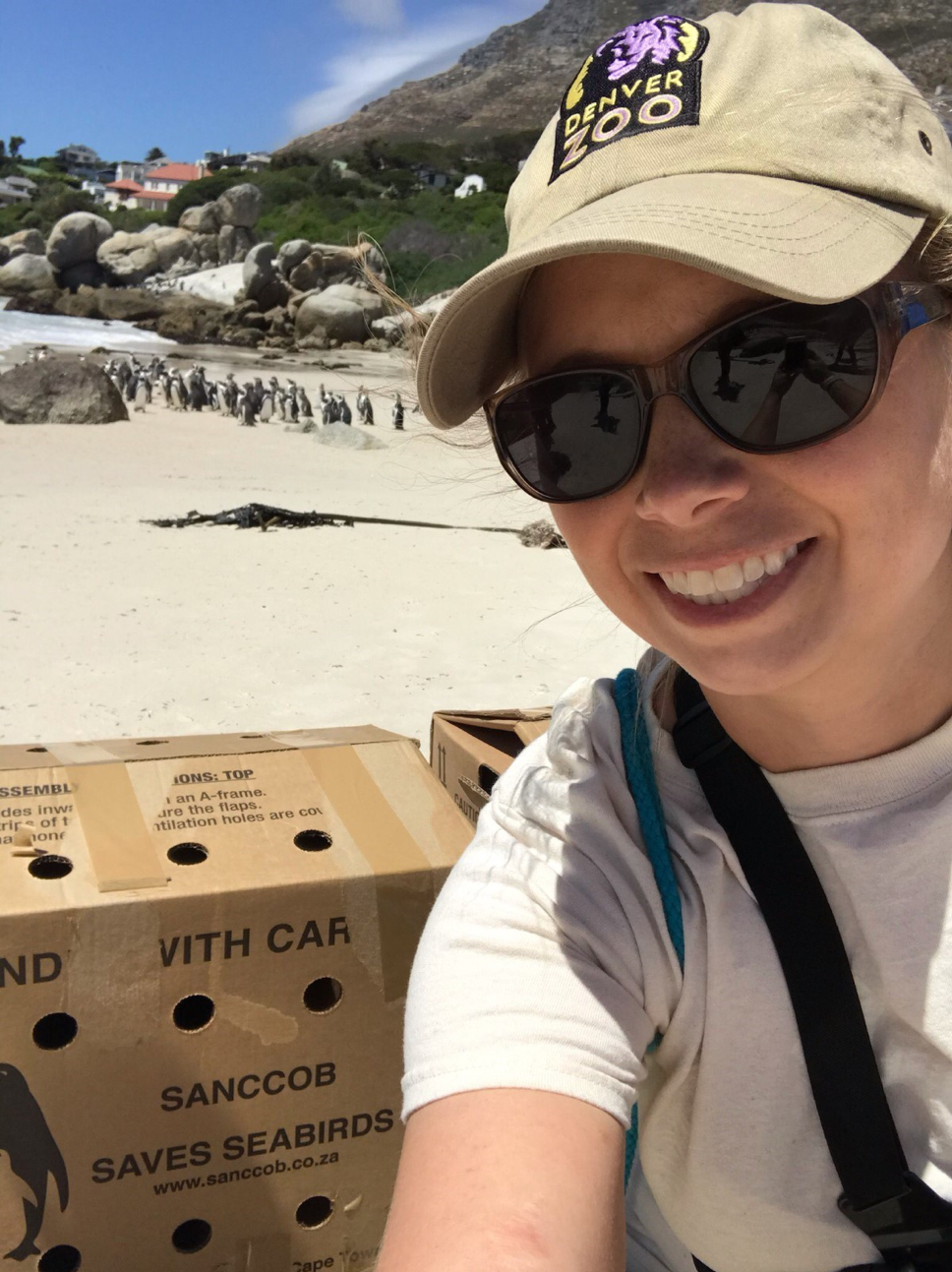
Penguin Rehabilitation. Here at Denver Zoo, penguin conservation gets personal! Every year, we send our resident penguin experts, Travis Garrett and Stephanie Hollister, to Cape Town-where the Southern African Foundation for the Conservation of Coastal Birds (SANCCOB) works tirelessly to rehabilitate and release penguin chicks. Travis and Stephanie volunteered alongside SANCCOB’s full-time staff, fellow AZA program participants and zookeepers from around the world to rescue and rehabilitate chicks that would not otherwise survive, then release them back to the Boulders Beach and Stony Point colonies. To date, SANCCOB partnerships like this one have led to the release of nearly 90,000 penguin chicks.

Stephanie after releasing rehabilitated penguins to the resident African penguin colony at Boulders Beach Stephanie after releasing rehabilitated penguins to the resident African penguin colony at Boulders Beach

Species Survival Plan. Thorough our accreditation by the Association of Zoos and Aquariums (AZA), Denver Zoo participates in the Species Survival Plan (SSP) for many species, including the endangered African penguin. This cooperative program facilitates collaboration among zoos around the world, with the goal of ensuring healthy genetic diversity in zoo animals under human care-as well as the breeding of assurance populations to bolster species for whom wild populations are in decline.

Protected Parkland. In 2004, the coast surrounding Cape Town became Table Mountain National Park Marine Protected Area, dedicated to preserving the two distinct marine bioregions that fall to the east and west of the Cape of Good Hope. In addition to African penguin colonies at Boulders Beach and Stony Point, the area is known for its robust shark and whale populations and is a haven of biodiversity. The goal of the “protected” designation is to set sustainable guardrails for tourism, allowing people to enjoy the area while supporting the healthy growth of vulnerable and endangered marine species.

Responsible Tourism. Tourism, as you might imagine, is a double-edged sword at Boulders Beach; it simultaneously raises public awareness about the challenges African penguins are facing, while potentially contributing to those challenges. But in the decades since the national park designation and IUCN classification, other entities have championed the penguins’ cause in other ways. Strict systems and regulations are in place to protect the colony; an elevated boardwalk also allows visitors to view the colony from a safe distance, while eco-safari tents enable low-impact overnights for penguin superfans.

It Takes a Village to Heal the Planet

As a zoo-based conservation organization, we understand that much of our global impact starts at the local level. That’s why the design of a wildlife experience like Pinnacol African Penguin Point is about so much more than viewing windows or an interactive wavemaker-although those things are pretty cool, too. There’s century-old conservation success story behind Penguin Point. It’s one we hope will inspire our guests to consider the world’s wildlife as they move about their lives. So, what can YOU do?

1. Support Denver Zoo. Every donation, membership and ticket helps us care for our 3,000 animals. Your visit also helps fund critical conservation efforts around the world, including our partnership with SANCCOB-which we’re thrilled to be supporting again this year.

2. Choose Seafood Wisely. Our partner, Monterey Bay Aquarium, makes it easy to choose seafood that is responsibly sourced. Add Seafood Watch® to your home screen today to ensure that your meals don’t contribute to wildlife endangerment.

3. Avoid Single-Use Plastics. With single-use plastics, recycling is no longer enough; it’s a much better choice to avoid them altogether. Coffee cups, drinking straws, yogurt tubs, shampoo bottles-consider everything in your grocery cart and ask yourself if there’s a better option.

4. Adopt a Penguin. If this article hasn’t made you feel like hugging a penguin…are you okay? One surefire way to start feeling FINE is to snuggle up with a formal feathered friend-the plush version, that is! It’s a great way to show your love for penguins and get a special souvenir of your visit.

Little Fish, Big Impact

They’re so small you’d never notice they were there, but with the help of the St. Vrain Valley School District Innovation Center, Denver Zoo, Colorado Parks and Wildlife, and Ocean First Institute and other local partners, the Northern redbelly dace is finally being reintroduced in Northern Colorado. More than a hundred people came to Pella Crossing in late August to celebrate the release, which was years in the making. 


Saving the Northern Redbelly Dace  

Northern Redbelly Dace (NRD) are a type of minnow that can be found in many areas of North America. In Colorado, there is only one remaining wild population, found south of Denver. There are several threats leading to the population decline of this fish; but the largest are predators that are non-native to CO, and human-involved habitat alteration. After the 2013 floods along the Front Range, many aquatic habitats were destroyed, and species like the NRD had no place to call home. As a result, Colorado Parks and Wildlife listed the NRD as a “Tier 1: Species of Greatest Conservation Need” in 2015.  

 With support from the Colorado Parks and Wildlife Native Aquatic Species Restoration Facility in Alamosa, students from the Innovation Center in Longmont began hatching and raising fish in their classroom. Not only did they need to successfully hatch the fish, but raise them to maturity, so they’d survive in their new habitat in Webster Pond.  Pella Crossing is a popular fishing area in Longmont with many different ponds. After the floods, there was a significant amount of silt that had settled in Webster Pond. When Boulder Open Space and Colorado Parks and Wildlife looked at dredging Webster Pond, they decided to keep the pond shallow, to create a natural wetland habitat suitable for the Northern Redbelly Dace. To create an even better NRD habitat, local volunteers planted native vegetation, and a fishing ban for Webster Pond was passed. Once the habitat was suitable, Webster Pond was ready for fish! 

Looking Ahead 

 These little fish will make a big splash in protecting many other species in the area. The goal is to establish a healthy, biodiverse environment. Data collected at Webster Pond will determine potential releases at other sites. To do that, we need to know that the fish are thriving in Webster Pond. To help monitor their progress, Denver Zoo educators James Garcia and Conor Kirby secured a conservation grant for robotics students at the Innovation Center. The funds secured from the Denver Zoo conservation department for the NRD project will be used for post-release monitoring of the species in Webster Pond, including artificial intelligence technology to identify the fish underwater using GoPro video cameras. Water quality testing will be ongoing to ensure that these little fish will thrive in their new wild habitat.   

 This isn’t the first time Denver Zoo has partnered with the Innovation Center students. In 2015 middle and high school students from the Innovation center built an underwater ROV to collect data for the Lake Titicaca Frog project in Peru.  We’re proud to partner once again to support innovative technologies that will help save species right here in Colorado.